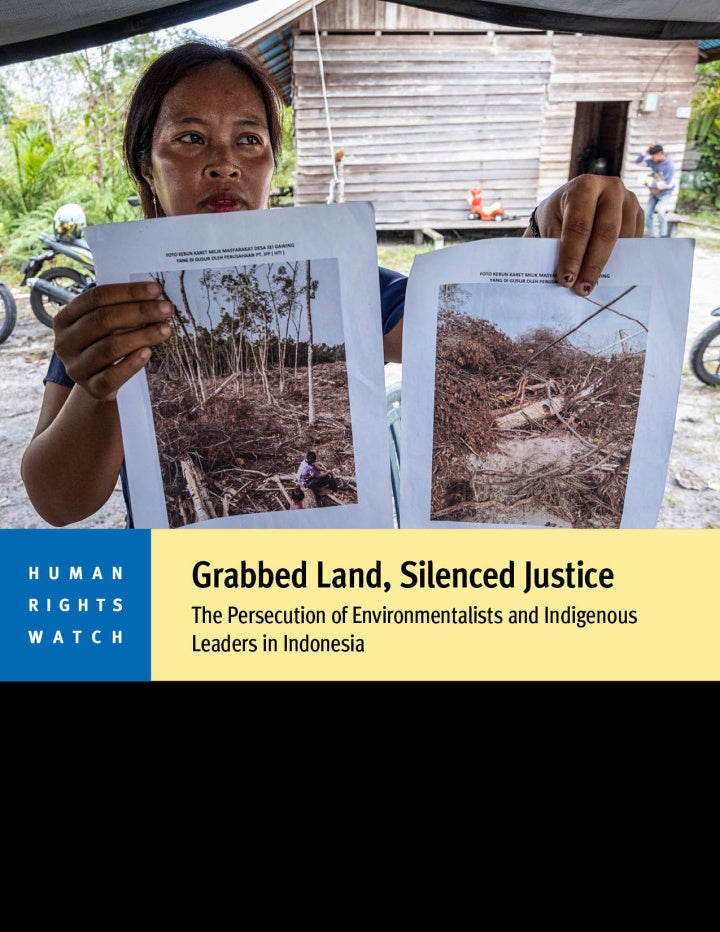
The Persecution of Environmentalists and Indigenous Leaders in Indonesia
The 70-page report, “Grabbed Land, Silenced Justice: The Persecution of Environmentalists and Indigenous Leaders in Indonesia,” documents how Indonesian police have responded to complaints filed by company officials or politicians by silencing Indigenous villagers who demand their customary land rights and the activists who defend them. The authorities have targeted environmental and Indigenous community defenders using the criminal code and other laws to bring charges ranging from defamation to “spreading communism” to silence protest over environmental harm.
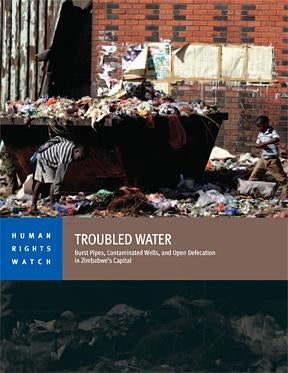
Burst Pipes, Contaminated Wells, and Open Defecation in Zimbabwe’s Capital
The 60-page report describes how residents have little access to potable water and sanitation services, and often resort to drinking water from shallow, unprotected wells that are contaminated with sewage, and to defecating outdoors. The conditions violate their right to water, sanitation, and health.
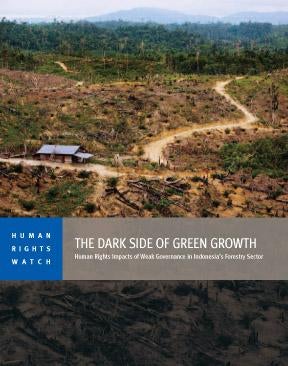
Human Rights Impacts of Weak Governance in Indonesia’s Forestry Sector
This 68-page report finds that illegal logging and forest-sector mismanagement resulted in losses to the Indonesian government of more than US$7 billion between 2007 and 2011.
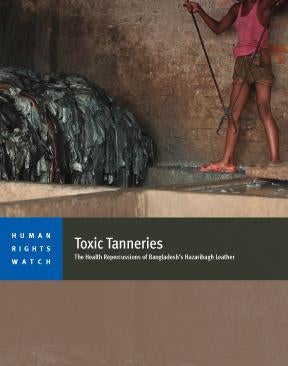
The Health Repercussions of Bangladesh’s Hazaribagh Leather
This report documents an occupational health and safety crisis among tannery workers, both men and women, including skin diseases and respiratory illnesses caused by exposure to tanning chemicals, and limb amputations caused by accidents in dangerous tannery machinery.
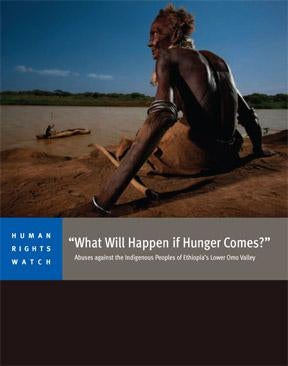
Abuses against the Indigenous Peoples of Ethiopia’s Lower Omo Valley
This report documents how government security forces are forcing communities to relocate from their traditional lands through violence and intimidation, threatening their entire way of life with no compensation or choice of alternative livelihoods.
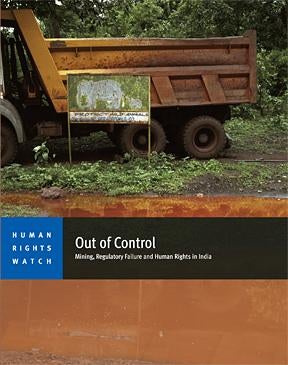
Mining, Regulatory Failure, and Human Rights in India
This 70-page report finds that deep-rooted shortcomings in the design and implementation of key policies have effectively left mine operators to supervise themselves. This has fueled pervasive lawlessness in India’s scandal-ridden mining industry and threatens serious harm to mining-affected communities.
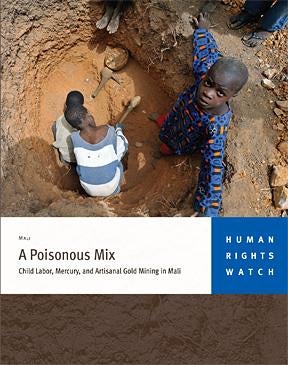
Child Labor, Mercury, and Artisanal Gold Mining in Mali
This 108-page report reveals that children as young as six dig mining shafts, work underground, pull up heavy weights of ore, and carry, crush, and pan ore. Many children also work with mercury, a toxic substance, to separate the gold from the ore. Mercury attacks the central nervous system and is particularly harmful to children.
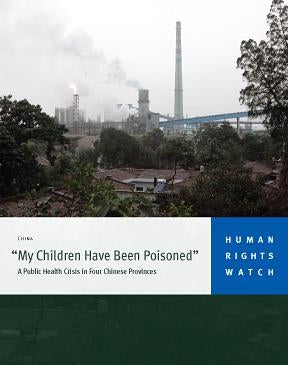
This 75-page report draws on research in heavily lead-contaminated villages in Henan, Yunnan, Shaanxi, and Hunan provinces. The report documents how, despite increasing regulation and sporadic enforcement targeting polluting factories, local authorities are ignoring the urgent and long-term health consequences of a generation of children continuously exposed to life-threatening levels of lead.
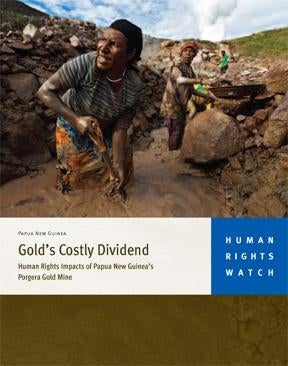
Human Rights Impacts of Papua New Guinea’s Porgera Gold Mine
This report identifies systemic failures on the part of Toronto-based Barrick Gold that kept the company from recognizing the risk of abuses, and responding to allegations that abuses had occurred.
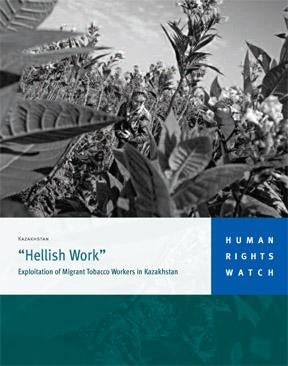
Exploitation of Migrant Tobacco Workers in Kazakhstan
This 115-page report documents how some employers confiscated migrant workers' passports, failed to provide them with written contracts, did not pay regular wages, cheated them of earnings, and required them to work excessively long hours.
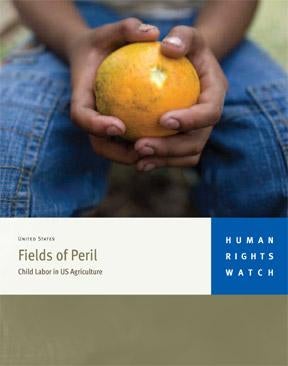
In this 99-page report Human Rights Watch found that child farmworkers risked their safety, health, and education on commercial farms across the United States. For the report, Human Rights Watch interviewed 59 children under age 18 who had worked as farmworkers in 14 states in various regions of the United States.
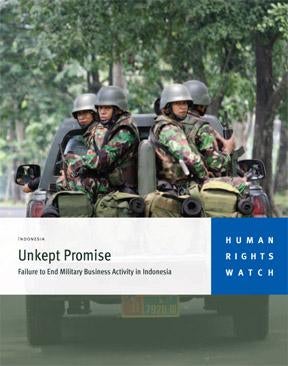
Failure to End Military Business Activity in Indonesia
This 20-page report provides a detailed critique of a presidential decree and Defense Ministry regulations addressing military involvement in businesses that were issued in October 2009.
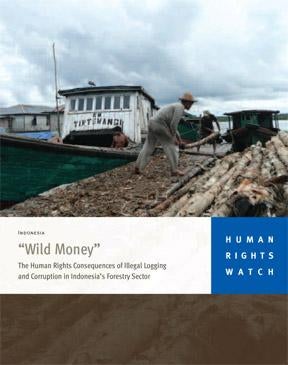
The Human Rights Consequences of Illegal Logging and Corruption in Indonesia’s Forestry Sector
This 75-page report found that more than half of all Indonesian timber from 2003 through 2006 was logged illegally, with no taxes paid. Unreported subsidies to the forestry industry, including government use of artificially low timber market prices and currency exchange rates, and tax evasion by exporters using a scam known as "transfer pricing," exacerbated the losses.
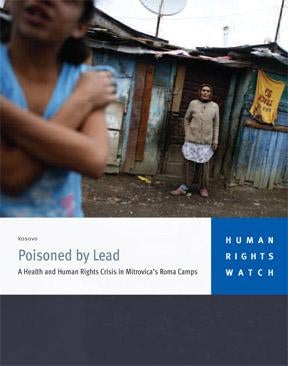
A Health and Human Rights Crisis in Mitrovica’s Roma Camps
This 68-page report tells the story of a decade of failure by the UN and others to provide adequate housing and medical treatment for the Roma, and the devastating consequences for the health of those in the camps.
This 53-page report was jointly prepared by Human Rights Watch and the Center for Human Rights and Global Justice. It illustrates how everyday business decisions have significant implications for the human rights of workers, local communities, suppliers, and consumers.
The Human Rights Cost of the Indonesian Military’s Economic Activities
This 136-page report is the most comprehensive account to date of the harmful effect on civilians of the armed forces' involvement in business. Human Rights Watch calls on the Indonesian government to ban all military businesses, reform the budget process, and hold military personnel accountable for crimes.