The Persecution of Environmentalists and Indigenous Leaders in Indonesia
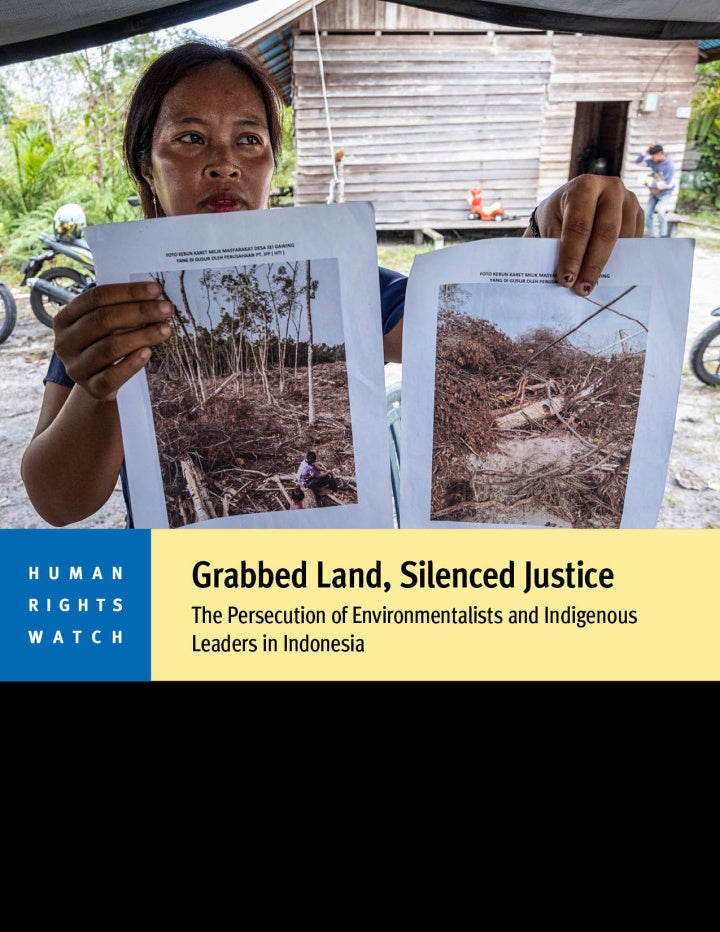
The 70-page report, “Grabbed Land, Silenced Justice: The Persecution of Environmentalists and Indigenous Leaders in Indonesia,” documents how Indonesian police have responded to complaints filed by company officials or politicians by silencing Indigenous villagers who demand their customary land rights and the activists who defend them. The authorities have targeted environmental and Indigenous community defenders using the criminal code and other laws to bring charges ranging from defamation to “spreading communism” to silence protest over environmental harm.
How the US Government’s Deregulation of Mountaintop Removal Threatens Public Health
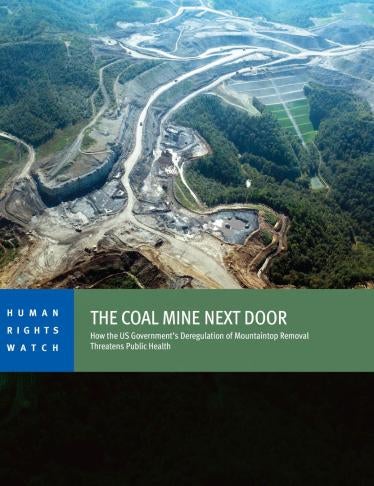
This report finds that Congress failed to mitigate health risks associated with this form of mining when it voted to roll back a modest regulation to protect streams from mining pollution. In reversing the regulation, Congress made it easier for the coal industry to destroy mountains and bury the waste rock in streams without monitoring or addressing the environmental impacts, while relying on a deeply flawed industry-funded study that was not subject to peer review. In addition, the Trump administration abruptly withdrew funding from a study that could have established broad consensus around the practice’s health impacts in an apparently deliberate effort to prevent important information regarding the health risks of mountaintop removal mining from coming to light.
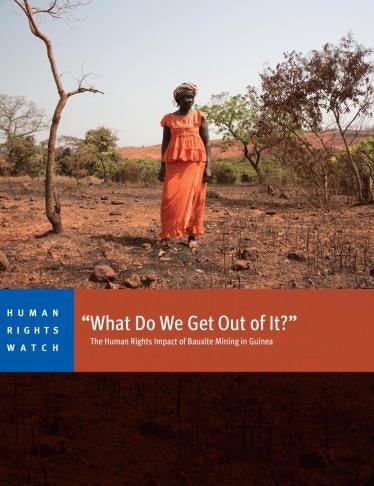
The Human Rights Impact of Bauxite Mining in Guinea
This report focuses on two mining projects that were Guinea’s two largest bauxite producers in 2017: La Société Minière de Boké (SMB), a joint venture linked to the world’s largest aluminum producer, China Hongqiao Group, that has expanded extremely rapidly since it began in 2015; and la Compagnie des Bauxites de Guinée (CBG), a decades-old company co-owned by multinationals Alcoa and Rio Tinto. Guinea’s government, which has transformed Guinea into the world’s third-largest exporter, should take immediate steps to better regulate companies and protect communities.
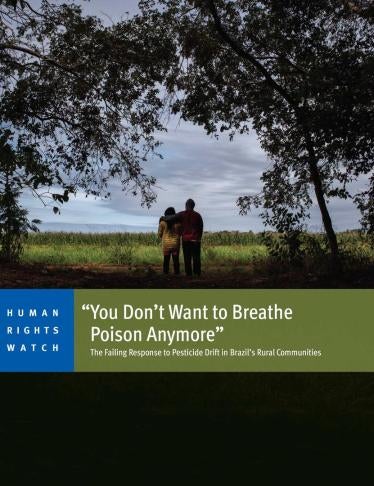
The Failing Response to Pesticide Drift in Brazil’s Rural Communities
This report documents cases of acute poisoning from pesticide drift in seven sites, located across Brazil, including farming communities, indigenous communities, quilombo (Afro-Brazilian) communities, and rural schools. Exposure occurs when pesticide spray drifts off target during application, or when pesticides vaporize and drift to adjacent areas in the days after spraying.
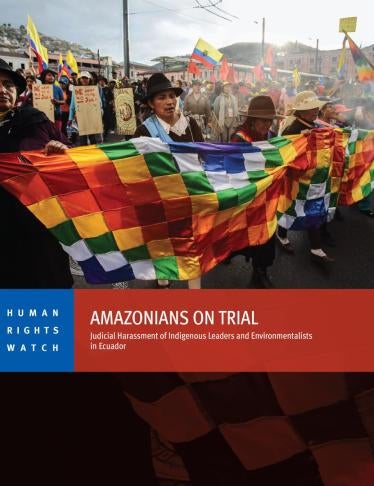
Judicial Harassment of Indigenous Leaders and Environmentalists in Ecuador
This report shows that prosecutors in three prominent cases failed to produce sufficient evidence to support serious charges or justify the years-long continuation of a criminal investigation. On March 28, 2018, a trial court in Morona Santiago will rule on the case of a Shuar indigenous leader, Agustín Wachapá, for allegedly inciting violence through a Facebook post. On March 16, a court ordered the arrest of Pepe Acacho, another Shuar indigenous leader, to serve a prison sentence over a charge he never had an opportunity to defend himself at trial.
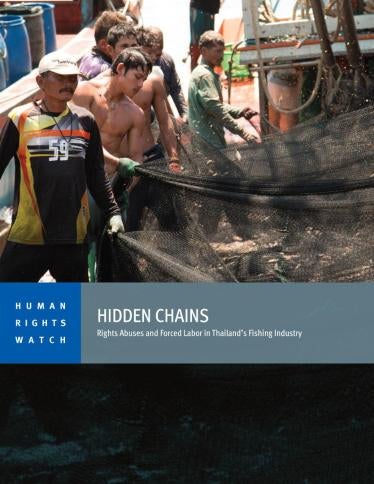
Rights Abuses and Forced Labor in Thailand’s Fishing Industry
This report describes how migrant fishers from neighboring countries in Southeast Asia are often trafficked into fishing work, prevented from changing employers, not paid on time, and paid below the minimum wage. Migrant workers do not receive Thai labor law protections and do not have the right to form a labor union.
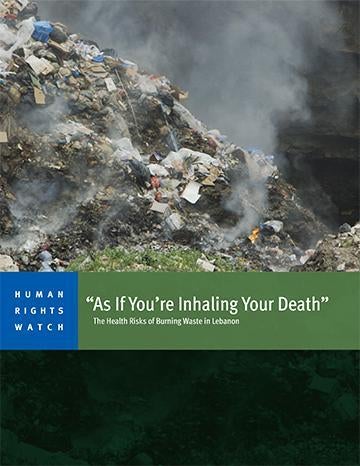
This report finds that Lebanese authorities’ lack of effective action to address widespread open burning of waste and a lack of adequate monitoring or information about the health effects violate Lebanon’s obligations under international law. Open burning of waste is dangerous and avoidable, a consequence of the government’s decades-long failure to manage solid waste in a way that respects environmental and health laws designed to protect people. Scientific studies have documented the dangers smoke from the open burning of household waste pose to human health. Children and older people are at particular risk. Lebanon should end the open burning of waste and carry out a sustainable national waste management strategy that complies with environmental and public health best practices and international law.
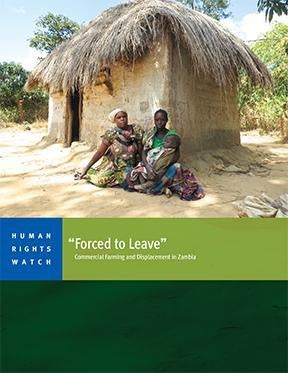
This report examines the impact of commercial farms on residents’ rights to health, housing, livelihood, food and water security, and education. It examines how women have been disproportionately affected and often excluded from negotiations with commercial farmers. Based on more than 130 interviews with rural residents affected by commercial farming, the report examines the human rights record of six commercial farms that exemplify much larger failures of rights protection and governance. It also draws on interviews with government officials, commercial farmers, advocates, and lawyers.
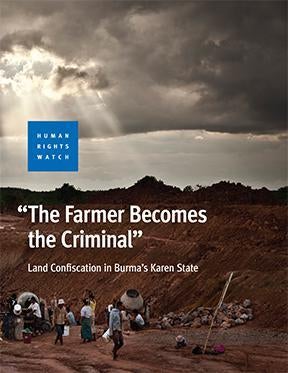
This report documents human rights violations by militias, police, and government officials in Karen State for the confiscation of land from ethnic Karen farmers, many of whose families had farmed the land for generations.
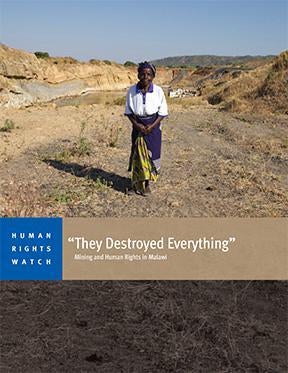
This report examines the impact of extractive industries on communities in some of Malawi’s first mining areas, in Karonga district located on the northwestern shores of Lake Malawi. Malawi’s government has promoted private investment in mining and resource extraction to diversify its economy. But environmental risks are common in resource extraction and mining significantly contributes to climate change, which in turn affects governments’ ability to realize the rights to health, water, and food.
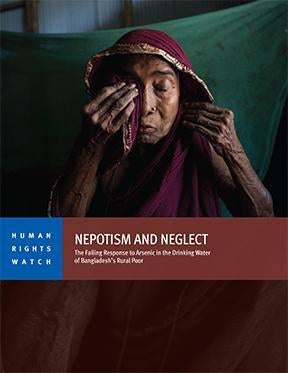
The Failing Response to Arsenic in the Drinking Water of Bangladesh’s Rural Poor
This report documents how Bangladesh’s health system largely ignores the impact of exposure to arsenic on people’s health. An estimated 43,000 people die each year from arsenic-related illness in Bangladesh, according to one study. The government identifies people with arsenic-related illnesses primarily via skin lesions, although the vast majority of those with arsenic-related illnesses don’t develop them. Those exposed are at significant risk of cancer, cardiovascular disease, and lung disease as a result, but many receive no health care at all.
Climate Change, Environmental Threats, and Human Rights in Turkana County, Kenya
This 96-page report highlights the increased burden facing the government of Kenya to ensure access to water, food, health, and security in the Turkana region. The region also presents an example of how climate change, with rising temperatures and shifting precipitation patterns, disproportionately affects already vulnerable people, especially in countries with limited resources and fragile ecosystems.
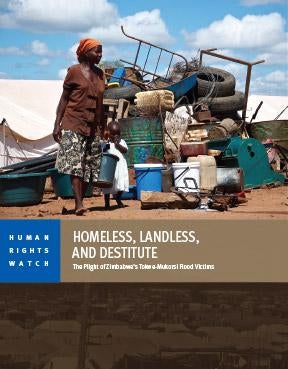
The Plight of Zimbabwe’s Tokwe-Mukorsi Flood Victims
This 57-page report documents human rights violations suffered by people forced to suddenly evacuate their homes due to massive flooding in the Tokwe-Mukorsi dam basin in February 2014, which some experts say could have been avoided.
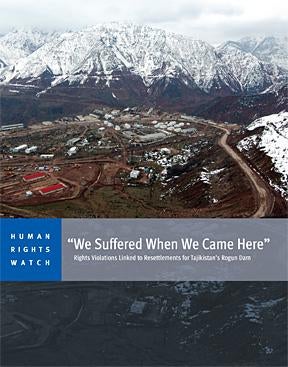
Rights Violations Linked to Resettlements for Tajikistan's Rogun Dam
The 81-page report examines serious shortcomings in the government’s resettlement of 1,500 families since 2009. The Rogun Dam and Hydropower Plant stands to displace over 42,000 people before it is operational. The major problem, people said, was that they were not given enough compensation to replace their homes.
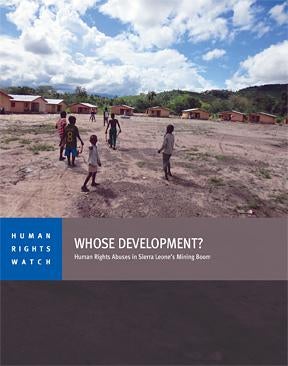
This 96-page report documents how the government and London-based African Minerals Limited forcibly relocated hundreds of families from verdant slopes to a flat, arid area in Tonkolili District. As a result, residents lost their ability to cultivate crops and engage in income generating activities that once sustained them.
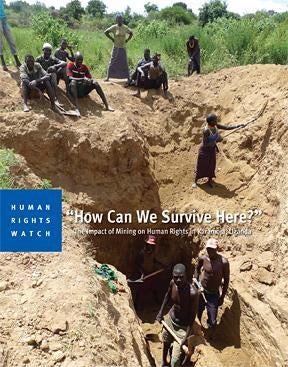
The Impact of Mining on Human Rights in Karamoja, Uganda
This 140-page report examines the conduct of three companies in different stages of the mining process: East African Mining, Jan Mangal, and DAO Uganda. Human Rights Watch found that companies have explored for minerals and actively mined on lands owned and occupied by Karamoja’s indigenous people.