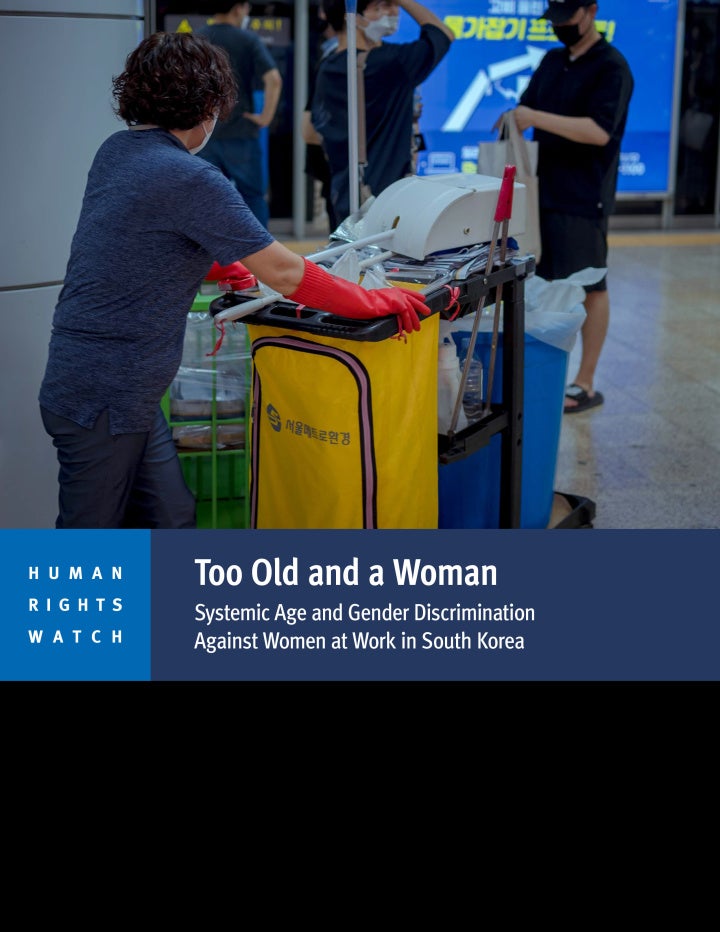
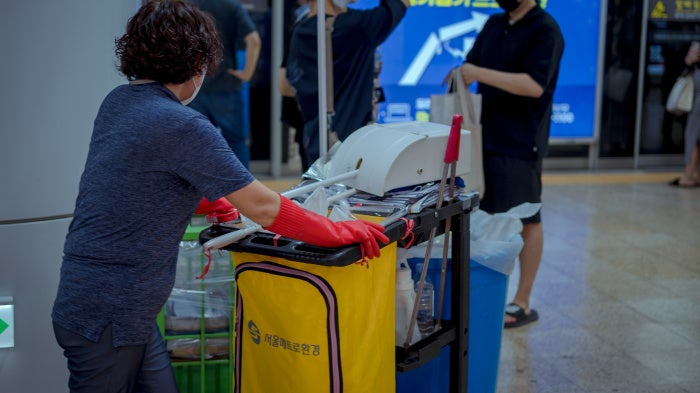
Systemic Age and Gender Discrimination Against Women at Work in South Korea
The 92-page report, “Too Old and a Woman: Systemic Age and Gender Discrimination Against Women at Work in South Korea,” documents that social attitudes toward education, unfair treatment in hiring, disrupted careers due to family responsibilities, limited promotion opportunities, glass ceilings, and sexual harassment create a disadvantage for South Korean women throughout their working lives. As women get older, their work opportunities narrow to a handful of low-paid, insecure jobs, and the gender pay gap increases. By the time they are eligible for pensions, women face a significant gender pension gap.
Abuses and Discrimination against Children in Institutions and Lack of Access to Quality Inclusive Education in Armenia
This report documents how thousands of children in Armenia live in orphanages, residential special schools for children with disabilities, and other institutions. They often live there for years, separated from their families. More than 90 percent of children in residential institutions in Armenia have at least one living parent. Human Rights Watch also found that the Armenian government is not doing enough to ensure quality, inclusive education for all children. Inclusive education involves children with disabilities studying in their community schools with reasonable support for academic and other achievement.
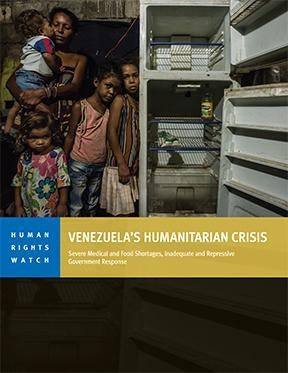
Severe Medical and Food Shortages, Inadequate and Repressive Government Response
This report documents how the shortages have made it extremely difficult for many Venezuelans to obtain essential medical care or meet their families’ basic needs. The Venezuelan government has downplayed the severity of the crisis. Although its own efforts to alleviate the shortages have not succeeded, it has made only limited efforts to obtain international humanitarian assistance that might be readily available. Meanwhile, it has intimidated and punished critics, including health professionals, human rights defenders, and ordinary Venezuelans who have spoken out about the shortages.
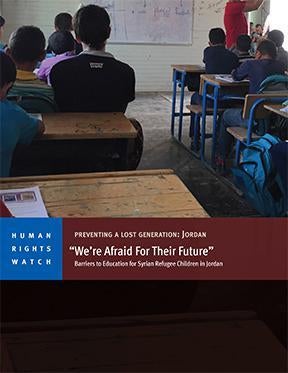
Barriers to Education for Syrian Refugee Children in Jordan
This report describes Jordan’s generous efforts to enroll Syrian children in its public school system, which was struggling with capacity and quality issues even before refugees began to arrive from Syria. But Human Rights Watch also documented barriers to education, including asylum-seeker registration requirements that many Syrians cannot meet; punishments for refugees working without permits that contribute to poverty, child labor, and school drop-outs; and a bar on enrollment for children who have been out of school for three or more years. Jordan has eased some restrictions, but authorities should expand efforts to realize the fundamental right to education for all Syrian children, Human Rights Watch said.
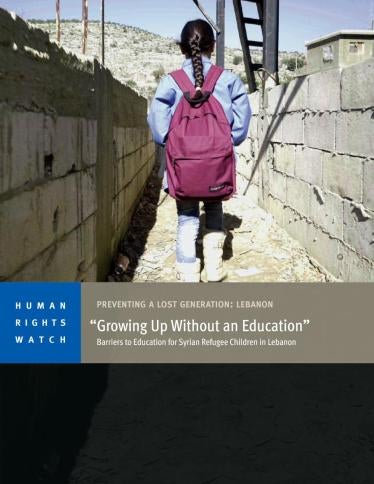
Barriers to Education for Syrian Refugee Children in Lebanon
This report documents the important steps Lebanon has taken to allow Syrian children to access public schools. But Human Rights Watch found that some schools have not complied with enrollment policies, and that more donor support is needed for Syrian families and for Lebanon’s over-stretched public school system. Lebanon is also undermining its positive education policy by imposing harsh residency requirements that restrict refugees’ freedom of movement and exacerbate poverty, limiting parents’ ability to send their children to school and contributing to child labor. Secondary school-age children and children with disabilities face particularly difficult obstacles.
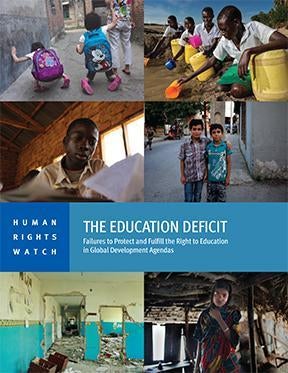
Failures to Protect and Fulfill the Right to Education through Global Development Agendas
This report says that governments around the world made a commitment two decades ago to remove barriers to education for their children. But Human Rights Watch found that discriminatory laws and practices, high fees, violence, and other factors keep children and adolescents out of school in many countries. The report is based on Human Rights Watch research in more than 40 countries, covering nearly two decades. The United Nations Educational, Scientific and Cultural Organization, UNESCO, has reported that 124 million children and adolescents are out of school.
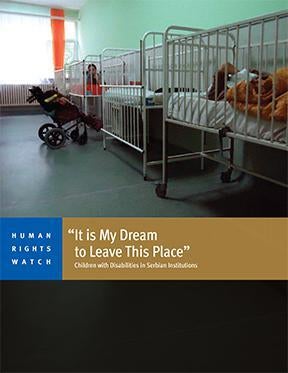
Children with Disabilities in Serbian institutions
This report documents the pressure families face to send children born with disabilities to large residential institutions, often far away from their homes, separating them from their families. There, children may experience neglect, inappropriate medication, and lack of privacy and have limited or no access to education.
Canada’s Obligation to End the First Nations Water Crisis
This report documents the impacts of serious and prolonged drinking water and sanitation problems for thousands of indigenous people – known as “First Nations” – living on reserves. It assesses why there are problems with safe water and sanitation on reserves, including a lack of binding water quality regulations, erratic and insufficient funding, faulty or sub-standard infrastructure, and degraded source waters. The federal government’s own audits over two decades show a pattern of overpromising and underperforming on water and sanitation for reserves.
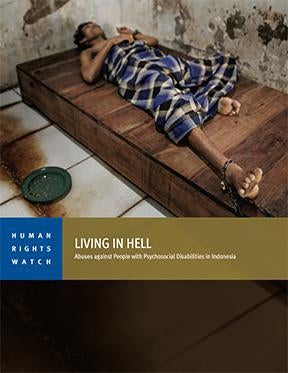
Abuses against People with Psychosocial Disabilities in Indonesia
This report examines how people with mental health conditions often end up chained or locked up in overcrowded and unsanitary institutions – without their consent – due to stigma and the absence of adequate community-based support services or mental health care. In institutions, they face physical and sexual violence; involuntary treatment, including electroshock therapy; seclusion; restraint; and forced contraception.
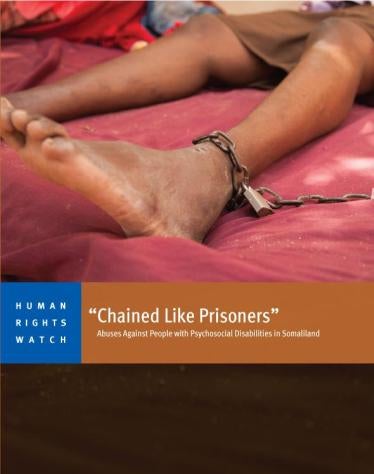
Abuses Against People with Psychosocial Disabilities in Somaliland
This 81-page report finds that men with perceived or actual psychosocial disabilities face abusive restraints, beatings, involuntary treatment, and overcrowding in private and public health centers. Most are held against their will and have no possibility of challenging their detention. In private centers in particular, those with psychosocial disabilities face punitive and prolonged chaining, confinement, seclusion, and severe restrictions on their movement. The findings highlight the importance of mental health services in post-conflict regions. According to the World Health Organization, Somaliland has high rates of psychosocial disability.
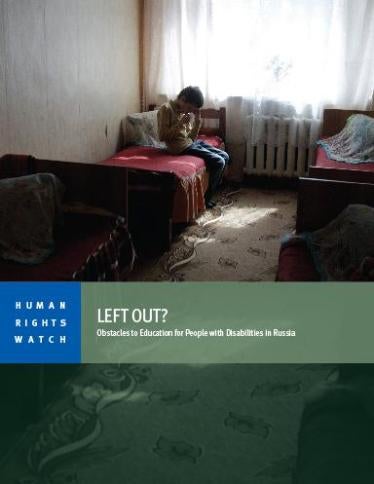
Obstacles to Education for People with Disabilities in Russia
The 45-page report found many barriers that can prevent children with disabilities from studying in mainstream schools. These include a lack of ramps or lifts to help children enter and move within buildings and the absence of accommodations such as large-print textbooks for children with low vision, assistive technology, or teachers’ aides. Infrastructure barriers and limited accessible transportation prevent some children from leaving their homes and reaching school.
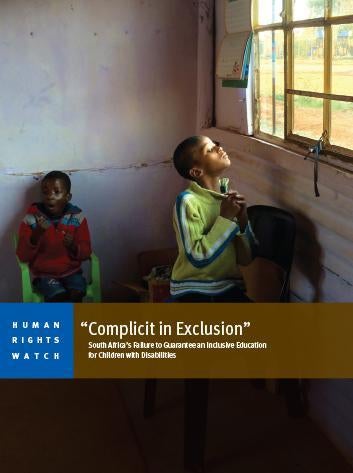
South Africa’s Failure to Guarantee an Inclusive Education for Children with Disabilities
This 94-page report found that South Africa has failed to guarantee the right to education for many of the country’s children and young adults due to widespread discrimination against children with disabilities in enrollment decisions. Human Rights Watch research in five out of South Africa’s nine provinces showed that children with disabilities face discriminatory physical and attitudinal barriers, often beginning early in children’s lives when government officials classify them according to their disabilities.
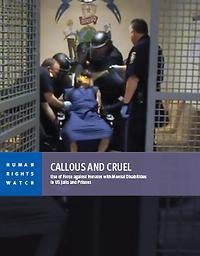
Use of Force against Inmates with Mental Disabilities in US Jails and Prisons
This 127-page report details incidents in which correctional staff have deluged prisoners with painful chemical sprays, shocked them with powerful electric stun weapons, and strapped them for days in restraining chairs or beds. Staff have broken prisoners’ jaws, noses, ribs; left them with lacerations requiring stitches, second-degree burns, deep bruises, and damaged internal organs.
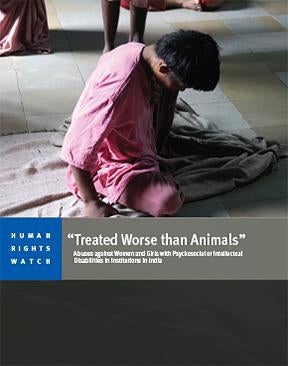
Abuses against Women and Girls with Psychosocial or Intellectual Disabilities in Institutions in India
This report documents involuntary admission and arbitrary detention in mental hospitals and residential care institutions across India, where women and girls with psychosocial or intellectual disabilities experience overcrowding and lack of hygiene, inadequate access to general healthcare, forced treatment – including electroconvulsive therapy – as well as physical, verbal, and sexual violence.
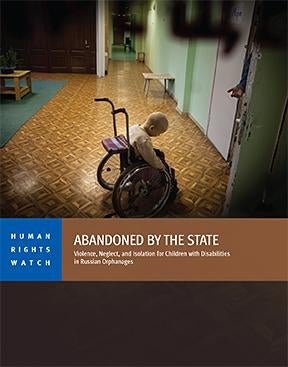
Violence, Neglect, and Isolation for Children with Disabilities in Russian Orphanages
This 93-page report found that many children and young people with disabilities who have lived in state orphanages suffered serious abuse and neglect on the part of institution staff that impedes their development.
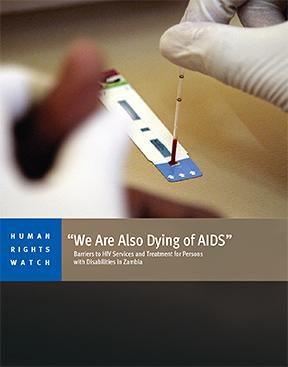
Barriers to HIV Services and Treatment for Persons with Disabilities in Zambia
The 80-page report documents the obstacles faced by people with disabilities in both the community and healthcare settings. These include pervasive stigma and discrimination, lack of access to inclusive HIV prevention education, obstacles to accessing voluntary testing and HIV treatment, and lack of appropriate support for adherence to antiretroviral treatment.