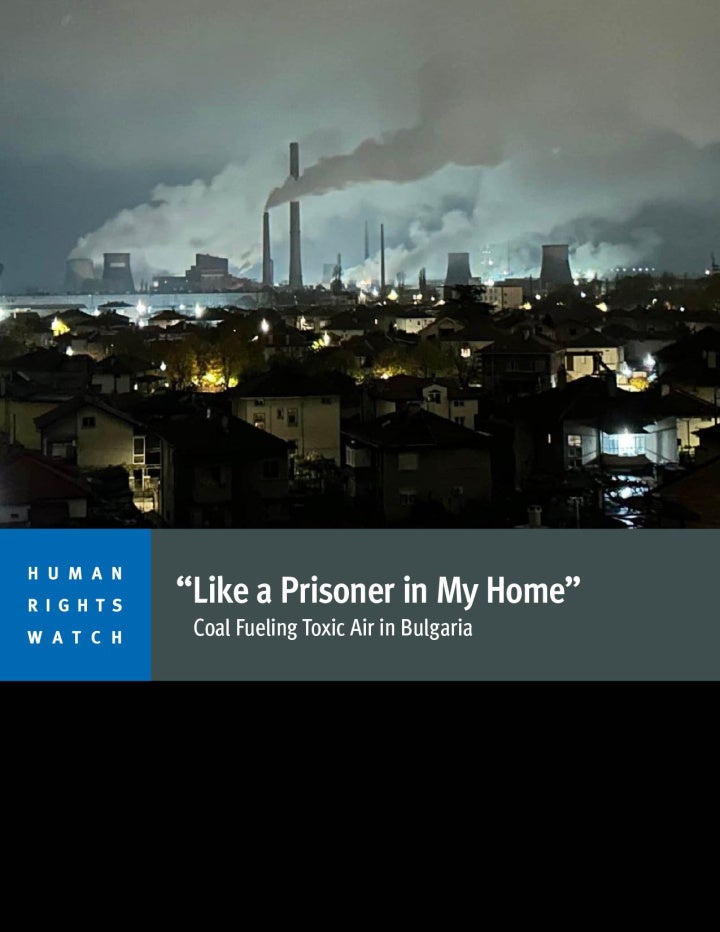
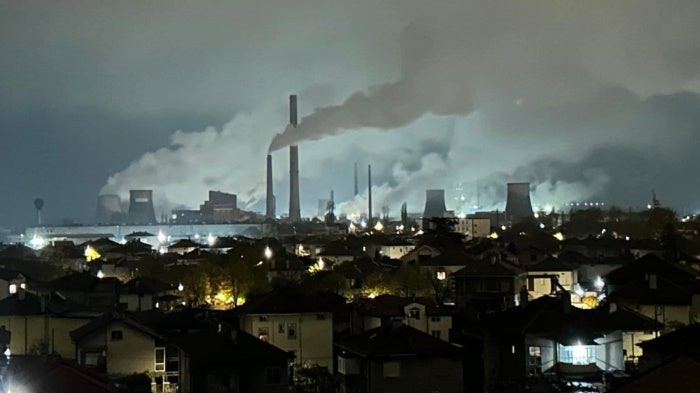
The 45-page report, “Like a Prisoner in My Home’: Coal Fueling Toxic Air in Bulgaria” analyzes the data revealing alarmingly high air pollution levels in Dimitrovgrad, a town in southern Bulgaria, which hosts Maritsa 3, one of the country’s oldest coal plants. Maritsa 3 emits hazardous air pollutants, which contribute to poor air quality that harms the health of local residents, particularly children.
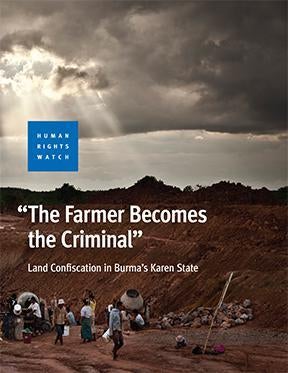
This report documents human rights violations by militias, police, and government officials in Karen State for the confiscation of land from ethnic Karen farmers, many of whose families had farmed the land for generations.
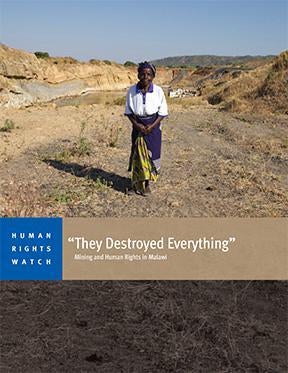
This report examines the impact of extractive industries on communities in some of Malawi’s first mining areas, in Karonga district located on the northwestern shores of Lake Malawi. Malawi’s government has promoted private investment in mining and resource extraction to diversify its economy. But environmental risks are common in resource extraction and mining significantly contributes to climate change, which in turn affects governments’ ability to realize the rights to health, water, and food.
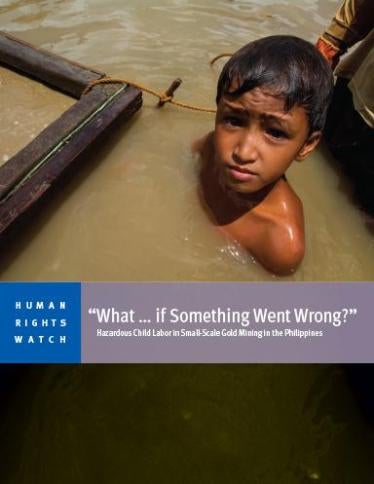
Hazardous Child Labor in Small-Scale Gold Mining in the Philippines
This 39-page report documents how thousands of Filipino children – some just 9 years old – work in illegal, small-scale gold mines, mostly financed by local businessmen. Children work in unstable 25-meter-deep pits or underwater along the coastal shore or in rivers, and process gold with mercury, a toxic metal. In September 2014, a 17-year-old boy suffocated in an underground mine because there was no machine providing oxygen. The Philippine government should act on its public commitment to end child labor in mining, Human Rights Watch said.
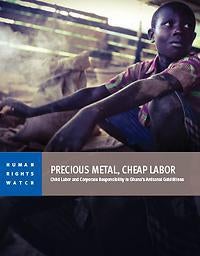
Child Labor and Corporate Responsibility in Ghana’s Artisanal Gold Mines
This 82-page report documents the use of child labor in Ghana’s artisanal, or unlicensed, mines, where most mining takes place. It is estimated that thousands of children work in hazardous conditions in violation of Ghanaian and international law. They pull the gold ore out of shafts, carry and crush loads of ore, and process it with toxic mercury.
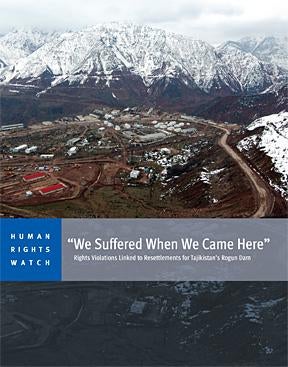
Rights Violations Linked to Resettlements for Tajikistan's Rogun Dam
The 81-page report examines serious shortcomings in the government’s resettlement of 1,500 families since 2009. The Rogun Dam and Hydropower Plant stands to displace over 42,000 people before it is operational. The major problem, people said, was that they were not given enough compensation to replace their homes.
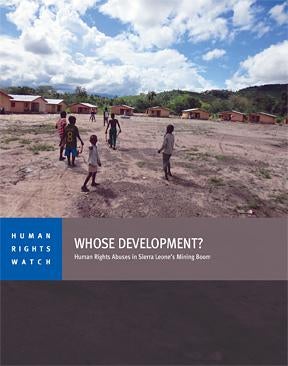
This 96-page report documents how the government and London-based African Minerals Limited forcibly relocated hundreds of families from verdant slopes to a flat, arid area in Tonkolili District. As a result, residents lost their ability to cultivate crops and engage in income generating activities that once sustained them.
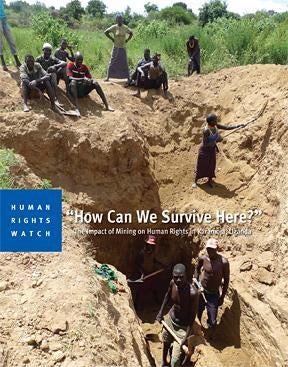
The Impact of Mining on Human Rights in Karamoja, Uganda
This 140-page report examines the conduct of three companies in different stages of the mining process: East African Mining, Jan Mangal, and DAO Uganda. Human Rights Watch found that companies have explored for minerals and actively mined on lands owned and occupied by Karamoja’s indigenous people.
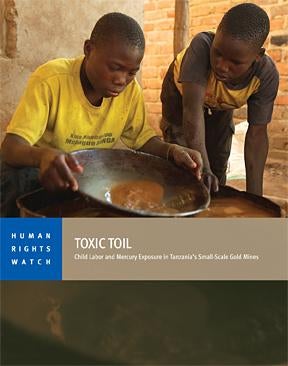
Child Labor and Mercury Exposure in Tanzania’s Small-Scale Gold Mines
This 96-page report describes how thousands of children work in licensed and unlicensed small-scale gold mines in Tanzania, Africa’s fourth-largest gold producer. They dig and drill in deep, unstable pits, work underground for shifts of up to 24 hours, and transport and crush heavy bags of gold ore.
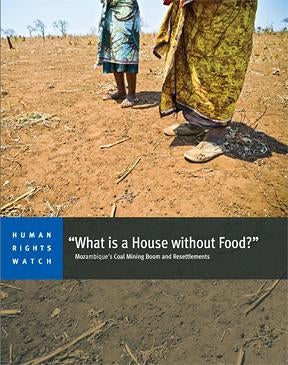
This 122-page report examines how serious shortcomings in government policy and mining companies’ implementation uprooted largely self-sufficient farming communities and resettled them to arid land far from rivers and markets. These communities have experienced periods of food insecurity or, when available, dependence on short-term food assistance financed by Vale and Rio Tinto.
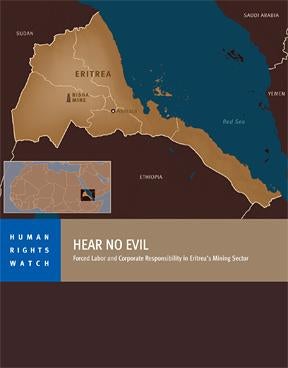
Forced Labor and Corporate Responsibility in Eritrea’s Mining Sector
The 29-page report describes how mining companies working in Eritrea risk involvement with the government’s widespread exploitation of forced labor. It also documents how Nevsun – the first company to develop an operational mine in Eritrea – initially failed to take those risks seriously, and then struggled to address allegations of abuse connected to its operations.
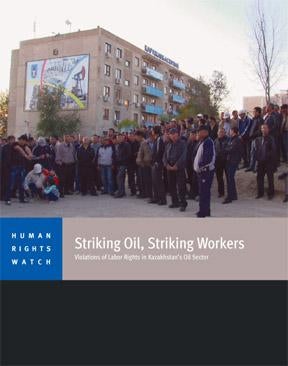
Violations of Labor Rights in Kazakhstan’s Oil Sector
This report analyzes the tactics employed by Kazakh authorities and three companies operating in the oil and gas sector in western Kazakhstan to restrict workers’ rights to freedom of assembly, association, and expression leading up to and during peaceful labor strikes that began in May 2011. Local authorities broke the strike at one of the companies in June.
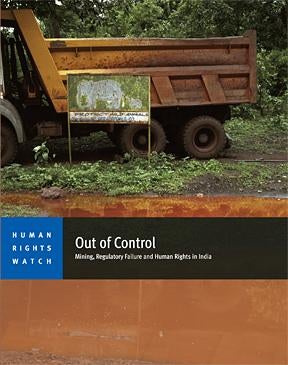
Mining, Regulatory Failure, and Human Rights in India
This 70-page report finds that deep-rooted shortcomings in the design and implementation of key policies have effectively left mine operators to supervise themselves. This has fueled pervasive lawlessness in India’s scandal-ridden mining industry and threatens serious harm to mining-affected communities.
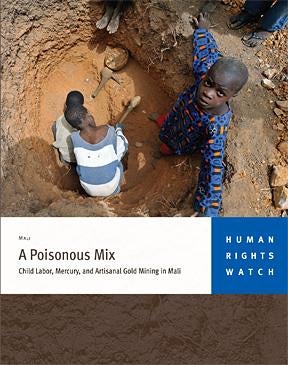
Child Labor, Mercury, and Artisanal Gold Mining in Mali
This 108-page report reveals that children as young as six dig mining shafts, work underground, pull up heavy weights of ore, and carry, crush, and pan ore. Many children also work with mercury, a toxic substance, to separate the gold from the ore. Mercury attacks the central nervous system and is particularly harmful to children.
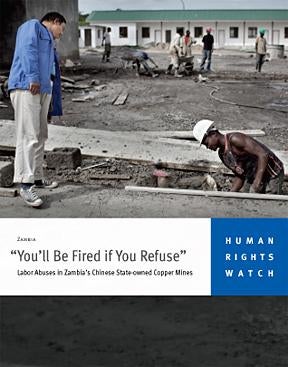
Labor Abuses in Zambia's Chinese State-owned Copper Mines
This 122-page report details the persistent abuses in Chinese-run mines, including poor health and safety conditions, regular 12-hour and even 18-hour shifts involving arduous labor, and anti-union activities, all in violation of Zambia’s national laws or international labor standards.
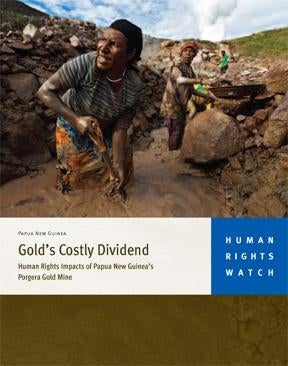
Human Rights Impacts of Papua New Guinea’s Porgera Gold Mine
This report identifies systemic failures on the part of Toronto-based Barrick Gold that kept the company from recognizing the risk of abuses, and responding to allegations that abuses had occurred.