Reports

JBS and the EU’s Exposure to Human Rights Violations and Illegal Deforestation in Pará, Brazil

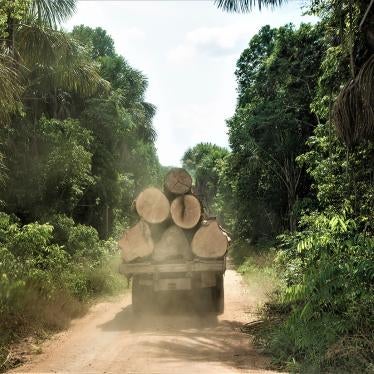
The 86-page report “Tainted: JBS and the EU’s Exposure to Human Rights Violations and Illegal Deforestation in Pará, Brazil,” details how cattle ranchers illegally seized land and devastated the livelihoods of lawful residents in the Terra Nossa smallholder settlement and the Cachoeira Seca Indigenous territory, affecting their rights to housing, land, and culture. Human Rights Watch analysis of official sources shows that illegal farms in these areas sold cattle to several JBS direct suppliers.

A man rides a motorcycle down a dirt road
A woman looks out of the window of a damaged building

Search

  • March 9, 2023

    Lebanon’s Failure on the Right to Electricity

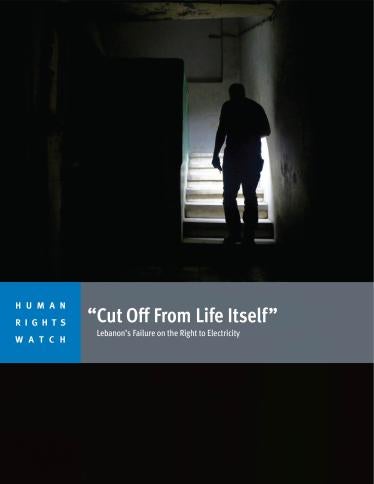
    The 127-page report, “‘Cut Off from Life Itself’: Lebanon’s Failure on the Right to Electricity,” argues that electricity is fundamental to nearly every aspect of living and participating in present- day societies, and as such, the internationally protected right to an adequate standard of living includes the right of everyone, without discrimination, to sufficient, reliable, safe, clean, accessible, and affordable electricity. At present, the government provides electricity for only one to three hours a day on average, while people who can afford it supplement that supply with private generators. The public sector and private generator industry rely on polluting climate-intensive fossil fuels. The electricity crisis has exacerbated inequality in the country, severely limited people’s ability to realize their most basic rights, and pushed them further into poverty.

    video content
    202303ejr_lebanon_electricity_cover.jpg
  • January 13, 2023
    A new multimedia report details the impact of criminal groups involved in illegal land grabbing and logging inside Terra Nossa, a land-reform settlement intended for small-scale agriculture and sustainable collection of forest products in the state of Pará. The situation there shows the link between environmental destruction, violence, and poverty in many rural communities that depend on the sustainable use of the forest across the Amazon.
    Terra Nossa
  • September 21, 2022

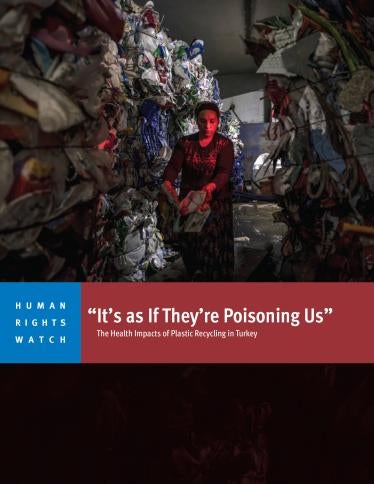
    The Health Impacts of Plastic Recycling in Turkey

    The 88-page report, “‘It’s as If They’re Poisoning Us’: The Health Impacts of Plastic Recycling in Turkey,” documents the consequences of the Turkish government’s ineffective response to the health and environmental impacts of plastic recycling on the right to health. Air pollutants and toxins emitted from recycling affect workers, including children, and people living near recycling facilities.

    video content
    202209eca_turkey_plasticrecycling_cover
  • July 5, 2022

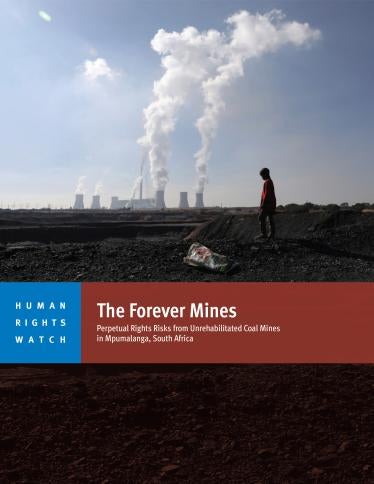
    Perpetual Rights Risks from Unrehabilitated Coal Mines in South Africa

    The 45-page report, The Forever Mines: Perpetual Rights Risks from Unrehabilitated Coal Mines in Mpumalanga, South Africa documents the threats to communities from coal mines that have not been properly cleaned up, the failure of the national government to make progress on addressing the impacts of abandoned coal mines, and the inaction of industry to address the ongoing problems.

    map content
    video content
    202207africa_southafrica_coalmine_cover
  • October 21, 2020

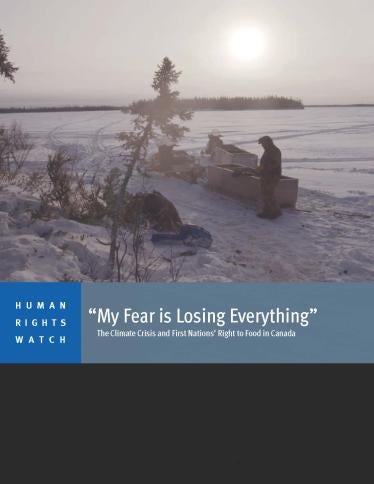
    The Climate Crisis and First Nations’ Right to Food in Canada

    The 120-page report, “‘My Fear is Losing Everything’: The Climate Crisis and First Nations’ Right to Food in Canada,” documents how climate change is reducing First Nations’ traditional food sources, driving up the cost of imported alternatives, and contributing to a growing problem of food insecurity and related negative health impacts. Canada is warming at more than twice the global rate, and northern Canada at about three times the global rate. Despite its relatively small population, Canada is still a top 10 greenhouse gas emitter, with per capita emissions 3 to 4 times the global average.

    map content
    video content
    202010americas_canada_climate change_cover
  • August 26, 2020

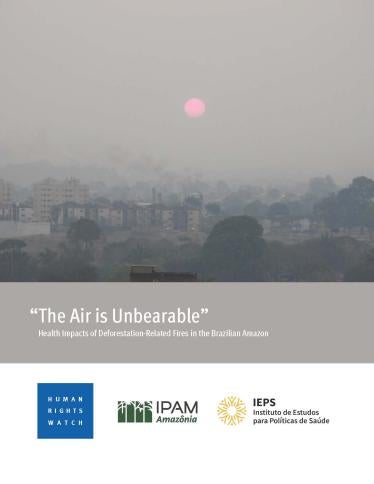
    Health Impacts of Deforestation-Related Fires in the Brazilian Amazon

    The 50-page report, “The Air is Unbearable: Health Impacts of Deforestation-Related Fires in the Brazilian Amazon,” uses official health and environmental data to estimate that 2,195 hospitalizations due to respiratory illness are attributable to the 2019 fires. Nearly 500 involved infants under a year old, and more than 1,000 involved people over age 60. These hospitalizations represent only a fraction of the total health impact from fires, as millions of people were exposed in 2019 to harmful levels of air pollution resulting from the deforestation-related burning of the Amazon.

    map content
    video content
    202008americas_brazil_amazon_cover
  • November 25, 2019

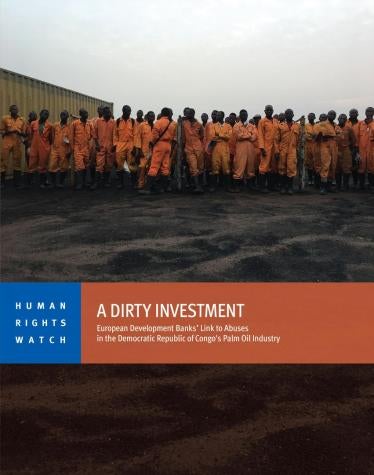
    European Development Banks’ Link to Abuses in the Democratic Republic of Congo’s Palm Oil Industry

    This report documents that investment banks owned by Belgium, Germany, the Netherlands, and the United Kingdom are failing to protect the rights of people working and living on three plantations they finance. Human Rights Watch found that Feronia and its subsidiary in Congo, Plantations et Huileries du Congo, S.A. (PHC), expose workers to dangerous pesticides, dump untreated industrial waste into local waterways, and engage in abusive employment practices that result in extreme poverty wages.

    photo gallery
    map content
    video content
    201911ENV_DRC_cover
  • October 23, 2019

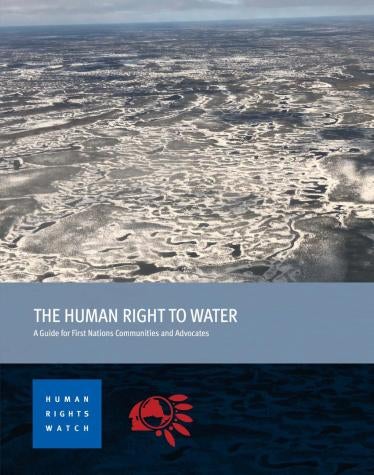
    A Guide for First Nations Communities and Advocates

    This report provides an overview of the legal framework behind the human right to water and recommendations on how to work with government officials and other towards the realization of this right.

    201910wrd_water_cover
  • September 17, 2019

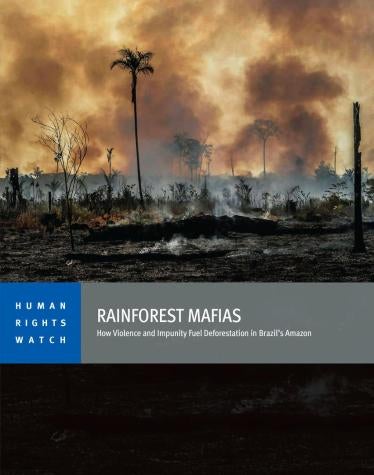
    How Violence and Impunity Fuel Deforestation in Brazil’s Amazon

    This report documents how illegal logging by criminal networks and resulting forest fires are connected to acts of violence and intimidation against forest defenders and the state’s failure to investigate and prosecute these crimes. 


    photo gallery
    map content
    video content
    201909ENV_Brazil_reportcover
  • August 23, 2019

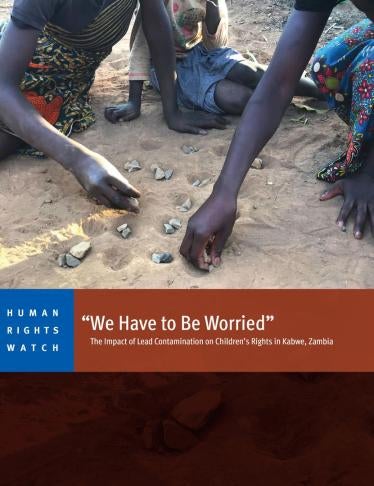
    The Impact of Lead Contamination on Children’s Rights in Kabwe, Zambia

    This report examines the effects of lead contamination in Kabwe, a provincial capital, on children’s rights to health, a healthy environment, education, and play. Twenty-five years after the mine closed, children living in nearby townships continue to be exposed to high levels of toxic lead in soil and dust in their homes, backyards, schools, play areas, and other public spaces. The Zambian government’s efforts to address the environmental and health consequences of the widespread lead contamination have not thus far been sufficient, and parents struggle to protect their children.

    201908crd_zambia_cover
  • April 16, 2019

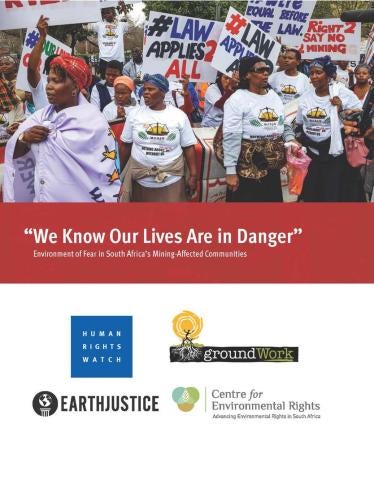
    Environment of Fear in South Africa’s Mining-Affected Communities

    The 73-page report “‘We Know Our Lives Are in Danger’: Environment of Fear in South Africa’s Mining-affected Communities” and video cites activists’ reports of intimidation, violence, damage to property, use of excessive force during peaceful protests, and arbitrary arrest for their activities in highlighting the negative impacts of mining projects on their communities. Municipalities often impose barriers to protest on organizers that have no legal basis. Government officials have failed to adequately investigate allegations of abuse, and some mining companies resort to frivolous lawsuits and social media campaigns to further curb opposition to their projects. The government should protect the activists.

    201904ehr_southafrica_mining_cover
  • December 17, 2018

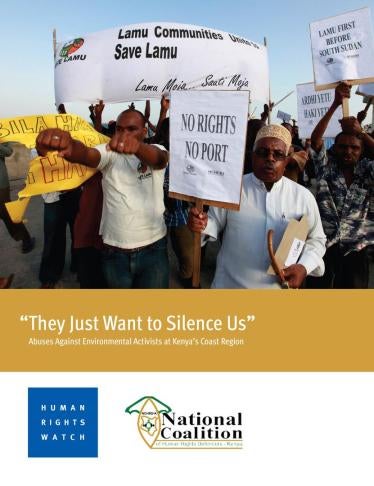
    Abuses Against Environmental Activists at Kenya’s Coast Region

    This report describes the context for activism around The Lamu Port-South Sudan-Ethiopia Transport corridor project (LAPSSET) and associated development projects, and documents the obstacles activists face in speaking out publicly about their concerns. At least 35 activists campaigning against the region’s mega infrastructure and transport projects have faced threats, beatings, arbitrary arrests, and detentions.

    map content
    Cover
  • December 10, 2018

    How the US Government’s Deregulation of Mountaintop Removal Threatens Public Health

    This report finds that Congress failed to mitigate health risks associated with this form of mining when it voted to roll back a modest regulation to protect streams from mining pollution. In reversing the regulation, Congress made it easier for the coal industry to destroy mountains and bury the waste rock in streams without monitoring or addressing the environmental impacts, while relying on a deeply flawed industry-funded study that was not subject to peer review. In addition, the Trump administration abruptly withdrew funding from a study that could have established broad consensus around the practice’s health impacts in an apparently deliberate effort to prevent important information regarding the health risks of mountaintop removal mining from coming to light. 

    map content
    video content
    Cover
  • October 4, 2018

    The Human Rights Impact of Bauxite Mining in Guinea

    This report focuses on two mining projects that were Guinea’s two largest bauxite producers in 2017: La Société Minière de Boké (SMB), a joint venture linked to the world’s largest aluminum producer, China Hongqiao Group, that has expanded extremely rapidly since it began in 2015; and la Compagnie des Bauxites de Guinée (CBG), a decades-old company co-owned by multinationals Alcoa and Rio Tinto. Guinea’s government, which has transformed Guinea into the world’s third-largest exporter, should take immediate steps to better regulate companies and protect communities.

    map content
    Cover
  • July 20, 2018

    The Failing Response to Pesticide Drift in Brazil’s Rural Communities

    This report documents cases of acute poisoning from pesticide drift in seven sites, located across Brazil, including farming communities, indigenous communities, quilombo (Afro-Brazilian) communities, and rural schools. Exposure occurs when pesticide spray drifts off target during application, or when pesticides vaporize and drift to adjacent areas in the days after spraying. 

    map content
    Cover