After the Storm
A new web feature looks at climate change, planned relocation, and people with disabilities in Siargao, Philippines.
This report is based on interviews with 40 victims of abuses, their family members, witnesses, victims’ lawyers, and other sources. Amnesty International and Human Rights Watch documented nine cases of arbitrary, prolonged detention of civilians by the Ukrainian authorities – including some cases of enforced disappearances – in informal detention sites and nine cases of arbitrary, prolonged detention of civilians by Russian-backed separatists. Most of the cases detailed in the report took place in 2015 and the first half of 2016.
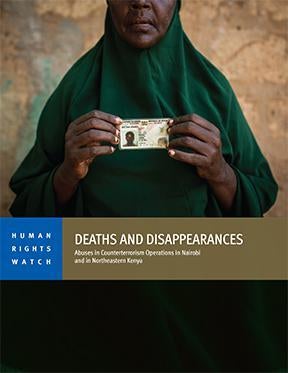
This report documents 34 instances in multi-agency security operations in which the military was actively involved in raiding homes and compounds to arrest people who were allegedly suspected of links with the armed Islamist group, Al-Shabab. But months, and in some cases over a year, later, suspects have not been charged with any crimes and families cannot locate them. In each case, although families reported the disappearance to the police and sought help from various authorities, the authorities failed to inform them of the detainees’ whereabouts or to properly investigate allegations of abuse.
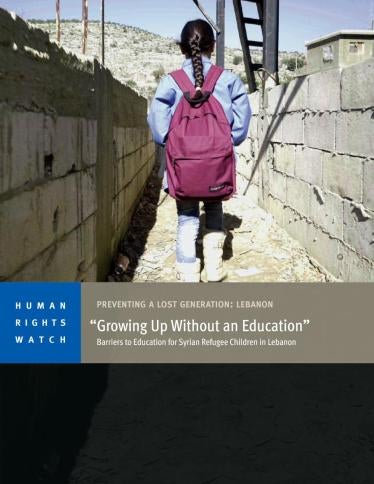
This report documents the important steps Lebanon has taken to allow Syrian children to access public schools. But Human Rights Watch found that some schools have not complied with enrollment policies, and that more donor support is needed for Syrian families and for Lebanon’s over-stretched public school system. Lebanon is also undermining its positive education policy by imposing harsh residency requirements that restrict refugees’ freedom of movement and exacerbate poverty, limiting parents’ ability to send their children to school and contributing to child labor. Secondary school-age children and children with disabilities face particularly difficult obstacles.
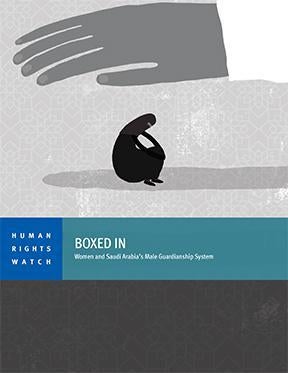
This report examines in detail the panoply of formal and informal barriers women in Saudi Arabia face when attempting to make decisions or take action without the presence or consent of a male relative. As one 25-year-old Saudi woman told Human Rights Watch, “We all have to live in the borders of the boxes our dads or husbands draw for us.” In some cases, men use the permission requirements to extort large sums of money from female dependents.
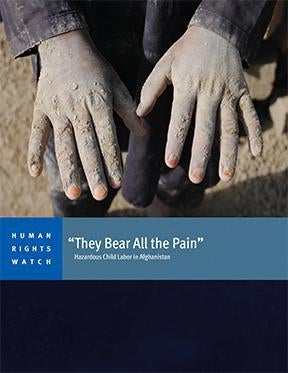
This report documents how child workers work dangerous jobs in Afghanistan’s carpet industry; as bonded labor in brick kilns; and as metal workers. They perform tasks that could result in illness, injury, or even death due to hazardous working conditions and poor enforcement of safety and health standards. Many children who work under those conditions combine the burdens of a job with school, or forego education altogether. Working compels many children in Afghanistan to leave school prematurely. Only half of children involved in child labor attend school.
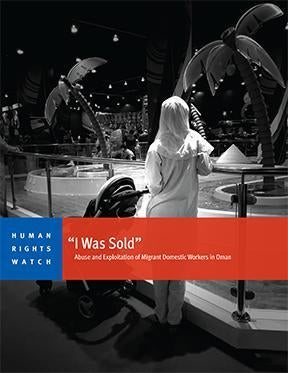
This report documents how Oman’s kafala(sponsorship) immigrant labor system and lack of labor law protections leaves migrant domestic workers exposed to abuse and exploitation by employers, whose consent they need to change jobs. Those who flee abuse – including beatings, sexual abuse, unpaid wages, and excessive working hours – have little avenue for redress and can face legal penalties for “absconding.” Families rely on migrant domestic workers to care for their children, cook their meals, and clean their homes. Yet many migrant domestic workers, who rely on their salaries to support their own families and children at home, face cruel and exploitative conditions.
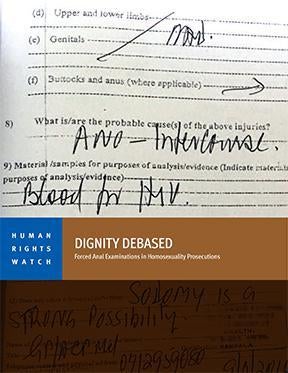
This report is based on interviews with 32 men and transgender women who underwent forced anal examinations in Cameroon, Egypt, Kenya, Lebanon, Tunisia, Turkmenistan, Uganda, and Zambia. The examinations, which have the purported objective of finding “proof” of homosexual conduct, often involve doctors or other medical personnel forcibly inserting their fingers, and sometimes other objects, into the anus of the accused. Victims of forced anal testing told Human Rights Watch that they found the exams painful and degrading; some experienced them as a form of sexual violence.
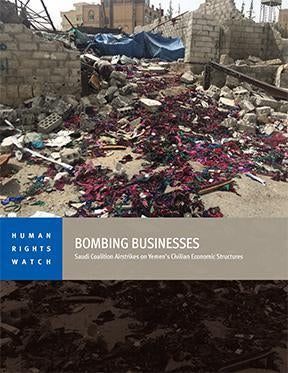
This report examines in detail 17 apparently unlawful airstrikes on 13 civilian economic sites, including factories, commercial warehouses, a farm, and two power facilities. These strikes killed 130 civilians and injured 171 more. Collectively, the facilities employed over 2,500 people; following the attacks, many of the factories ended their production and hundreds of workers lost their livelihoods. Further, with more than 20 million people in desperate need of humanitarian aid, the strikes on factories are contributing to the shortages of food, medicine, and other critical needs of Yemen’s civilians.
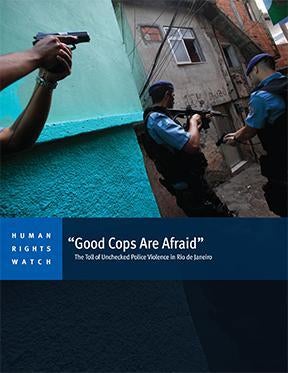
This report documents how unlawful police killings have contributed to the unraveling of the state’s ambitious efforts to improve public security.
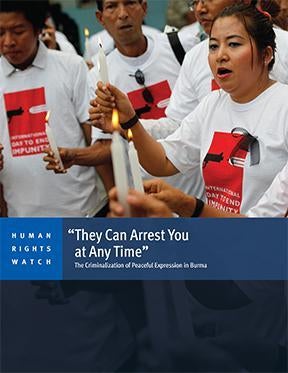
This report documents the use and abuse of a range of broad and vaguely worded laws to criminalize peaceful expression, including debates on matters of public interest, and provides specific recommendations for the repeal or amendment of those laws.
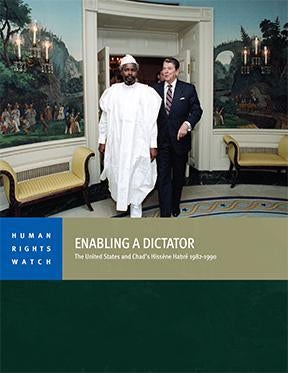
This report describes how France, and especially the United States, were pivotal in bringing Habré to power, although signs of his brutality were already evident. The two countries saw Habré as a bulwark against the expansionist designs of Libya’s Muammar Gaddafi, whose forces were occupying northern Chad. Human Rights Watch details how both the United States and France continued to provide Habré’s government with critical support, even as it committed widespread and systematic human rights violations.
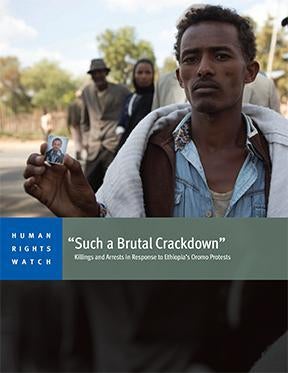
This report details the Ethiopian government’s use of excessive and unnecessary lethal force and mass arrests, mistreatment in detention, and restrictions on access to information to quash the protest movement. Human Rights Watch interviews in Ethiopia and abroad with more than 125 protesters, bystanders, and victims of abuse documented serious violations of the rights to free expression and peaceful assembly by security forces against protesters and others from the beginning of the protests in November 2015 through May 2016.
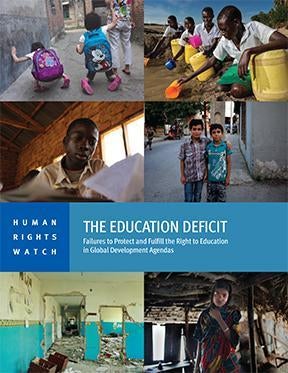
This report says that governments around the world made a commitment two decades ago to remove barriers to education for their children. But Human Rights Watch found that discriminatory laws and practices, high fees, violence, and other factors keep children and adolescents out of school in many countries. The report is based on Human Rights Watch research in more than 40 countries, covering nearly two decades. The United Nations Educational, Scientific and Cultural Organization, UNESCO, has reported that 124 million children and adolescents are out of school.
This report documents shortcomings in the system that prevent children from receiving the care guaranteed by international standards and Swedish law. Children endure long delays in the appointment of legal guardians to safeguard the child’s best interests and wait months before meeting with a social worker or healthcare provider. In some cases, the specific needs of girls are not sufficiently identified or addressed. Amid a backlog of cases, unaccompanied children face lengthy waits in processing their asylum applications.
This report documents the pressure families face to send children born with disabilities to large residential institutions, often far away from their homes, separating them from their families. There, children may experience neglect, inappropriate medication, and lack of privacy and have limited or no access to education.