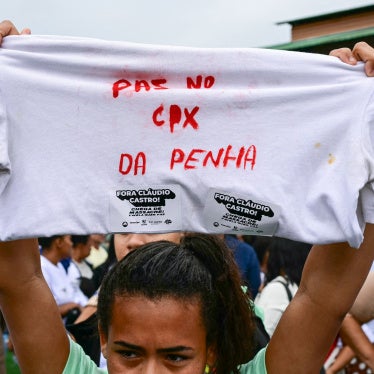
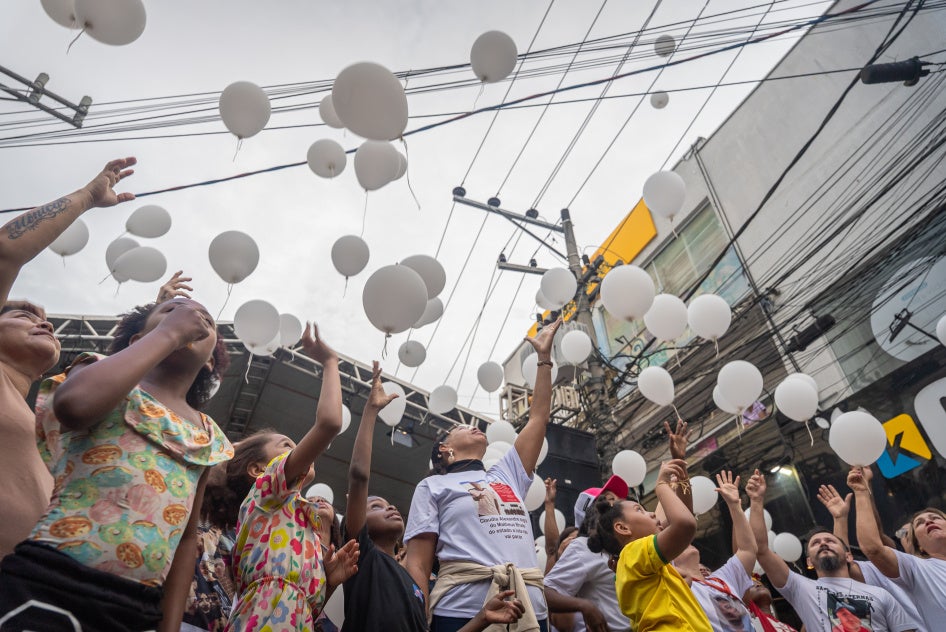
It takes a long time to read more than a hundred names. I stood holding a white balloon alongside the victims’ relatives, some wearing T-shirts bearing photos of their loved ones. The list went on and on. As Tauã Brito said name after name, as if reading tombstones, the scale of the tragedy hit me. Then she reached Wellington Brito Santos, her 20-year-old son. He, like the others, had been killed during a police operation on October 28, 2025.
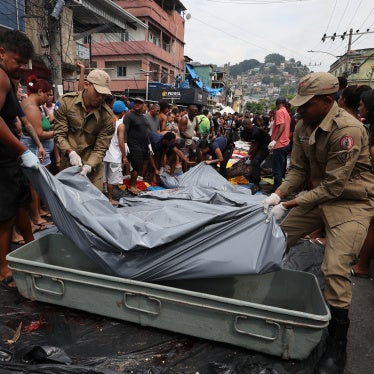
One year later, we stood at the very spot where residents had laid out dozens of bodies that police had abandoned in a forested area of Complexo da Penha, a cluster of favelas in Rio de Janeiro.
When she finished reading the names, we released our balloons. They rose past the tangle of utility wires overhead, above the narrow alleys of the favelas, toward the sky over Rio. Passionate locals call it the Cidade Maravilhosa, the Marvelous City.
A colleague asked me how I was doing. I started to cry.
It was a day of mourning for the senseless killing of 122 people, including two boys and five police officers, during the operation, and two others before it officially began. Their deaths had changed nothing in the favelas. My Human Rights Watch colleagues Sophia, Damir, Renata, and I attended the remembrance event, but we could not venture beyond Saint Luke Square. The same criminal group targeted by the raid continued to exert armed control over the neighborhood and subject residents to its tyranny.
Yet the event was also a celebration of hope and solidarity. Children bounced in small inflatable castles, had their faces painted, played foosball. People swung to rhythms rooted in traditions that enslaved Africans centuries ago had transformed into capoeira, a martial art, a dance, and an act of resistance.
“We decided to hold this celebration of life where the State gave us death,” Tauã Brito told me. “We ask that the State does not come just with armed force, but brings education, culture, recreation… Nothing will bring back my son, but I am here for the children who are still here.”
On the stage at Saint Luke Square, mothers of victims from other deadly police operations joined her and other women from Complexo da Penha. They all demanded justice.