(Bangkok) – Thai authorities should not forcibly return two Uyghur men to China, where they face grave risks of torture and other serious abuses, Human Rights Watch said today. The two men, whose names are not public for security reasons, were transferred from prison to immigration detention in Bangkok after receiving a royal pardon, apparently in preparation for deportation.
“Previous Thai governments have kept Uyghurs in inhumane detention for years and then complied with Beijing’s demands to send them to China, where they were forcibly disappeared,” said Elaine Pearson, Asia director at Human Rights Watch. “Thai Prime Minister Anutin Charnvirakul should end forced returns to China and allow the two Uyghur men to travel to a safe third country.”
The two Uyghur men have been detained by Thai authorities since 2014, when one of them was only 14 years old. They were serving a prison sentence for offenses related to an escape attempt from immigration detention in January 2020. On October 21, 2026, the authorities transferred them from Bangkok Central Prison to the Bangkok Immigration Detention Center Suan Phlu after they had served most of their seven-year sentence. Thai Foreign Ministry officials told a parliamentary committee that in August the Chinese embassy in Bangkok demanded their return to China.
Under Thai immigration law and regulations, the two Uyghur men will be deported to China unless they object to the deportation and are resettled to a third country. Lawyers representing them told Human Rights Watch that they have already informed Thai authorities that the two do not consent to be sent to China. Thai immigration authorities have repeatedly refused to allow the United Nations refugee agency (UNHCR) access to the men to determine their refugee status.
The Thai government is obligated to respect the international law principle of nonrefoulement, barring anyone’s forcible return to a place where they would face a genuine risk of persecution, torture or other ill-treatment, or a threat to their life or other comparable serious human rights violations. Refoulement is prohibited by the UN Convention Against Torture, to which Thailand is a party, as well as customary international law. Thailand’s Prevention and Suppression of Torture and Enforced Disappearance Act prohibits deportation when there is a substantial risk of torture or ill-treatment.
In March 2014, Thai police in Songkhla province, near the Malaysia border, arrested about 220 Uyghur men, women, and children, charged them with immigration violations, and soon after transferred them to an immigration detention facility in Bangkok. In several separate incidents around the same period, the authorities arrested dozens of other Uyghurs and placed them in immigration detention facilities around the country. In July 2015, about 170 of the Uyghur women and children detained in Songkhla were released to Turkey. A week later, however, the Thai authorities forcibly transferred over 100 Uyghur men to Chinese authorities, who flew them to China.
On February 27, 2025, Thai authorities took 40 Uyghur men from immigration detention and forcibly returned them to China. Upon the men’s return, the Thai authorities participated in a Chinese government-organized propaganda trip to show some of these men with their families. Despite promises by the Thai and Chinese authorities, there has been no credible monitoring of those Uyghurs since their return.
UN human rights experts issued a statement on the one-year anniversary of the deportation and said the families of returnees “have received no communication, no confirmation of the place of detention or whereabouts, and no indication as to whether their loved ones are even alive.”
Following the deportation, UN High Commissioner for Human Rights Volker Türk said in February 2025 that it was “a clear violation of international human rights laws and standards,” and urged Thai authorities to “ensure there are no further deportations and the remaining members of the group, including potential refugees and asylum-seekers, being held in Thailand are fully protected in accordance with their obligations under international law.”
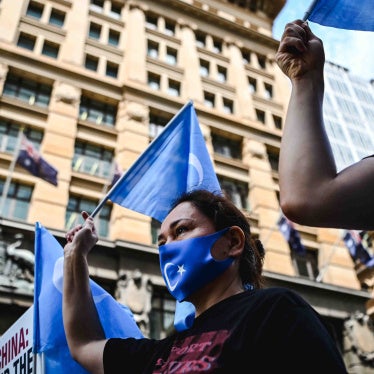
Uyghurs are Turkic-speaking Muslims, most of whom live in the Xinjiang Uyghur Autonomous Region in China’s northwest. Over the past 10 years, China’s repression of Uyghurs has increased significantly as the authorities have intensified a widespread and systematic campaign of human rights abuses against them, several amounting to crimes against humanity.
The authorities have subjected the population to arbitrary detention, unjust imprisonment, mass surveillance, forced labor, cultural and religious persecution, and severe movement restrictions. Uyghurs considered to have left China illegally are, if forcibly returned, viewed with intense suspicion and subject to arbitrary detention, interrogation, torture, and other cruel, inhuman, and degrading treatment.
“Prior to the UN Human Rights Council’s review of Thailand’s human rights record on November 9, governments should press Thailand to immediately end its abusive treatment of Uyghurs,” Pearson said. “The Thai authorities should be protecting Uyghurs fleeing persecution, not jailing them, and certainly not returning them to harm’s way.”