To Permanent Representatives of Member and Observer States of the United Nations (UN) Human Rights Council (Geneva, Switzerland)
8 October 2026
Ethiopia: The Human Rights Council should convene a special session to address the quickly deteriorating human rights situation and prevent further atrocity crimes
Excellencies,
As armed hostilities have resumed on a large scale in Ethiopia, with risks of repetition of the atrocity crimes documented during the 2020-2022 conflict, we, the undersigned civil society organisations, urge the Human Rights Council to urgently convene a special session on the human rights impact of the conflict. At the session, we urge the adoption of a resolution requesting the Council’s President to appoint an advisory panel of experts, drawn from the pool of existing independent UN and African human rights experts, to undertake a swift assessment, compile a summary report, and make recommendations on steps the Council could take to address the human rights situation in Ethiopia.
The Council should stand ready to take further action, as appropriate, to address any developments in Ethiopia or the sub-region, send a message of deterrence to all actors, and indicate that those responsible for perpetrating, ordering or facilitating violations should be held accountable.
~ ~ ~
On 22 September 2026, after long-simmering tensions between the Ethiopian Federal Government led by Prime Minister Abiy Ahmed and the Tigray People’s Liberation Front (TPLF) escalated from sporadic clashes and airstrikes to open military confrontation, fighting resumed on a large scale and spread to the Afar and Amhara regions in northern Ethiopia.
Heavy fighting, involving the use of drone strikes, mortar strikes and artillery fire, including indiscriminate airstrikes in populated areas and on civilian infrastructure that may amount to war crimes, is pitting federal forces, the Ethiopian National Defence Force (ENDF), and allied forces against not only the TPLF’s Tigray Defence Force (TDF) but other regional armed groups, including the Amhara Fano militia and the Oromo Liberation Army (OLA), both of which formed an alliance with TPLF and other regional groupings to topple the federal government. Renewed hostilities are also occurring amid the backdrop of ongoing conflict in the Amhara and Oromia regions.
At the time of writing, fighting and airstrikes were ongoing in Tigray, including near camps for internally displaced persons in central Tigray, and northern Amhara. ENDF and pro-government forces also reportedly captured several towns, including the regional capital, Mekelle. On 1 October, blasts were reported in Addis Ababa after Ethiopia’s National Intelligence and Security Service (NISS) declared a ban on operating drones and other flying objects in the capital.
This significant escalation means that the Cessation of Hostilities Agreement (CoHA) signed in Pretoria in November 2022 between Ethiopia’s Federal Government and the TPLF, has effectively collapsed. The escalation occurred against a backdrop of geopolitical tensions that led to the cutting of diplomatic ties between Eritrea and Ethiopia. Observers point to the role of external actors and the risk of a regional conflict threatening to destabilise the entire Horn of Africa sub-region, as well as the Red Sea area.
The conflict is exacerbating the already dire humanitarian situation in northern Ethiopia due to disruptions to essential services and supply routes, including access to health care, Internet and communication services, air travel, and banking services (including cash and mobile banking, as well as remittances, on which many depend for survival). During the 2020-2022 war, the Ethiopian Government deliberately obstructed commercial and humanitarian supplies, shut down banks, and imposed an effective siege on Tigray.
Communication disruptions and access restrictions in conflict-affected areas are occurring alongside severe civic space restrictions in Ethiopia, including government attacks against journalists, media workers, human rights defenders, and other independent actors who could report on the situation.
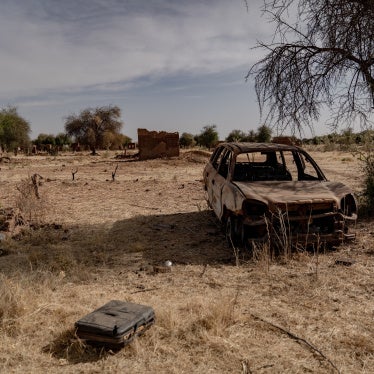
The previous conflict was marked by atrocity crimes, massacres of civilians and other unlawful killings, widespread conflict-related sexual and reproductive violence, attacks on health, forced displacement, and ethnic cleansing, with estimates of a death toll of up to several hundred thousand.
There has been no accountability for the grave crimes committed, including because the federal government has largely shelved its transitional justice process and the Human Rights Council terminated the mandate of the International Commission of Human Rights Experts on Ethiopia (ICHREE) it had established, despite warnings by the mechanism of acute risks of further atrocities. Impunity for these crimes points to grave risks for civilians, including of new atrocities.
The UN Secretary-General, the High Commissioner for Human Rights, and the African Union (AU) have all expressed alarm about the situation and urged restraint, de-escalation and civilian protection.
~ ~ ~
The situation in Ethiopia requires the international community’s urgent attention and close scrutiny by regional and UN human rights bodies and mechanisms. In line with its prevention mandate and its responsibility to respond promptly to human rights emergencies and address gross and systematic violations, and given the sharp deterioration of the situation on the ground, the Human Rights Council should act before its next regular session, which is scheduled for February 2027.
The Human Rights Council should urgently convene a special session on the human rights impact of the conflict in Ethiopia and adopt a resolution that, among other things:
- Condemns all violations and abuses of human rights and violations of international humanitarian law committed in Ethiopia;
- Requests the President of the Human Rights Council, following consultations with relevant stakeholders, including the Coordination Committee of Special Procedures, to appoint on the most expeditious basis possible an advisory panel of three independent human rights experts, drawn from the pool of existing experts from the United Nations special procedures and African Commission on Human and Peoples’ Rights special mechanisms:
- To swiftly undertake an assessment of violations and abuses of human rights and violations of international humanitarian law committed in Ethiopia by all parties to the conflict since August 2026, with a view to preventing a further deterioration of the human rights situation;
- To prepare a summary report outlining the human rights impact of the conflict in Ethiopia and setting out recommendations to the warring parties, relevant States, and the Human Rights Council, to be presented during an inter-sessional briefing convened by the President of the Council before 31 January 2027;
- To engage with the Ethiopian authorities and all other relevant stakeholders and to ensure the complementarity and coordination of this effort with other efforts of the United Nations, the African Union, and other regional and international entities; and
- To make recommendations on steps the Human Rights Council could take to address the human rights situation in Ethiopia, taking into consideration the findings and recommendations of the International Commission of Human Rights Experts on Ethiopia, including those outlined in report A/HRC/54/55, as well as the panel of experts’ own findings, including on supporting further investigations, evidence collection and preservation, identification of those responsible for violations, ending impunity and addressing its root causes, and ensuring accountability for all violations and abuses.
- Requests the advisory panel of experts to keep the Human Rights Council updated on the situation in Ethiopia by holding urgent inter-sessional briefings as necessary and advising the Council’s President, Member and Observer States on the need for any additional urgent meetings or actions;
- Decides to convene an enhanced interactive dialogue on the human rights situation in Ethiopia, to be held at its 64th regular session, with the participation of a representative of the advisory panel of experts, the High Commissioner for Human Rights, the Special Adviser of the Secretary-General for the Prevention of Genocide, representatives of the African Union or the African Commission on Human and Peoples’ Rights, and civil society;
- Encourages the High Commissioner to resume public reporting on the human rights situation in Ethiopia, in accordance with his global mandate and the mandate of his office in Addis Ababa;
- Requests that the advisory panel of experts be provided with all necessary resources to fulfil this mandate, including by the Office of the High Commissioner for Human Rights;
- Requests the Government of Ethiopia to facilitate access to the country for the experts; and
- Makes clear that the Council will stand ready to take further action to prevent human rights violations and abuses and violations of international humanitarian law in Ethiopia, including the risk of atrocity crimes, and take steps to ensure accountability for past and ongoing violations.
We thank you for your attention to these pressing issues and stand ready to provide your delegation with further information as required.
Sincerely,
- AfricanDefenders (Pan-African Human Rights Defenders Network)
- Africans for the Horn of Africa Initiative (Af4HA)
- Amnesty International
- Atrocities Watch Africa (AWA)
- Bridge Social Development Organization
- Burkinabè Human Rights Defenders Coalition (CBDDH)
- CIVICUS: World Alliance for Citizen Participation
- Coalition for Genocide Response
- CSW (Christian Solidarity Worldwide)
- DefendDefenders (East and Horn of Africa Human Rights Defenders Project)
- Extending Access and Systems Enhancement (EASE)
- Gender Empowerment Movement Tigray (GEM Tigray)
- Global Centre for the Responsibility to Protect (GCR2P)
- Health Professionals Network for Tigray (HPN4T)
- Humanists International
- Human Rights Watch
- International Bar Association’s Human Rights Institute (IBAHRI)
- International Federation for Human Rights (FIDH)
- International Press Institute
- International Service for Human Rights (ISHR)
- Irob Anina Civil Society (IACS)
- Ivorian Human Rights Defenders Coalition (CIDDH)
- Lawyers’ Rights Watch Canada
- Legacy Tigray Advocacy Group (LTAG)
- Legal Action Worldwide (LAW)
- Media Institute for Democracy and Human Rights (IM2DH) – Togo
- Movimento Internazionale della Riconciliazione – Mir Italy (Italian branch of International Fellowship of Reconciliation)
- Network of Human Rights Defenders in Central Africa (REDHAC)
- Network of the Independent Commission for Human rights in North Africa (CIDH AFRICA)
- Nigerien Human Rights Defenders Network (RNDDH)
- Omna Tigray
- Physicians for Human Rights
- Tghat
- Tigray Accountability Coalition (TAC)
- Togolese Human Rights Defenders Coalition (CTDDH)
- Vox Tigray for Journalists and Media