Nothing inherent in children’s development explains why their right to education should be more or less accessible depending on whether they are 4, 8, or 16. Yet international law treats financial barriers to education as more or less problematic depending on their stage of childhood. For primary education, the obligation to remove fees is clear and urgent. For secondary education, it is weaker and easier to postpone. For pre-primary education, there’s largely silence.
This uneven approach, arbitrary on its face, is one reason why states are considering a new Optional Protocol to the Convention on the Rights of the Child. The protocol would guarantee free public pre-primary and secondary education, and recognize early childhood care and education as part of the right to education.
During the treaty’s first negotiations last year, some worried it could cause fragmentation in international law. But international law already takes a fragmented approach to free education, depending on the child’s age, the treaty — or treaty body — invoked, and where the child lives. When governments meet again in Geneva starting August 31, they should view an Optional Protocol as an opportunity to bring clarity, coherence, and urgency to a legal framework that leaves many children unable to access a supposedly universal right.
Guaranteeing free education is not some fiscal recommendation about optimal government spending. It reflects core human rights principles. Fees undermine equality, expose children to exploitation and child marriage, increase dropouts, constrain girls’ education, exacerbate gender disparities, and entrench poverty. A protocol on free education would not fragment the interdependence of rights but strengthen the enabling conditions for the Convention on the Rights of the Child’s wider realization.
Free Education Entered International Law Piecemeal
Post-First-World-War “Minority Treaties” promised certain racial, religious, and linguistic minorities in some European countries equal rights to establish their own schools and, where they formed a significant portion of the population, an equitable share of public educational funds.
The 1948 Universal Declaration of Human Rights declared that education “shall be free, at least in the elementary and fundamental stages.” It is the only human right listed with a price tag in the world’s postwar promise of human dignity.
Binding obligations followed unevenly through the 1960 UNESCO Convention against Discrimination in Education, the 1966 International Covenant on Economic, Social and Cultural Rights (ICESCR), and the 1989 Convention on the Rights of the Child (CRC).
All three treaties guarantee free primary education, but beyond that they diverge. The UNESCO Convention makes no explicit reference to free secondary education. Under ICESCR, secondary education must be made generally available and accessible to all, “in particular by the progressive introduction of free education.” That formulation points toward an endpoint, if not a deadline.
The CRC is weaker: states are to “encourage” secondary education, with free provision as one possible means. During the treaty’s drafting, some states expressed reluctance to be bound to fully fund secondary education. Thus the treaty leaves, as Japan insisted, free education as merely one option for making education accessible, not a measure states were obliged to adopt.
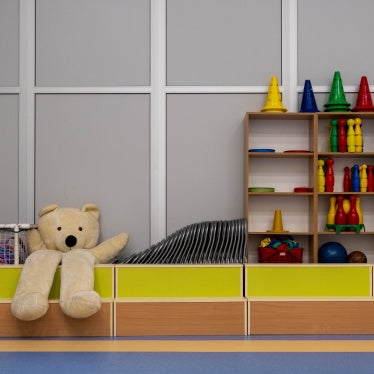
Early education is the striking omission. None of these treaties explicitly name early childhood or pre-primary education, let alone require it to be free. During drafting of the CRC, Venezuela and UNESCO proposed addressing pre-school education, but failed to gain support.
Fragmentation is Also Temporal
The resulting hierarchy of urgency is difficult to defend: free primary education is part of the minimum core obligation of the right to education; secondary is progressively free, at least as one option; and pre-primary is left to benevolence, interpretation, and policy development.
Progressive realization once made sense. When the Universal Declaration of Human Rights proclaimed “everyone has a right to education,” only half the world’s children attended primary school. Resources vary, and implementation takes time.
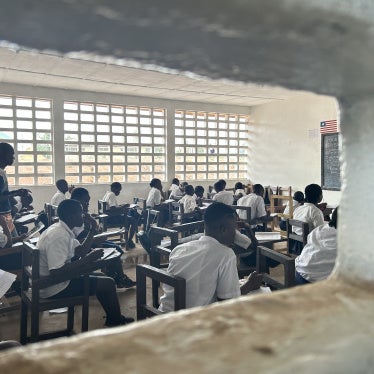
But progressive realization can become a holding pattern, and it assumes that governments will expand rights as wealth grows. While this may be a general pattern, the approach by states is also idiosyncratic. Today, Sierra Leone, one of the world’s lowest-income countries, and Japan, one of its highest, both offer free secondary education for all. Sierra Leone introduced it in law in 2023, Japan promised it in 2025. This illustrates how children everywhere could benefit from clearer guidance in international law.
Treaty Bodies Stepped In
Where treaty language is cautious, accountability tends to be cautious too. Treaty bodies can nudge states forward, but their recommendations must hew close enough to the instruments they interpret to retain legitimacy.
The CRC committee illustrates this dilemma. Its 2005 General Comment on early childhood recognized “with appreciation” that some states make one year of preschool education free, but offered no obligation or timeline for others.
In 2013, the committee declared it in “the best interests of the child to have access to quality education, including early childhood education…free of charge.” Yet neither states nor the committee have treated this as imposing an obligation to provide free early childhood education, perhaps reflecting the treaty’s mandate that a child’s best interests be a primary — but not necessarily the only — consideration for legislative action.
Secondary education shows the same difficulty. A 2016 draft of the CRC committee’s General Comment on adolescence proposed urging states to “introduce compulsory free secondary education for all as a matter of urgency.” The final version, however, merely urged “widely available secondary education for all as a matter of urgency.” They sped-up the timetable, but hedged on the destination.
Other treaty regimes have also been unable to solve the fragmentation problem. The Convention on the Rights of Persons with Disabilities requires access to “inclusive, quality and free primary education and secondary education on an equal basis.” The missing comma before “and secondary education” enticed its committee to read the provision as requiring “States parties must progressively adopt measures to ensure that all children, including children with disabilities, complete free, equitable, and quality secondary education.” The result is a delight for punctuation aficionados, but a poor substitute for clear law.
The Committee on the Elimination of Discrimination Against Women—whose treaty guarantees women equal rights with men in education, but does not explicitly mention free education—boldly called for “universal, free and compulsory education from preschool to secondary school, regardless of socioeconomic status, for citizens…as well as for girls and women with migrant or refugee status.” This approach reflects where the law maybe should be — but not, perhaps, where states have agreed that it is.
Whether children’s right to education means free education depends partly on which treaty body is speaking, which right-holder is foregrounded, and how much interpretive work can credibly be done from language that states have declined to make explicit.
Regional Systems Bring More Fragmentation
In parts of Europe, children have a regional guarantee of free primary and secondary education. In the Americas, the Protocol of San Salvador requires the progressive introduction of free secondary education, and in 2025 the Inter-American Court said states should progressively increase early childhood education coverage. The African Charter on the Rights and Welfare of the Child requires free basic education and progressive free secondary education, and its committee recently clarified that African countries should guarantee at least one year of free pre-primary education, and include early childhood development “as part of basic education.” The Arab Charter guarantees free education through the “primary and basic levels,” but leaves the length undefined, and limits it only to “citizens;” a significant restriction for a universal human right.
In Asia and the Pacific, children have no comparable regional legally binding framework.
Children’s entitlement to free education therefore also depends on whether they live in China, Honduras, Iraq, Liberia, or Denmark. That, too, is fragmentation.
An Optional Protocol Would Bring Coherence
A well-drafted optional protocol would harmonize this landscape.
International law has done this before. The CRC’s Optional Protocol on children in armed conflict, which raised the minimum age of compulsory conscription to 18, did not fragment the Convention simply because article 38 already addressed children in armed conflict. It strengthened a standard that had become unacceptable.
The same logic applies here. The issue is not whether education is already a right. It is that the current framework does not provide children, parents, policymakers, legislators, courts, treaty bodies, and advocates a clear enough standard regarding the obligation to remove cost barriers that exclude children from early learning and secondary education.
UNESCO and UNICEF have recommended that a new, legally binding international framework establishing the right to early childhood care and education would promote greater accountability and monitoring, and ensure countries allocate the resources needed to make it happen.
Eliminating fees alone won’t deliver universal enrollment. Ongoing implementation of existing regimes remains essential. But stronger implementation and clearer law are not competing goals; they reinforce one another. Focusing only on implementing current standards leaves millions of children insufficiently protected.
A new protocol would create one global standard acknowledging the indispensable importance of every child’s access to free education throughout childhood.