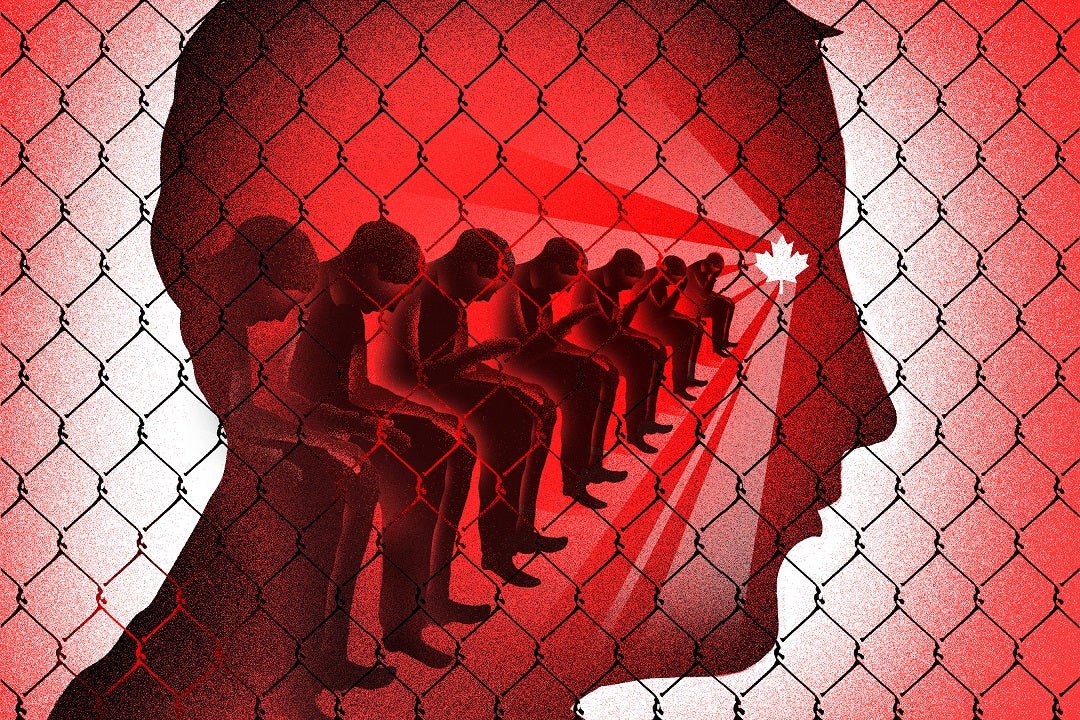
Canada Takes Important Step to End Water Crisis
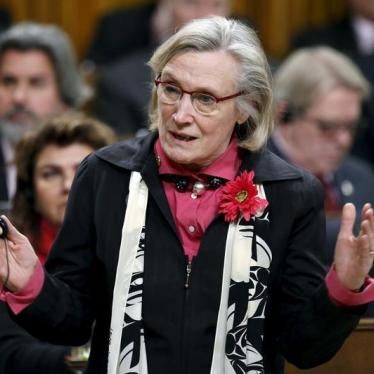
Canada has unveiled a new approach to fixing the drinking water crisis faced by indigenous First Nations peoples.
Human Rights Watch is one of the world’s leading independent organizations dedicated to protecting the human rights of people around the world. In 2002 Human Rights Watch Canada was established to advance education on human rights issues both in Canada and around the world, and to increase support for the work of Human Rights Watch worldwide.
The Canadian office organizes several larger public and smaller private events throughout the year. This includes our Annual Toronto Human Rights Watch Film Festival, which demonstrates the power of film in raising awareness of human rights issues across the globe, and our Voices for Justice Dinner that celebrates human rights champions for their courageous activism.
We also engage with Canadian decision-makers in government and in other sectors as part of the organization’s advocacy work. If you are interested in learning more about our local activities, please contact the Toronto office at canada@hrw.org
Également, vous pouvez envoyer un courriel à notre bureau en français. Nos rapports canadiens sont publiés dans les deux langues. Notez les options de langue sur chaque page de rapport.
Human Rights Watch is a nonprofit, nongovernmental human rights movement with a network of affiliates and offices around the globe. It includes roughly 400 staff members who are human rights professionals, including country experts, lawyers, journalists, and academics of diverse backgrounds and nationalities.
Established in 1978, Human Rights Watch is known for its accurate fact-finding, impartial reporting, effective use of media, and targeted advocacy, often in partnership with local human rights groups. Each year, Human Rights Watch publishes more than 100 reports and briefings on human rights conditions in some 90 countries, generating extensive coverage in local and international media. With the leverage this brings, Human Rights Watch meets with governments, the United Nations, regional groups like the African Union and the European Union, financial institutions, and corporations to press for changes in policy and practice that promote human rights and justice around the world. Would you be interested in finding out more about Human Rights Watch research on Canada, please go to the Canada country research page.
Investigate. Human Rights Watch is committed to systematically researching and analysing human rights conditions worldwide in order to uncover abuses. Researchers interview leaders, victims and witnesses so that they can form an accurate picture of what happened. They also review media and academic reports, domestic and international law and policy papers to gain a further understanding of the situation.
Expose. Human Rights Watch researchers publish their findings in the form of reports and articles. These are then made accessible to the public as well as local authorities in order to raise awareness of the abuses. The publications are available in multiple languages and formats and are often referenced in news articles worldwide.
Change. Following the identification and publication of human rights abuses, Human Rights Watch’s advocacy division work closely with local authorities and organisations in order to demand accountability and put an end to the abuses that they have discovered. The ultimate goal of Human Rights Watch is to ensure that human rights are upheld worldwide and to promote justice and change.
Human Rights Watch is an independent, nongovernmental organization, supported by contributions from private individuals and foundations worldwide. To ensure our independence, we do not accept government funds, directly or indirectly. Donations made in Canada benefit our work worldwide.
DONATE NOW
Canadian Registered Charity
Every registered charity is issued a nine-digit business number, with a program identifier of RR, and a four-digit reference number.
Human Rights Watch Canada's Charitable Registration number is 836252544 RR0001.
The charity's registration number must be written in full on all official donation receipts and must include the business number, the proper program identifier (RR), and the reference number.
Ahmad Attia
Deane Collinson (Chair)
Marusya Lazo
Maryse Roy (Treasurer)
Bruce Simpson
Visit the Canada Board and Committee page for further information.
Canada has unveiled a new approach to fixing the drinking water crisis faced by indigenous First Nations peoples.
Adult women in Saudi Arabia must obtain permission from a male guardian to travel abroad, marry, or be released from prison. These restrictions last from birth until death, as women are, in the view of the Saudi state, permanent legal minors. Read more >
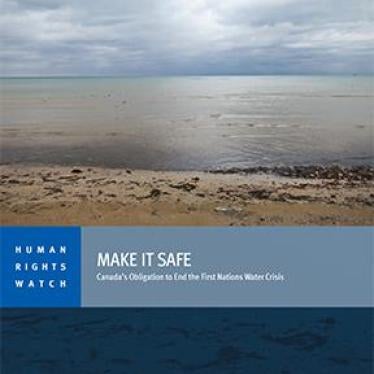
This report documents the impacts of serious and prolonged drinking water and sanitation problems for thousands of indigenous people – known as “First Nations” – living on reserves. It assesses why there are problems with safe water and sanitation on reserves, including a lack of binding water quality regulations, erratic and insufficient funding, faulty or sub-standard infrastructure, and degraded source waters. The federal government’s own audits over two decades show a pattern of overpromising and underperforming on water and sanitation for reserves.
Thursday October 29, 6:30-8 pm
The Gardiner Museum | 111 Queen’s Park, Toronto
Prchase Tickets: $15 General | $10 Gardiner Members
Amanda Klasing, Senior Researcher in the Women’s Rights Division at Human Rights Watch presents a talk about the human rights to water and sanitation and their intersectionality with the rights of indigenous women.
Following the lecture there will be a screening of the VICE Documentary Canada’s Waterless Communities: Neskantaga, introduced by VICE News Producer Allya Davidson.
The lecture and screening are presented in conjunction with the Gardiner Museum's special exhibition Kent Monkman: The Rise and Fall of Civilization.
***
Amanda Klasing is a senior researcher in the women’s rights division at Human Rights Watch. Her work focuses on sexual and domestic violence, reproductive rights, and economic and social rights. She is a specialist in the rights to water and sanitation.
Amanda has carried out a research and advocacy on a number of human rights issues including: the rights of women and girls in Haiti after the earthquake; sexual violence and other forms of violence against women displaced by conflict in Colombia; and the rights to water and sanitation in schools. Most recently, Amanda has been conducting research on the rights to water and sanitation in First Nations communities in Ontario for a report to be published in early 2016.
Amanda has been published in peer-reviewed journals on the right to water and on human rights and humanitarian response, and she is a contributing author of an academic book on health and human rights. Her op-eds have run in Jurist, The Hill, and the Huffington Post. She has made radio and TV appearances on outlets including the BBC, CCTV, and CNN Spanish.
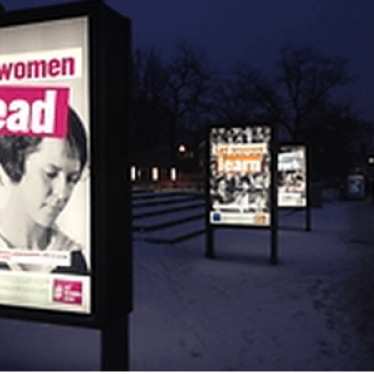
The Gardiner Museum - Women, Art, and Social Change: The Newcomb Pottery Enterprise
Wednesday, March 11, 2015 | 6:30 - 8:00 PM | 111 Queen's Park
One in seven people worldwide lives with a disability. Yet, despite their numbers, people with disabilities - particularly women - remain invisible: neglected, abused and isolated, facing insurmountable obstacles to accessing justice and equal rights. Shantha Rau Barriga, Director of Disability Rights at Human Rights Watch, will share her experiences documenting violence against women and girls with disabilities in different parts of the world and some of the efforts underway to give these women a voice.
$10 Gardiner Members / $15 General, Call 416.586.8080 for tickets or get them online at gardinermuseum.com
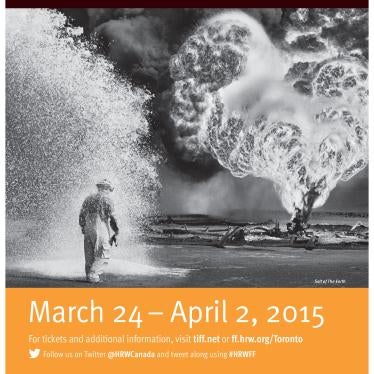
Please join us for the 12th annual Toronto Human Rights Watch Film Festival, taking place at the TIFF Bell Lightbox from March 24 to April 2, 2015.
Human Rights Watch is one of the world’s leading independent organizations dedicated to defending and protecting human rights. We work tenaciously to lay the legal and moral groundwork for deep rooted change and fight to bring greater justice and security to people around the world.
Through our Human Rights Watch Film Festival, we bear witness to human rights violations and create a forum for courageous individuals on both sides of the lens to empower audiences with the knowledge that personal commitment can make a difference. The film festival brings to life human rights abuses through storytelling in a way that challenges each individual to empathize and demand justice for all people.
For complete film descriptions, visit: http://ff.hrw.org/toronto.
Thurs., Jan. 29, 2015 | 6:00 – 8:00pm | Campbell Conference Facility | 1 Devonshire Place | Munk School for Global Affairs | University of Toronto
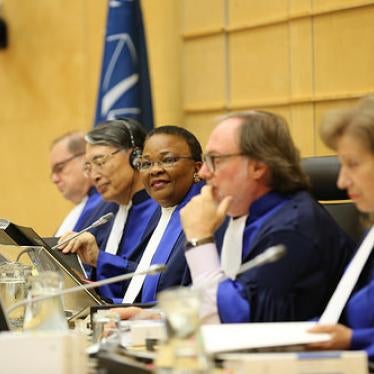
Join us for an intimate conversation with James Stewart (LLB75), Deputy Prosecutor of the International Criminal Court, & Richard Dicker, Director of International Justice Program, HRW.
Just over 10 years after the ICC began hearing cases, two of the world’s most prominent international lawyers will discuss the Court’s successes and ongoing challenges. They will address the jurisdictional limitations that impede the Court’s engagement in Syria, explore whether the Court promotes “victor’s justice” or “selective justice,” and debate whether peace and justice can co-exist.
6-8 PM | Alumni Hall, Victoria College | University of Toronto | 73 Queens Park Cres. E. | RSVP: canada@hrw.org
Join us for the release of our report focusing on the LGBT community in Jamaica and discussion of opportunities for Canadians to respond. Featuring: Graeme Reid, LGBT Director and Rhon Reynolds, LGBT Researcher.
LGBT Jamaicans face an intolerable level of violence, both physical and sexual, perpetrated on the basis of actual or perceived sexual orientation or gender identity. Police investigations into such violence are often inadequate or lacking altogether. This report documents cases of such violence, in addition to cases of discrimination from government institutions, including healthcare facilities, as well as in the private sector.
Wednesday, September 17, 2014
11:30 AM – 2:00 PM
E-Team screening at 2:00pm
Please join Human Rights Watch for this unique Inform & Inspire session.
Learn about our work, hear from our researchers and stay for an optional screening of the critically acclaimed documentary, the E-Team.
Bloor Hot Docs Cinema
506 Bloor Street West, Toronto, ON
Fee $50 (includes a box lunch)
For tickets & more information, please contact the HRW Canada office at 416.322.8448 or canada@hrw.org
Presentations By:
FRED ABRAHAMS, Special Advisor
AMANDA KLASING, Women’s Rights Researcher
SAMER MUSCATI, Emergencies Researcher
MEGHAN RHOAD, Women’s Rights Researcher
MAY 8–MAY 31, 2014
OCAD U Student Gallery, 52 McCaul Street, Toronto, Ontario
For more than five years, Human Rights Watch researcher Samer Muscati has been documenting some of humanity’s darkest acts, focusing his attention on the violation of the rights of women and girls around the world. Increasingly, he has explored photography’s capacities to expand our understanding of the plight and perseverance of others.
Gathering the testimony of his subjects is often harrowing, and Muscati has found the medium invaluable in processing his experience, and connecting with his subjects. This exhibition pulls together the highs and lows Muscati has borne witness to, offering a moving account of the shifting fates of women and girls in a period of profound global transition.
Through our Human Rights Watch Film Festival we bear witness to human rights violations and create a forum for courageous individuals on both sides of the lens to empower audiences with the knowledge that personal commitment can make a difference. The film festival brings to life human rights abuses through storytelling in a way that challenges each individual to empathize and demand justice for all people. It begins on Tuesday, February 26 and runs through Thursday, March 7 at the TIFF Bell Lightbox.