Reports

Obstetric Violence in Sierra Leone

The 75-page report, “No Money, No Care: Obstetric Violence in Sierra Leone,” documents cases of verbal abuse, medical neglect, and abandonment of women and girls facing serious obstetric complications, practices that experts interviewed say are common. Many women interviewed said they were shamed and mistreated by healthcare providers for expressing pain, needing help, or for not having enough money to pay fees. Others described humiliating experiences in which healthcare providers treated them brusquely or withheld important health information. Some cases documented constitute obstetric violence, a largely unaddressed form of gender-based violence prevalent across the world.

Pregnant women sit in the waiting area at the pre-natal clinic of the Princess Christian Maternity Hospital
A woman looks out of the window of a damaged building

Search

  • April 20, 2017

    The Need for Supply Chain Transparency in the Garment and Footwear Industry

    This report comes just ahead of the fourth anniversary of the Rana Plaza building collapse disaster in Bangladesh. It calls for companies to adopt the Apparel and Footwear Supply Chain Transparency Pledge. Companies that align with the pledge agree to publish information identifying the factories that produce their goods, addressing a key obstacle to rooting out abusive labor practices across the industry and helping to prevent disasters like the Rana Plaza collapse.

    Cover of the global Transparency report
  • February 14, 2017

    Barriers to Secondary Education in Tanzania

    This report examines obstacles, including some rooted in outmoded government policies, that prevent more than 1.5 million adolescents from attending secondary school and cause many students to drop out because of poor quality education. The problems include a lack of secondary schools in rural areas, an exam that limits access to secondary school, and a discriminatory government policy to expel pregnant or married girls.

    photo gallery
    map content
    Cover for Tanzania Education Report
  • January 24, 2017

    Violations of Property and Inheritance Rights of Widows in Zimbabwe

    This report found that in-laws often tell women shortly after the deaths of their husbands that the relatives intend to take over the homes and lands or other property where the husband and wife had lived for decades. One widow quoted her brother-in-law’s words to her after her husband’s funeral, in front of the family that had gathered: “He said in my face, ‘You are rubbish and you will get nothing. I am taking everything.’”

    map content
    video content
    Cover of the Zimbabwe report
  • September 8, 2016

    Child Marriage in Nepal

    This report documents the economic and social pressures that lead to child marriage, and the devastating consequences of those marriages. Nepal has the third-highest rate of child marriage in Asia, with 37 percent of girls marrying before age 18, and 10 percent before 15, though the minimum age of marriage for both women and men is 20 under Nepali law. An estimated 11 percent of boys marry before 18. Nepal’s government has made some effort to end the practice, but a long-promised national plan has met with delays.

    photo gallery
    map content
    video content
    Cover image for Nepal report
  • July 16, 2016

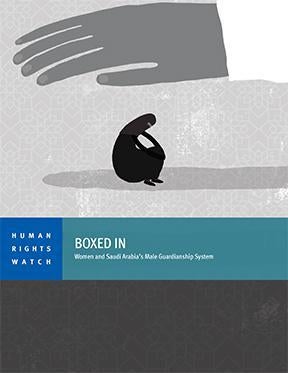
    Women and Saudi Arabia’s Male Guardianship System

    This report examines in detail the panoply of formal and informal barriers women in Saudi Arabia face when attempting to make decisions or take action without the presence or consent of a male relative. As one 25-year-old Saudi woman told Human Rights Watch, “We all have to live in the borders of the boxes our dads or husbands draw for us.” In some cases, men use the permission requirements to extort large sums of money from female dependents.

    photo gallery
    video content
    Cover for Saudi Arabia Report
  • July 13, 2016

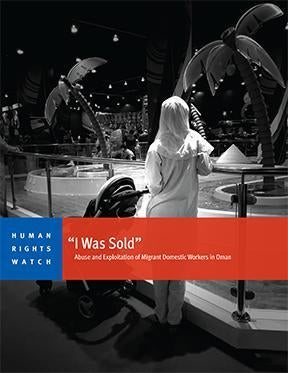
    Abuse and Exploitation of Migrant Domestic Workers in Oman

    This report documents how Oman’s kafala(sponsorship) immigrant labor system and lack of labor law protections leaves migrant domestic workers exposed to abuse and exploitation by employers, whose consent they need to change jobs. Those who flee abuse – including beatings, sexual abuse, unpaid wages, and excessive working hours – have little avenue for redress and can face legal penalties for “absconding.” Families rely on migrant domestic workers to care for their children, cook their meals, and clean their homes. Yet many migrant domestic workers, who rely on their salaries to support their own families and children at home, face cruel and exploitative conditions.

    photo gallery
    map content
    cover image for Oman Report
  • May 19, 2016

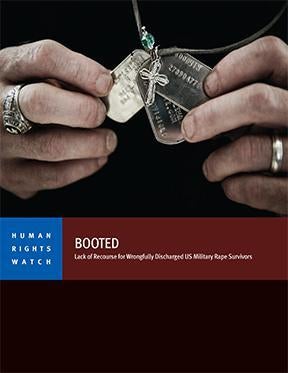
    Lack of Recourse for Wrongfully Discharged US Military Rape Survivors

    This report found that many rape victims suffering from trauma were unfairly discharged for a “personality disorder” or other mental health condition that makes them ineligible for benefits. Others were given “Other Than Honorable” discharges for misconduct related to the assault that shut them out of the Department of Veterans Affairs healthcare system and a broad range of educational and financial assistance. The consequences of having “bad paper” – any discharge other than “honorable” – or being labeled as having a “personality disorder” are far-reaching for veterans and their families, impacting employment, child custody, health care, disability payments, burial rights – virtually all aspects of life.


    photo gallery
    video content
    cover image
  • May 18, 2016

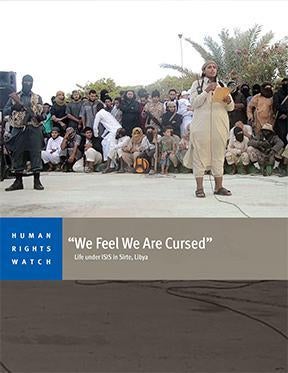
    Life under ISIS in Sirte, Libya

    The report, “‘We Feel We Are Cursed’: Life under ISIS in Sirte, Libya,” also finds that ISIS is inflicting severe hardship on the local population by diverting food, medicine, fuel, and cash, along with homes it seized from residents who fled, to fighters and functionaries it has amassed in the Mediterranean port city. As the de facto government in Sirte, ISIS has the duty to ensure that all residents are able to exercise their basic human rights, including the rights to food and health.

    map content
    cover
  • March 23, 2016

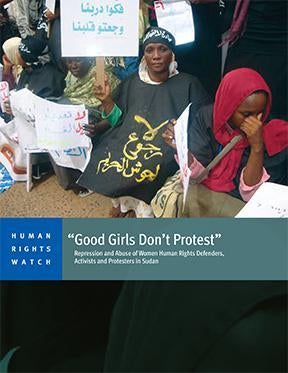
    Repression and Abuse of Women Human Rights Defenders, Activists, and Protesters in Sudan

    This report documents efforts by Sudanese authorities to silence women who are involved in protests, rights campaigns, and other public action, and who provide social services and legal aid, as well as journalists.

    video content
    report cover
  • February 15, 2016

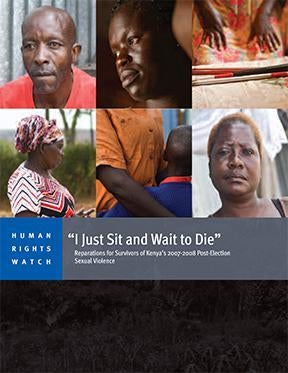
    Reparations for Survivors of Kenya’s 2007-2008 Post-Election Sexual Violence

    This report is based on interviews with 163 women and girls, nine male survivors, and witnesses of rape or other sexual violence in the post-election period. Human Rights Watch found that most of the survivors interviewed were still in dire need of medical attention, leaving them unable to work or pursue education, adding to their poverty and hunger. The government has recently promised reparations, which should be designed in consultation with survivors of sexual violence to ensure their full inclusion in all programs.

    photo gallery
    Cover image for Kenya report
  • November 4, 2015

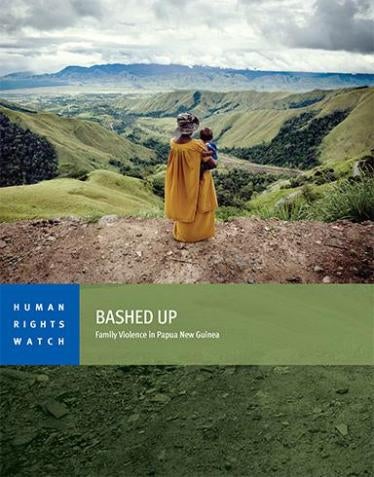
    Family Violence in Papua New Guinea

    This 59-page report documents systemic failures in how the government responds to domestic violence – failures which often leave women unprotected and subject to ongoing violence, even when they have gone to great lengths to seek help and justice.


    cover papua new guinea
  • October 28, 2015

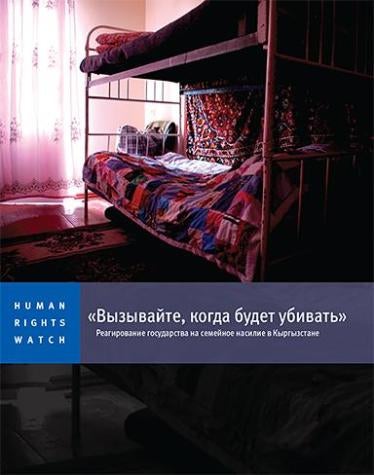
    State Response to Domestic Violence in Kyrgyzstan

    This 98-page report documents obstacles to accessing help or justice in cases of severe domestic abuse. Despite a 2003 domestic violence law, which guarantees survivors’ rights to protection, social services, and redress, Human Rights Watch’s report exposes gaps in state response to domestic violence, including police refusing to register or investigate complaints, police and courts failing to issue or enforce protection orders, and courts and prosecutors treating domestic violence as a minor offense carrying light penalties.

    cover
  • September 9, 2015

    Rapid Support Forces Attacks against Civilians in Darfur, Sudan

    The 88-page report documents Rapid Support Forces atrocities against civilians during two counterinsurgency campaigns in Darfur. The abuses appear to be widespread and systematic attacks on civilian populations that may constitute crimes against humanity. 

    video content
    report cover
  • July 22, 2015

    Destruction of Villages, Killings, and Sexual Violence in Unity State South Sudan

    Thise 42-page report is based on more than170 interviews in June and July with survivors and witnesses. More than 125 of these were displaced by fighting or attacks on their villages by government troops or allied militia from the Bul Nuer ethnic group. Human Rights Watch documented shocking accounts of about 60 unlawful killings of civilian women, men, and children, including the elderly. Some were hanged and others shot, and others were burned alive. Interviewees were selected randomly and the number of cases documented by Human Rights Watch almost certainly represents only a fraction of the total.

    UNMISS camp near Bentiu
  • June 9, 2015

    Child Marriage in Bangladesh

    This 134-page report is based on more than a hundred interviews conducted across the country, most of them with married girls, some as young as age 10. It documents the factors driving child marriage in Bangladesh – including poverty, natural disasters, lack of access to education, social pressure, harassment, and dowry.

    Belkis, 15 years old, holds her one-year-old son in the house where she lives with her mother, two sisters, and one brother. Belkis was married when she was 13 years old to a man who threatened to commit suicide if the family didn’t agree to the marriage.