Israel’s Forced Displacement of Palestinians in the West Bank
The 105-page report, “‘All My Dreams Have Been Erased’: Israel’s Forced Displacement of Palestinians in the West Bank,” details “Operation Iron Wall,” an Israeli military operation across Jenin, Tulkarem, and Nur Shams refugee camps that began on January 21, 2025, days after a temporary ceasefire was announced in Gaza. Israeli forces issued abrupt orders to civilians to leave their homes, including with loudspeakers mounted on drones. Witnesses said soldiers moved methodically through the camps, storming homes, ransacking properties, interrogating residents, and eventually forcing all families out.
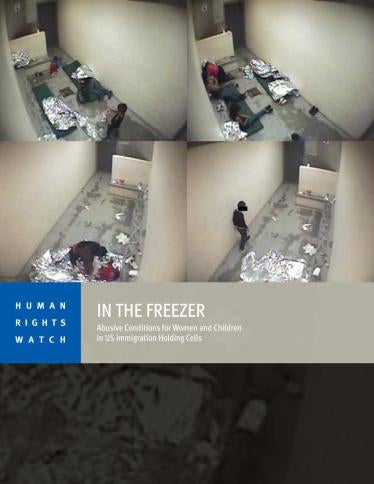
Abusive Conditions for Women and Children in US Immigration Holding Cells
This report is based on interviews with 110 women and children. Human Rights Watch found that US Customs and Border Protection (CBP) agents routinely separate adult men and teenage boys from other family members. The practice runs counter to agency policy that families should be kept together whenever possible while in holding cells. After the initial period of detention in the freezing holding cells, sometimes for days, men usually remain separated from the rest of their family upon transfer to longer-term detention facilities.
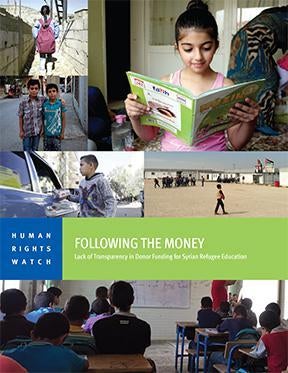
Lack of Transparency in Donor Funding for Syrian Refugee Education
This report tracks pledges made at a conference in London in February 2016. Human Rights Watch followed the money trail from the largest donors to education in Lebanon, Turkey, and Jordan, the three countries with the largest number of Syrian refugees, but found large discrepancies between the funds that the various parties said were given and the reported amounts that reached their intended targets in 2016. The lack of timely, transparent funding contributed to the fact that more than 530,000 Syrian schoolchildren in those three countries were still out of school at the end of the 2016-2017 school year.
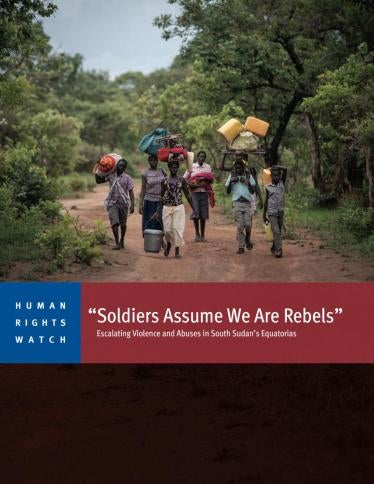
Escalating Violence and Abuses in South Sudan’s Equatorias
This report documents the spreading violence and serious abuses against civilians in the Greater Equatoria region in the last year. The report focuses on two areas: Kajo Keji county, in the former Central Equatoria state, and Pajok, a town in the former Eastern Equatoria state.
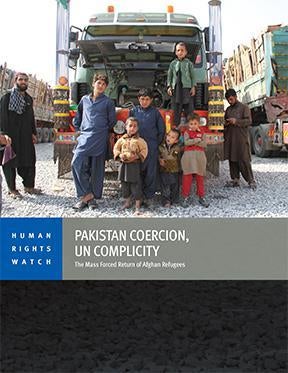
This report documents Pakistan’s abuses and the role of the United Nations High Commissioner for Refugees (UNHCR) in promoting the exodus. Through enhancing its “voluntary repatriation” program and failing to publicly call for an end to coercive practices, the UN agency has become complicit in Pakistan’s mass refugee abuse. The UN and international donors should press Pakistan to end the abuses, protect the remaining 1.1 million Afghan refugees in Pakistan, and allow refugees among the other estimated 750,000 unregistered Afghans there to seek protection, Human Rights Watch said.
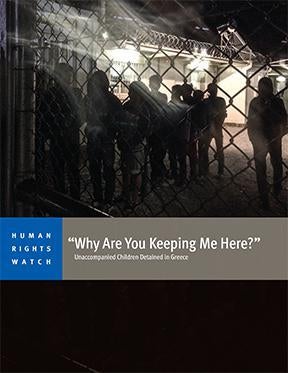
This report documents arbitrary and prolonged detention of children in violation of international and Greek law. Children are held in unsanitary conditions, sometimes with unrelated adults, in police stations and detention centers where they have little access to basic care and services. The report is based on interviews with 42 children who were or had been detained, as well as visits to two police stations and two detention centers in mainland Greece.
Barriers to Education for Syrian Refugee Children in Jordan
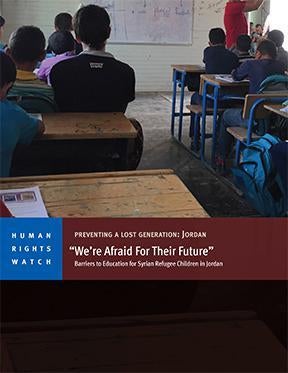
This report describes Jordan’s generous efforts to enroll Syrian children in its public school system, which was struggling with capacity and quality issues even before refugees began to arrive from Syria. But Human Rights Watch also documented barriers to education, including asylum-seeker registration requirements that many Syrians cannot meet; punishments for refugees working without permits that contribute to poverty, child labor, and school drop-outs; and a bar on enrollment for children who have been out of school for three or more years. Jordan has eased some restrictions, but authorities should expand efforts to realize the fundamental right to education for all Syrian children, Human Rights Watch said.
Barriers to Education for Syrian Refugee Children in Lebanon
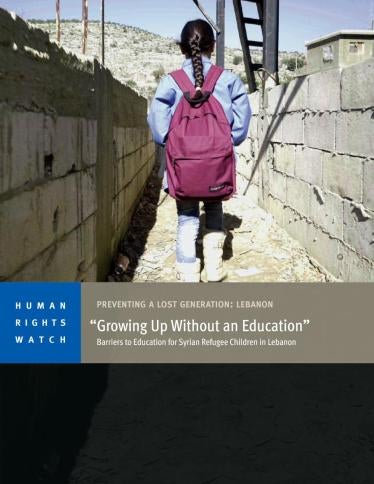
This report documents the important steps Lebanon has taken to allow Syrian children to access public schools. But Human Rights Watch found that some schools have not complied with enrollment policies, and that more donor support is needed for Syrian families and for Lebanon’s over-stretched public school system. Lebanon is also undermining its positive education policy by imposing harsh residency requirements that restrict refugees’ freedom of movement and exacerbate poverty, limiting parents’ ability to send their children to school and contributing to child labor. Secondary school-age children and children with disabilities face particularly difficult obstacles.
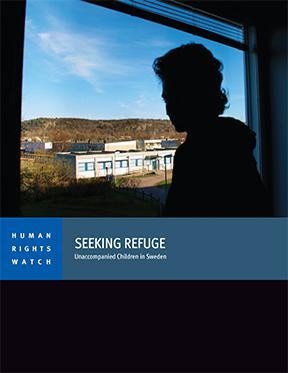
This report documents shortcomings in the system that prevent children from receiving the care guaranteed by international standards and Swedish law. Children endure long delays in the appointment of legal guardians to safeguard the child’s best interests and wait months before meeting with a social worker or healthcare provider. In some cases, the specific needs of girls are not sufficiently identified or addressed. Amid a backlog of cases, unaccompanied children face lengthy waits in processing their asylum applications.
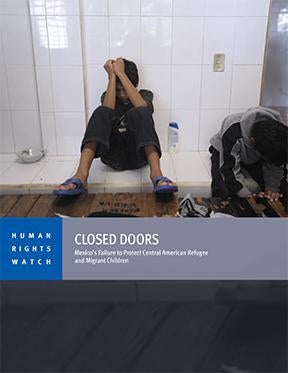
Mexico’s Failure to Protect Central American Refugee and Migrant Children
This report documents wide discrepancies between Mexican law and practice. By law, Mexico offers protection to those who face risks to their lives or safety if returned to their countries of origin. But less than 1 percent of children who are apprehended by Mexican immigration authorities are recognized as refugees, according to Mexican government data.
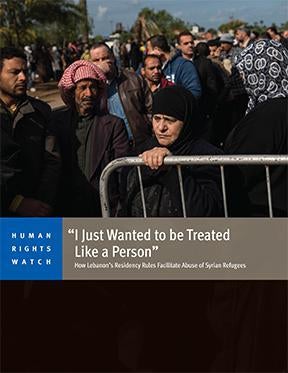
How Lebanon’s Residency Rules Facilitate Abuse of Syrian Refugees
This report is based on interviews with more than 60 Syrian refugees, lawyers, and humanitarian workers assisting refugees in Lebanon. Human Rights Watch found that residency regulations adopted in January 2015 have resulted in most Syrians losing their legal status. Only two out of the 40 refugees interviewed said they had been able to renew their residencies. Lebanese authorities should immediately revise the renewal regulations, including by waiving renewal fees and ending requirements for many refugees to find a sponsor.
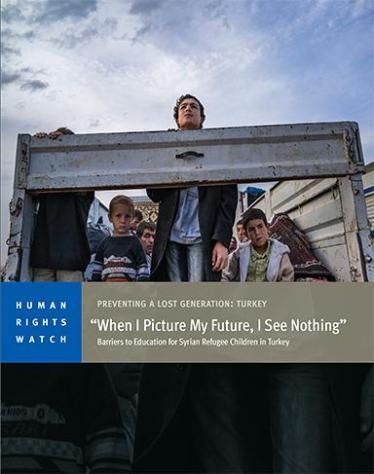
Barriers to Education for Syrian Refugee Children in Turkey
This 62-page report documents the major obstacles that prevent Syrian refugee children from getting formal education in Turkey, which is hosting more than 2 million refugees from the Syrian conflict that began in 2011. The government adopted an important policy in September 2014 that formally grants Syrian children access to public schools, but key obstacles including a language barrier, social integration issues, economic hardship, and lack of information about the policy, remain one year later, Human Rights Watch found.
This 33-page report is based on official Vietnamese media reports and Human Rights Watch interviews with Montagnards seeking asylum abroad. It describes religious and political persecution of Montagnards, highlanders who practice De Ga and Ha Mon forms of Christianity that the government calls “evil way” religions.
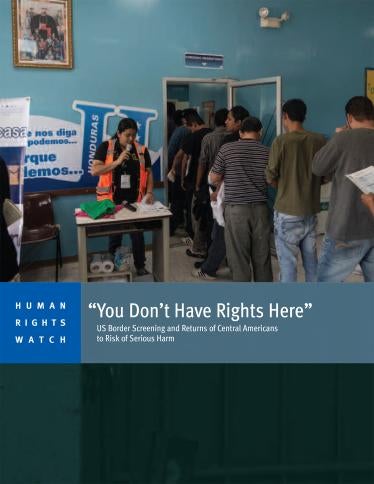
US Border Screening and Returns of Central Americans to Risk of Serious Harm
This report details the US border policies and practices that place migrants at risk of serious harm back home, based on the accounts of people sent back to Honduras, people in detention, and an analysis of deportation data obtained through the Freedom of Information Act.
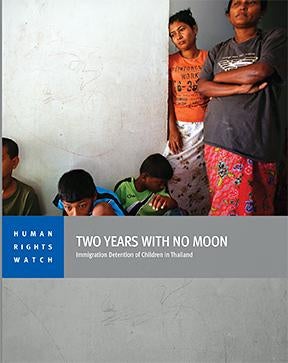
This 67-page report details how Thailand’s use of immigration detention violates children’s rights, risks their health and wellbeing, and imperils their development. The Thai government should stop detaining children on immigration grounds, Human Rights Watch said.
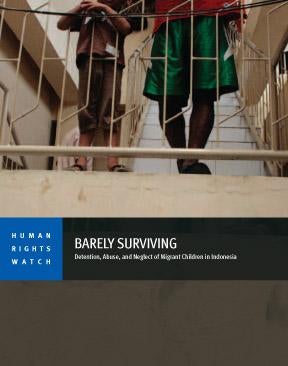
Detention, Abuse, and Neglect of Migrant Children in Indonesia
This 86-page report details Indonesia’s poor treatment of migrant and asylum-seeking children. They arrive in Indonesia after fleeing persecution, violence, and poverty in Somalia, Afghanistan, Pakistan, Burma, and elsewhere. Indonesia detains hundreds of migrant and asylum-seeking children each year without giving them a way to challenge their detention.