Reports

Obstetric Violence in Sierra Leone

The 75-page report, “No Money, No Care: Obstetric Violence in Sierra Leone,” documents cases of verbal abuse, medical neglect, and abandonment of women and girls facing serious obstetric complications, practices that experts interviewed say are common. Many women interviewed said they were shamed and mistreated by healthcare providers for expressing pain, needing help, or for not having enough money to pay fees. Others described humiliating experiences in which healthcare providers treated them brusquely or withheld important health information. Some cases documented constitute obstetric violence, a largely unaddressed form of gender-based violence prevalent across the world.

Pregnant women sit in the waiting area at the pre-natal clinic of the Princess Christian Maternity Hospital
A woman looks out of the window of a damaged building

Search

  • June 3, 2021

    Oil Palm Expansion in Indonesia Risks Peatlands and Livelihoods

    The 71-page report, “‘Why Our Land’: Oil Palm Expansion in Indonesia Risks Peatlands and Livelihoods,” examines the conduct of PT Sintang Raya, a subsidiary of South Korean Deasang Corporation, in three tidal villages in West Kalimantan province. Human Rights Watch found that the company has established and expanded its plantations in peatlands, which help to address climate change, without genuine consultation with local residents and without adequate compensation for loss of their farmland or livelihoods. Police have harassed, intimidated, and prosecuted villagers who have resisted or protested.

    video content
    A child carries palm kernels collected from the ground across a creek at an oil palm plantation in Sumatra, Indonesia, November 2017.
  • June 1, 2021

    China’s Two-Child Policy and Workplace Gender Discrimination

    The 37-page report, “‘Take Maternity Leave and You’ll Be Replaced’: China’s Two-Child Policy and Workplace Gender Discrimination,” draws on court documents, surveys, social media posts, and media reports to detail the various forms of pregnancy-related discrimination women have experienced during the two-child policy era. 

    202105asia_china_two_child_policy_cover
  • May 6, 2021

    Women’s Access to Health Care in Afghanistan

    The 39-page report, “‘I Would Like Four Kids—If We Stay Alive’: Women’s Access to Health Care in Afghanistan,” documents barriers to Afghan women and girls obtaining health care and the healthcare system’s deterioration due to declining international support. The drop in international donor funding has already had a harmful—and life-threatening—impact on the lives of many women and girls, as it affects access to and quality of health care.

    photo gallery
    video content
    202105wrd_afghanistan_cover
  • March 29, 2021

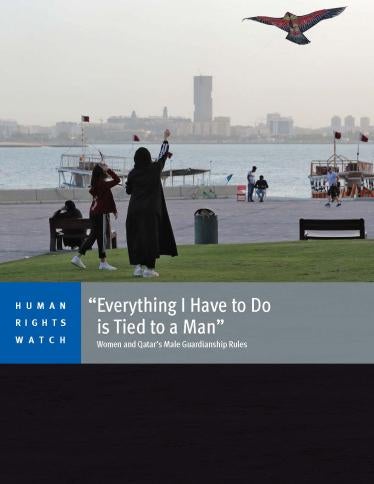
    Women and Qatar’s Male Guardianship Rules

    The 94-page report, “‘Everything I Have to Do is Tied to a Man’: Women and Qatar’s Male Guardianship Rules,” analyzes official male guardianship rules and practices. Human Rights Watch found that women in Qatar must obtain permission from their male guardians to marry, study abroad on government scholarships, work in many government jobs, travel abroad until certain ages, and receive some forms of reproductive health care. The discriminatory system also denies women the authority to act as their children’s primary guardian, even when they are divorced and have legal custody. These restrictions violate Qatar’s constitution and international law.

    video content
    202103mena_qatar_maleguardianship_cover
  • March 18, 2021

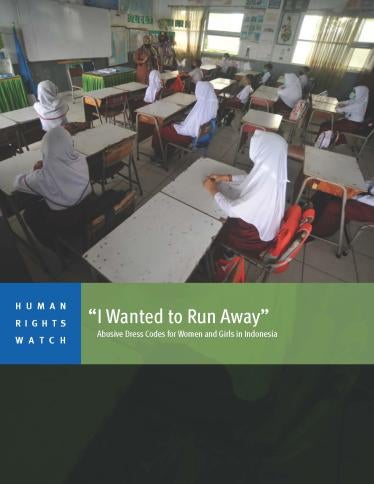
    Abusive Dress Codes for Women and Girls in Indonesia

    The 98-page report, “‘I Wanted to Run Away’: Abusive Dress Codes for Women and Girls in Indonesia,” documents government regulations that require girls and women to wear the jilbab, Muslim apparel that covers the head, neck, and chest. Human Rights Watch describes the historical imposition of discriminatory regulations on clothing, and the widespread bullying to wear a jilbab that causes women and girls psychological distress. Girls who don’t comply have been forced to leave school or have withdrawn under pressure, while female civil servants have lost their jobs or resigned to escape constant demands to conform.
     

    photo gallery
    video content
    202103asia_indonesia_jilbab_cover
  • March 11, 2021

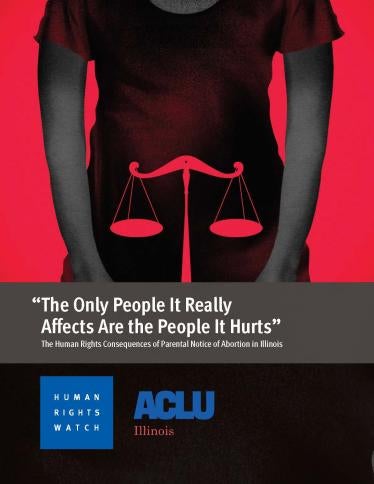
    The Human Rights Consequences of Parental Notice of Abortion in Illinois

    The 73-page report, “‘The Only People It Really Affects Are the People It Hurts’: The Human Rights Impacts of Parental Notice of Abortion in Illinois,” is the product of a collaboration between Human Rights Watch and the ACLU of Illinois. The groups found that young people often seek judicial bypass because they fear physical or emotional abuse, being kicked out of the home, alienation from their families or other deterioration of family relationships, or being forced to continue a pregnancy against their will. The groups also documented the hardships faced by young people forced to involve unsupportive family members in their abortion decision or navigate an unfamiliar court system to obtain a judicial bypass, and the additional stress and delays in seeking care this caused.

    video content
    202103us_illinois_abortion_cover
  • December 4, 2020

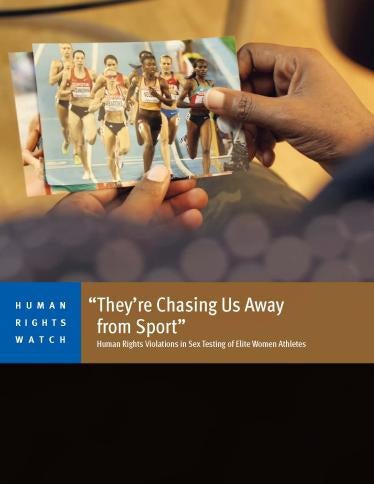
    Human Rights Violations in Sex Testing of Elite Women Athletes

    The 120-page report, “‘“They’re Chasing Us Away from Sport’”: Human Rights Violations in Sex Testing of Elite Women Athletes,” documents the experiences of more than a dozen women athletes from the Global South who have been affected by sex testing regulations. Human Rights watch found that global regulations that encourage discrimination, surveillance, and coerced medical intervention on women athletes result in physical and psychological injury and economic hardship. The International Olympic Committee – the supreme body in global sports – is developing guidelines to address human rights violations caused by sex testing policies.

    video content
    202012sex_testing_athletes_cover
  • October 29, 2020

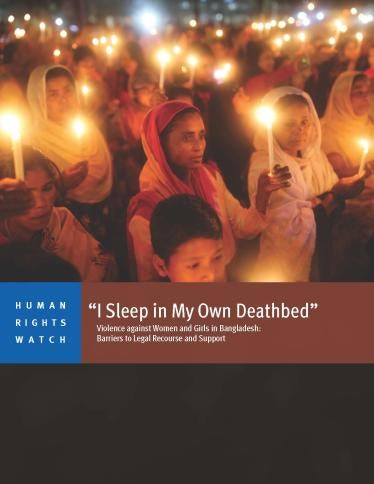
    Violence against Women and Girls in Bangladesh: Barriers to Legal Recourse and Support

    The 65-page report, “‘I Sleep in My Own Deathbed’: Violence against Women and Girls in Bangladesh,” draws on 50 interviews to document the obstacles to realizing the government’s goal of a society without violence against women and children. Human Rights Watch found that despite some important advances, the government response remains deeply inadequate, barriers to reporting assault or seeking legal recourse are frequently insurmountable, and services for survivors are in short supply.

    map content
    video content
    202010asia_bangladesh_cover
  • October 14, 2020

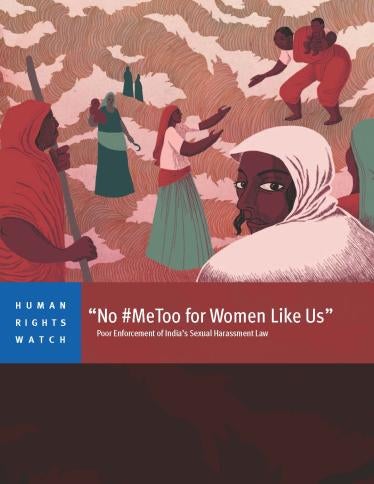
    Poor Enforcement of India’s Sexual Harassment Law

    The 56-page report, No #MeToo for Women Like Us’: Poor Enforcement of India’s Sexual Harassment Law,” finds that while women in India are increasingly speaking out against sexual abuse at work, in part due to the global #MeToo movement, many, particularly in the informal sector, are still constrained by stigma, fear of retribution, and institutional barriers to justice. The central and local governments have failed to promote, establish, and monitor complaints committees – a central feature of the POSH Act – to receive complaints of sexual harassment, conduct inquiries, and recommend actions against abusers.

    video content
    202010asia_india_metoo_cover
  • August 31, 2020

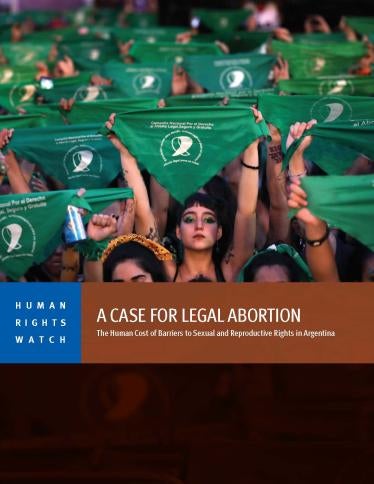
    The Human Cost of Barriers to Sexual and Reproductive Rights in Argentina

    The 77-page report named “A Case for Legal Abortion: The Human Cost of Barriers to Sexual and Reproductive Rights in Argentina,” describes the consequences of the Senate’s rejection of a 2018 bill that would have fully decriminalized abortion during the first 14 weeks of pregnancy. Human Rights Watch documented cases of women and girls who have, since then, encountered an array of barriers to access legal abortion and post-abortion care. The barriers include arbitrarily imposed gestational limits, lack of access to and availability of abortion methods, fear of criminal prosecution, stigmatization, and mistreatment by health professionals.

    photo gallery
    202008americas_argentina_abortion_cover
  • July 8, 2020

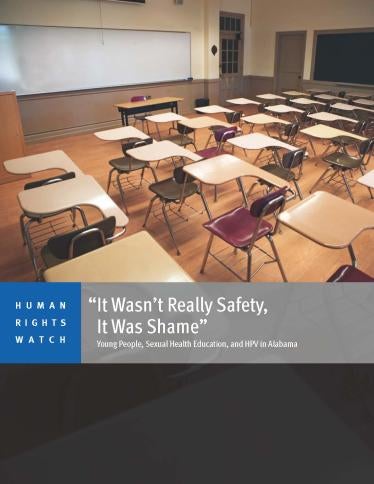
    Young People, Sexual Health Education, and HPV in Alabama

    The 65-page report, “‘It Wasn’t Really Safety, It Was Shame’: Young People, Sexual Health Education, and HPV in Alabama,” documents the Alabama state government’s failure to provide young people with comprehensive, inclusive, and accurate information on sexual and reproductive health. Human Rights Watch also found that the state is not addressing barriers to the human papillomavirus (HPV) vaccine – an effective tool to prevent several types of cancer – and that vaccination rates throughout Alabama remain low.

    video content
    202006us_alabama_sexed_cover
  • June 25, 2020

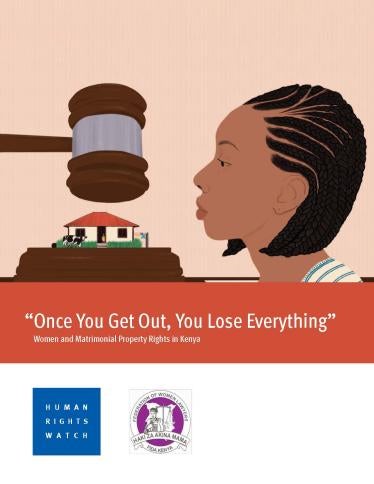
    Women and Matrimonial Property Rights in Kenya

    The 64-page report, “Once You Get Out, You Lose Everything” documents how the 2013 Matrimonial Property Act, which recognized that married women have the same rights as married men, and other legal reforms are undermined in practice. Kenya’s constitution is consistent with international interpretations of equality and nondiscrimination but falls short of ensuring substantive change for lack of adequate enforcement. Looking at the situation in two counties, Human Rights Watch found that ambiguous and antiquated laws that remain on the books and discriminatory social and traditional practices make it difficult for married, divorced, separated, and widowed women to claim property the law entitles them to.

    202006africa_kenya_wrd_cover
  • December 18, 2019

    Accelerating Supply Chain Transparency in the Apparel and Footwear Industry

    This report describes how dozens of brands and retailers are publicly disclosing information about their supplier factories. This has become a widely accepted step toward better identifying and addressing labor abuses in garment supply chains. 

    201912WRD_transparency_cover
  • September 22, 2019

    Oil Palm Plantations and Rights Violations in Indonesia

    This report examines how a patchwork of weak laws, exacerbated by poor government oversight, and the failure of oil palm plantation companies to fulfill their human rights responsibilities have adversely affected Indigenous peoples’ rights to their forests, livelihood, food, water, and culture in Bengkayang regency, West Kalimantan, and Sarolangun regency, Jambi. The report, based on interviews with over 100 people and extensive field research, highlights the distinct challenges Indigenous people, particularly women, face as a result.

    map content
    video content
    201909WRD_Indonesia_reportcover
  • September 19, 2019

    Weak State Response to Domestic Violence in Tajikistan

    This report and its recommendations focus on violence against women by male partners and their relatives, including mothers-in-law. Dozens of survivors of domestic violence all across Tajikistan, from cities and villages alike, told Human Rights Watch harrowing stories of the worst kinds of abuse, including sadistic violence committed by perpetrators who span nearly every socioeconomic category.

    map content
    video content
    201909ECA_Tajikistan_cover