US Expulsions of Third-Country Nationals to Countries in Africa
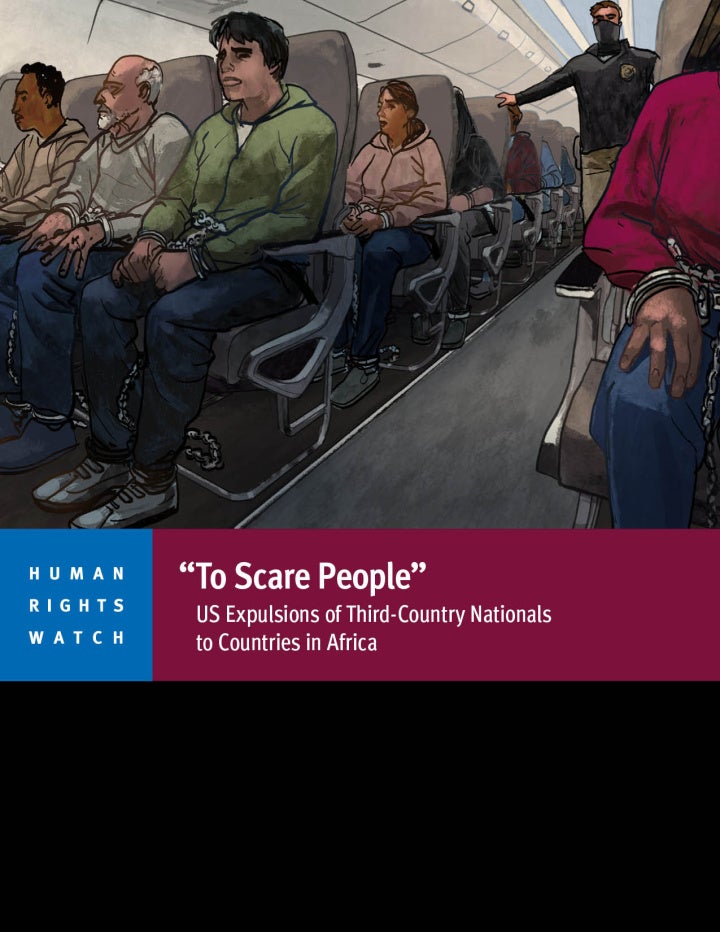
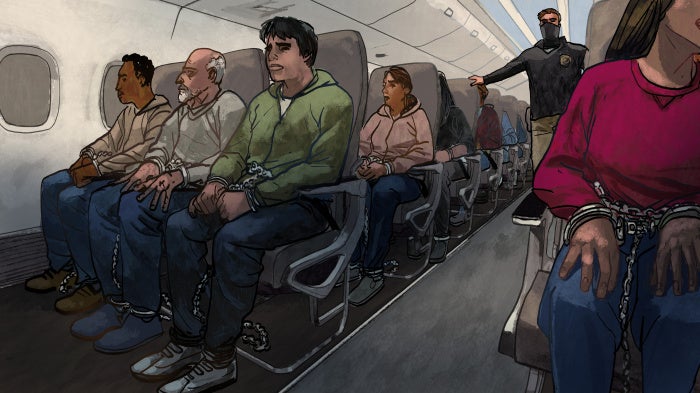
The 125-page report, “‘To Scare People’: US Expulsions of Third-Country Nationals to Countries in Africa,” documents that US authorities denied the more than 500 people transferred to third countries a meaningful chance to contest their removals or to articulate their fears of being removed to these countries. Some countries arbitrarily detained people they had accepted, and some have sent people onward to the risk of persecution or torture in their home countries, violating the international law principle of nonrefoulement.
The violence in East Timor on April 17 was sparked by a rally of an estimated 3,000 pro-Indonesia militia members on the grounds of the East Timor governor's office in the capital, Dili. The rally was attended by the governor, Abilio Soares, senior military officers, and the district heads of East Timor's thirteen districts.
Human Rights Watch issued a call today for human rights issues to occupy a central role in Algeria's presidential elections and in the post-election period.
Bulgaria has earned a reputation as an anything-goes weapons bazaar where Kalashnikov assault rifles, mortars, antitank mines, ammunition,explosives and other items are available for a price — no matter who the buyers are or how they might use the deadly wares.
As the North Atlantic Treaty Organization (NATO) celebrates its 50th anniversary and welcomes its three new members—the Czech Republic, Hungary, and Poland—one of the likely consequences of the Alliance’s enlargement eastwards remains largely unexplored: a firesale of stocks of old weapons.
This report examines the state of free expression in Turkey. It focuses largely on the print and broadcast media, and to a lesser extent on freedom of speech in politics.
The rebel group which is suspected in the killings of the eight foreign tourists has been active in Southwestern Uganda for more than a year, and according to local news reports has been responsible for numerous attacks on local villagers.
U.S. Attorney General Janet Reno's March 3 to March 4 visit comes at a moment of crisis for the rule of law and human rights in Colombia. Human rights defenders are under intense and violent attack.
More than one-sixth of India's population, some 160 million people, live a precarious existence, shunned by much of society because of their rank as "untouchables" or Dalits-literally meaning "broken" people[4]-at the bottom of India's caste system. Dalits are discriminated against, denied access to land, forced to work in degrading conditions, and routinely abused at the hands of the police and of higher-caste groups that enjoy the state's protection. In what has been called India's "hidden apartheid," entire villages in many Indian states remain completely segregated by caste. National legislation and constitutional protections serve only to mask the social realities of discrimination and violence faced by those living below the "pollution line."
Human Rights Watch has long denounced the contemporary form of slavery practiced in Sudan in the context of the fifteen-year civil war. This practice is conducted almost entirely by government-backed and armed militia of the Baggara tribe in western Sudan, and it is directed mostly at the civilian Dinka population of the southern region of Bahr El Ghazal.
On January 15, 1998, the United Nations transferred authority over Eastern Slavonia, Baranja andWestern Sirmium (hereafter, Eastern Slavonia) to the Croatian government, bringing the lastremaining Serb-held territory of Croatia back under Croatian control Despite positivedevelopments in terms of the repeal of some discriminatory legislation, and a generally stablesecurity situation, Serbs remain s
On January 19, 1999, as Muslims around the world were celebrating the end of the fasting month,a fight broke out on the island of Ambon, in Maluku (Molucca) province, Indonesia, between a Christian public transport driver and a Muslim youth. Such fights were commonplace, but thisone escalated into a virtual war between Christians and Muslims that is continuing.
Some 160 million people in India live a precarious existence, shunned by much of society because of their rank as "untouchables" or Dalits—literally meaning "broken" people—at the bottom of India's caste system.
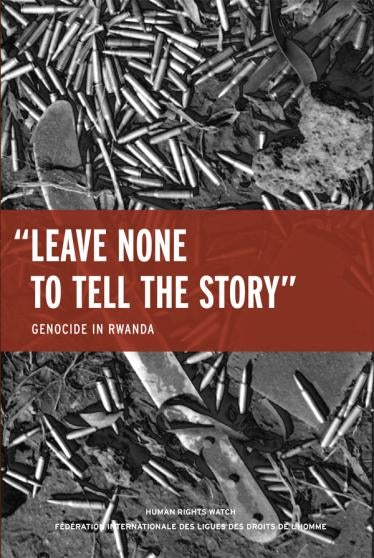
In 1994 a small elite chose genocide to keep power in Rwanda. They used state resources and authority to incite - or force - tens of thousands of Rwandans to kill the Tutsi minority. Within one hundred days, they slaughtered more than half a million people, three quarters of the Tutsi of Rwanda. The major international actors, France, the U.S., Belgium, and the U.N., failed to heed the warnings of coming disaster and refused to recognize the genocide when it began. They withdrew the troops that could have saved lives and made little protest against the genocide, lest condemnation lead to calls for action.
Corporate Responsibility and Human Rights Violations in Nigeria’s Oil Producing Communities
This report is an exploration of human rights violations related to oil exploration and productionin the Niger Delta, and of the role and responsibilities of the major multinational oil companies inrespect of those violations.