Discrimination and Violations of the Right to Work for Persons with Albinism in Malawi
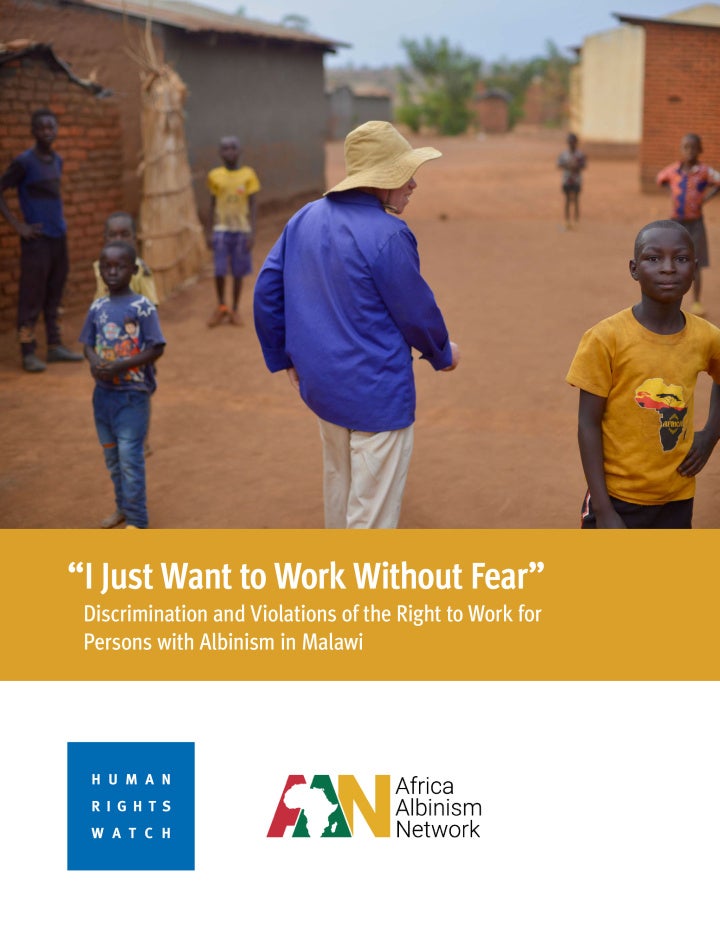
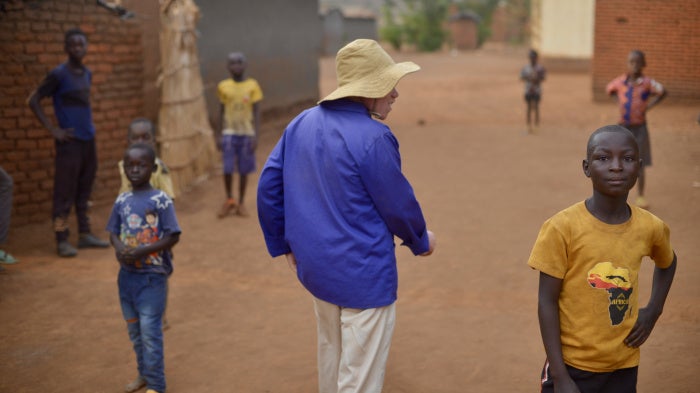
The 65-page report, “‘I Just Want to Work Without Fear’: Discrimination and Violations of the Right to Work for Persons with Albinism in Malawi,” documents how stigma, discrimination, fear of violence, and lack of reasonable accommodation undermine the rights of people with albinism to work, education, health and social security.
Yemen’s Failed Response to the “Friday of Dignity” Killings
This 69-page report found that Yemen's previous government’s criminal investigation government, into the shooting of demonstrators during the so-called Friday of Dignity Massacre on March 18, 2011, was fraught with political interference and ignored evidence implicating government officials.
Political Violence and the 2013 Elections in Kenya
This 58-page report presents the dangers of violence due to government failures to carry out needed reforms. Already in 2012 and early 2013, inter-communal clashes in parts of Kenya have claimed more than 477 lives and displaced about 118,000 people. Many of these incidents have been linked to pre-election maneuvering as local politicians mobilize support.
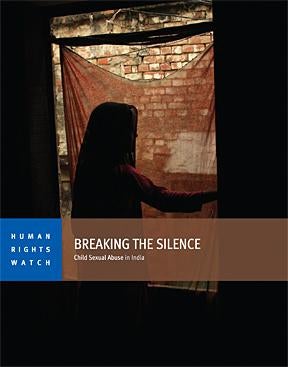
This 82-page report examines how current government responses are falling short, both in protecting children from sexual abuse and treating victims. Many children are effectively mistreated a second time by traumatic medical examinations and by police and other authorities who do not want to hear or believe their accounts.
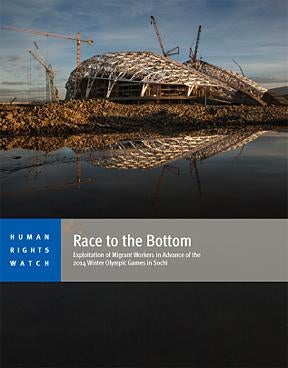
Exploitation of Migrant Workers Ahead of Russia’s 2014 Winter Olympic Games in Sochi
This 67-page report documents exploitation of migrant workers on key Olympic sites, including the Central Olympic Stadium, the Main Olympic Village, and the Main Media Center.
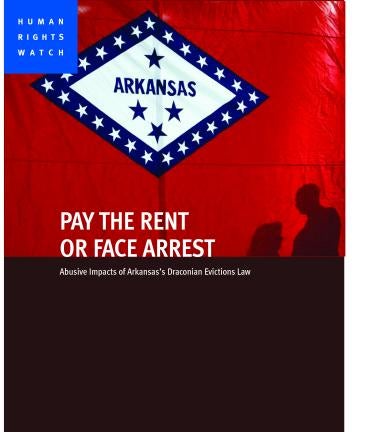
Abusive Impacts of Arkansas's Draconian Evictions Law
This 44-page report tells the stories of Arkansas tenants who were dragged into criminal court for transgressions that would not be a crime in any other US state. Other tenants who did not violate the law have faced charges because prosecutors acted on specious claims by landlords.
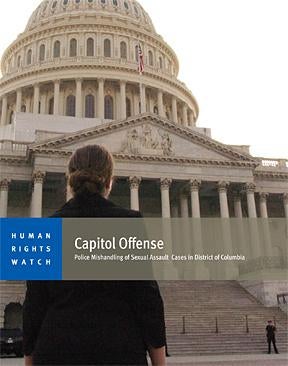
Police Mishandling of Sexual Assault Cases in the District of Columbia
This 196-page report concludes that in many sexual assault cases, the police did not file incident reports, which are required to proceed with an investigation, or misclassified serious sexual assaults as lesser or other crimes.
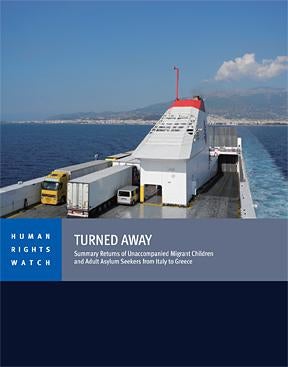
Summary Returns of Unaccompanied Migrant Children and Adult Asylum Seekers from Italy to Greece
This report documents the failure of Italian border police at the Adriatic ports of Ancona, Bari, Brindisi, and Venice to screen adequately for people in need of protection, in violation of Italy’s legal obligations. Human Rights Watch interviewed 29 children and adults who were summarily returned to Greece from Italian ports, 20 of them in 2012.
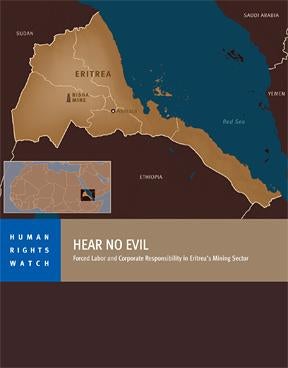
Forced Labor and Corporate Responsibility in Eritrea’s Mining Sector
The 29-page report describes how mining companies working in Eritrea risk involvement with the government’s widespread exploitation of forced labor. It also documents how Nevsun – the first company to develop an operational mine in Eritrea – initially failed to take those risks seriously, and then struggled to address allegations of abuse connected to its operations.
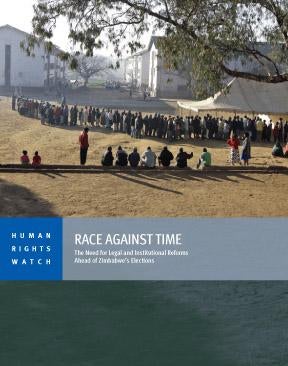
The Need for Legal and Institutional Reforms Ahead of Zimbabwe’s Elections
This report assesses the legislative and electoral reforms undertaken by the unity government, which was established in 2009 after the 2008 elections resulted in violence. The unity government consists of the former ruling Zimbabwe African National Union-Patriotic Front (ZANU-PF) and the two factions of the former opposition Movement for Democratic Change (MDC).
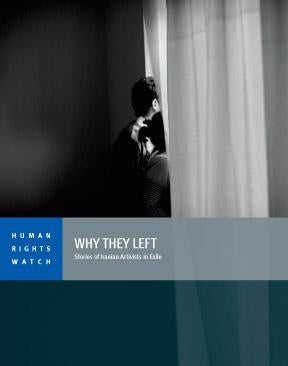
The 60-page report documents the experiences of dozens of rights defenders, journalists and bloggers, and lawyers whom security and intelligence forces targeted because they spoke out against the government.
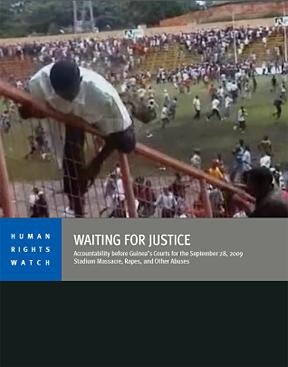
Accountability before Guinea’s Courts for the September 28, 2009 Stadium Massacre, Rapes, and Other Abuses
This 58-page report analyzes Guinea’s efforts to hold those responsible for the crimes to account. On that day, several hundred members of Guinea’s security forces burst into a stadium in Guinea’s capital, Conakry, and opened fire on tens of thousands of opposition supporters peacefully gathered there.
In this report, Human Rights Watch offers new data indicating that people who enter the criminal justice system with an arrest for public possession of marijuana rarely commit violent crimes in the future.