War Crimes and Crimes Against Humanity in Burkina Faso by All Sides
The 316-page report, “‘None Can Run Away’: War Crimes and Crimes Against Humanity in Burkina Faso by All Sides,” documents the devastating impact on civilians of an armed conflict that has received scant global attention. Researchers documented 57 incidents involving Burkinabè military forces and allied militias known as the Volunteers for the Defense of the Homeland (VDPs), and the Islamist armed group Jama’at Nusrat al‑Islam wa al‑Muslimin (JNIM) since the current military junta seized power in September 2022. Human Rights Watch issued a question and answer document to explain the legal issues involved.
The 60-page report documents the experiences of dozens of rights defenders, journalists and bloggers, and lawyers whom security and intelligence forces targeted because they spoke out against the government.
Accountability before Guinea’s Courts for the September 28, 2009 Stadium Massacre, Rapes, and Other Abuses
This 58-page report analyzes Guinea’s efforts to hold those responsible for the crimes to account. On that day, several hundred members of Guinea’s security forces burst into a stadium in Guinea’s capital, Conakry, and opened fire on tens of thousands of opposition supporters peacefully gathered there.
In this report, Human Rights Watch offers new data indicating that people who enter the criminal justice system with an arrest for public possession of marijuana rarely commit violent crimes in the future.
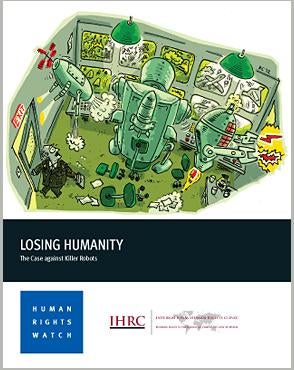
This 50-page report outlines concerns about these fully autonomous weapons, which would inherently lack human qualities that provide legal and non-legal checks on the killing of civilians. In addition, the obstacles to holding anyone accountable for harm caused by the weapons would weaken the law’s power to deter future violations.
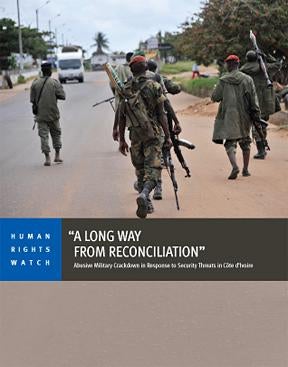
Abusive Military Crackdown in Response to Security Threats in Côte d’Ivoire
This 73-page report details the brutal crackdown that followed a series of violent attacks on military installations around the country in August. The attacks were allegedly committed by militants loyal to former President Laurent Gbagbo.
This 73-page report found that some child domestic workers – who are overwhelmingly girls – toil for 12 hours a day, 7 days a week, for as little as US$11 a month. Some girls told Human Rights Watch that their employers frequently beat and verbally abused them, denied them education, and sometimes refused them adequate food.
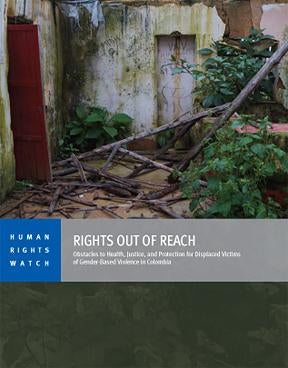
Obstacles to Health, Justice, and Protection for Displaced Victims of Gender-Based Violence in Colombia
This 101-page report documents how recent improvements in Colombia’s laws, policies, and programs on rape and domestic violence have not translated into more effective justice, healthcare, and protection for displaced women and girls. More than half of the country’s roughly four million displaced are female.
This 68-page report documents key cases of unsolved killings of political activists, journalists, opposition politicians, and others by Cambodian security forces since the 1991 Paris Agreements, which were signed by 18 countries, including the five permanent United Nations Security Council members.
Migrant Women’s Access to Protection for Family Violence in Belgium
This 59-page report found three major protection gaps for migrant women who experience domestic violence in that country. Women who migrate to Belgium to join a husband or partner may face deportation if they report the violence during the period when their status is being confirmed, as do undocumented migrant women.
This 58-page report details the final hours of Muammar Gaddafi’s life and the circumstances under which he was killed. It presents evidence that Misrata-based militias captured and disarmed members of the Gaddafi convoy and, after bringing them under their total control, subjected them to brutal beatings. They then executed at least 66 captured members of the convoy at the nearby Mahari Hotel.
Boko Haram Attacks and Security Force Abuses in Nigeria
This 98-page report catalogues atrocities for which Boko Haram has claimed responsibility. It also explores the role of Nigeria’s security forces, whose own alleged abuses contravene international human rights law and might also constitute crimes against humanity.
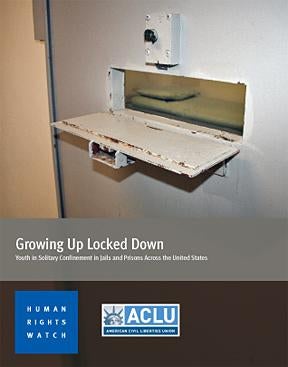
Youth in Solitary Confinement in Jails and Prisons Across the United States
The 141-page report is based on research in both US jails and prisons in five states – Colorado, Florida, Michigan, New York, and Pennsylvania – and correspondence with young people in 14 others. The isolation of solitary confinement causes anguish, provokes serious mental and physical health problems, and works against rehabilitation for teenagers, Human Rights Watch and the ACLU found.
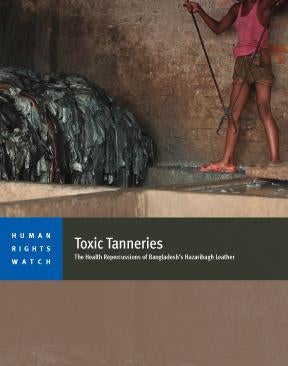
The Health Repercussions of Bangladesh’s Hazaribagh Leather
This report documents an occupational health and safety crisis among tannery workers, both men and women, including skin diseases and respiratory illnesses caused by exposure to tanning chemicals, and limb amputations caused by accidents in dangerous tannery machinery.