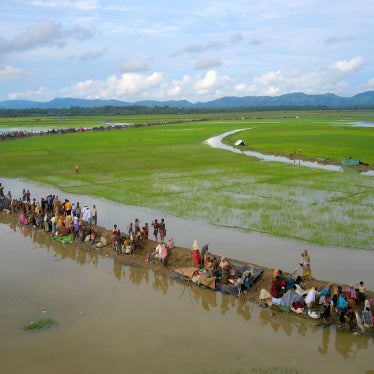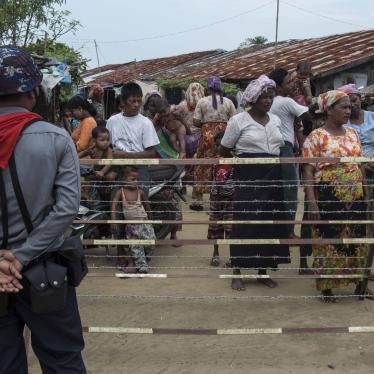
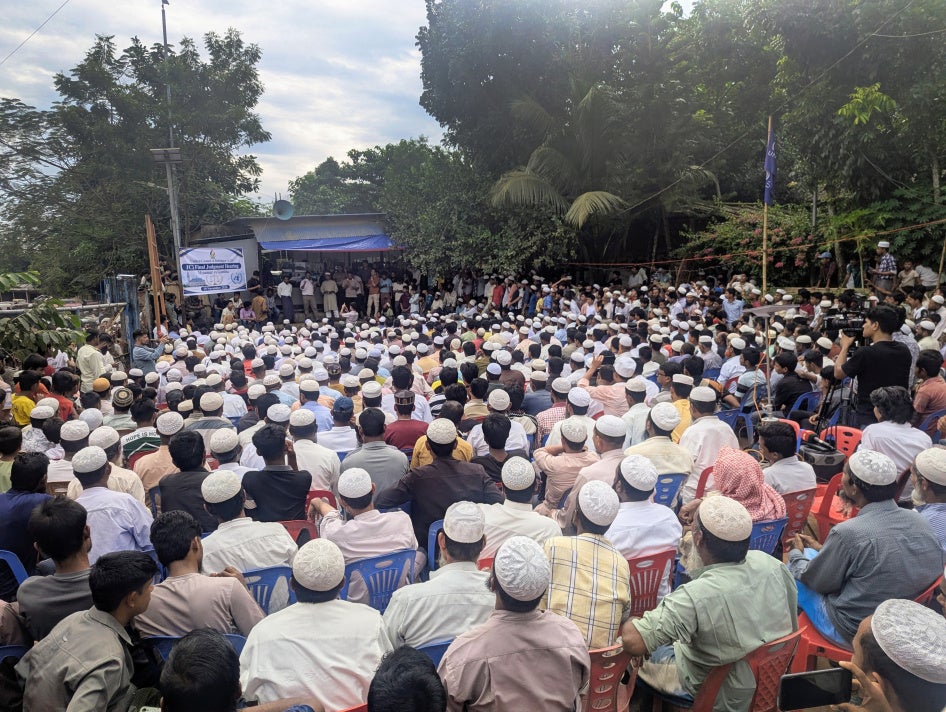
As the International Court of Justice in The Hague delivered its judgment on November 19 in the landmark case that Gambia brought against Myanmar for violating the Convention on the Prevention and Punishment of the Crime of Genocide, thousands of Rohingya waited anxiously in refugee camps in Bangladesh.
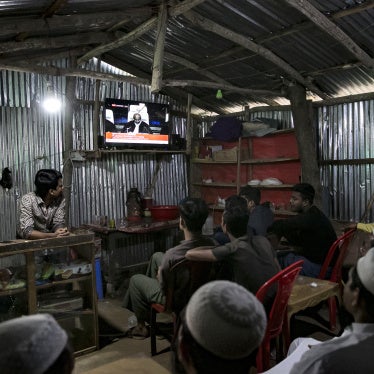
In the Jamtoli Camp 15 in Cox's Bazar District, many crowded around a television. About two hours into the reading of the judgment, it started to rain. But no one moved.
The court’s president spoke in English, a language rarely heard in the crowded camps where over a million Rohingya sought refuge after fleeing Myanmar military attacks in 2017. At 5:13 p.m. local time, a community leader relayed the court’s ruling in the Rohingya language to the waiting crowd, telling them that, by nine votes to six, the court found Myanmar “committed genocide against the Rohingya group in northern Rakhine State.”
The crowd clapped and cheered; many were in tears.
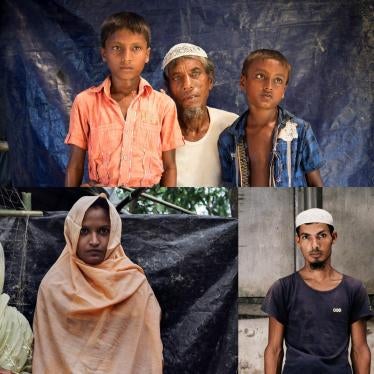
“The Myanmar military tried to convince the world that we had lied,” said 58-year-old Monajat Alam, from Rathedaung Township. “Today, the truth has been recognized.”
The ruling was based on evidence showing that thousands of Rohingya civilians, including children, had been killed and that there was widespread sexual violence and destruction of villages during the 2017 military campaign. The court found the evidence also showed that Myanmar intended to destroy a substantial part of the Rohingya population.
Nemat Hussen from Maung Nu in Buthidaung Township, where Myanmar soldiers massacred hundreds of Rohingya villagers on August 27, 2017, brought along his son. Maung Nu was one of three villages that Gambia asked the court to examine for evidence of genocidal intent.
“In 2017, I lost my mother and eldest son,” Maung Nu said. “Since that day, I’ve been waiting for justice, and today I brought my son to hear the judgment.”
The court ordered Myanmar to investigate suspected perpetrators of genocide and prosecute them where warranted, compensate the Rohingya for the harm they suffered, and facilitate the safe, voluntary, and dignified return of those displaced, among other measures.
“Today, my hopes have grown tremendously,” Monajat Uddin said. “I wish that we’ll be able to return to Rakhine and live in peace and our homeland will be safe so that we can return.”