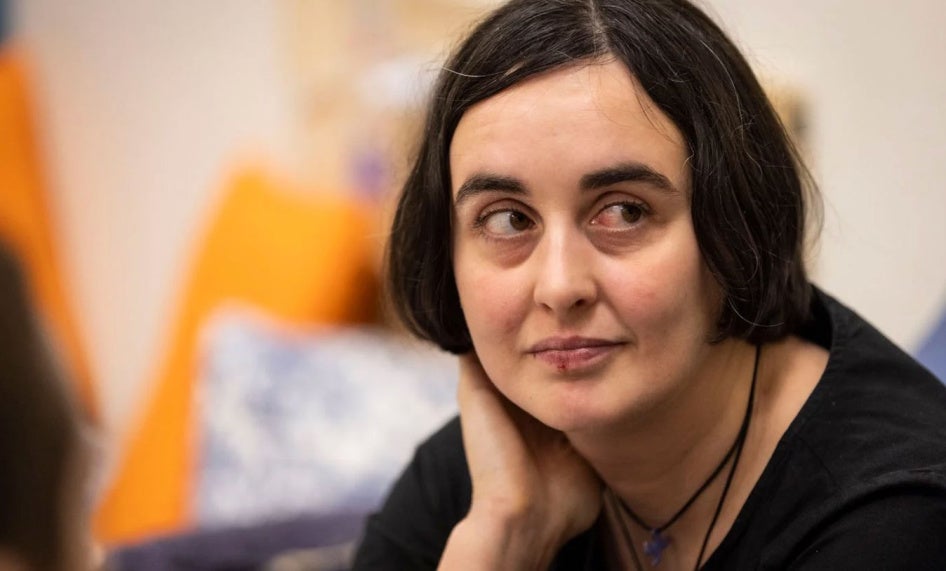
Lida Moniava, Russia’s best-known children’s palliative care advocate, was detained in Moscow this week and charged with disseminating “knowingly false information” about the army – apparent retaliation for her public stance against Russia’s war in Ukraine. If convicted, she faces up to 10 years in prison.
The charges stem from a Telegram post she published on February 24, 2023, the first anniversary of Russia’s full-scale invasion, commemorating thousands of “innocent people… dead as a result of my country’s actions.”
In 2012, when I was pregnant with my son and working for Human Rights Watch in Moscow, apparent Russian security officials sent me dozens of ugly miscarriage threats. Despite years of documenting government abuses, including torture and extrajudicial killings, I was profoundly shocked. But as low as threatening a pregnant woman was, Moniava’s case shows authorities have no apparent rock bottom.
For nearly two decades, Moniava has been running “Home With a Lighthouse,” which includes several children’s hospices, a resource center, and a perinatal palliative care program. Her work is guided by the principle that children with terminal illnesses and disabilities, including those who require more intensive support, deserve compassionate care and the opportunity to live fully and with as much dignity as possible. She has helped thousands.
Many leading charity activists left Russia after the full-scale invasion in 2022. Moniava stayed to continue her work. But she could not do it quietly. As Valery Panyushkin, a prominent activist and journalist, stated: “If Lida believed something was right, she acted on it. She believed that a child should have a full and meaningful childhood, so she made sure they had one. And in the same way, she wrote openly on social media that Russia had attacked Ukraine, causing immense harm both to Ukraine and to Russia itself.”
Earlier this year, a court fined Moniava in an administrative case for “discrediting” the army over three social media posts about civilians, including children, killed in Russian attacks. Many supporters have urged her to leave the country. Moniava refused to abandon her work and called the war a “crime” that needed “to be stopped.” The authorities then escalated to criminal prosecution.
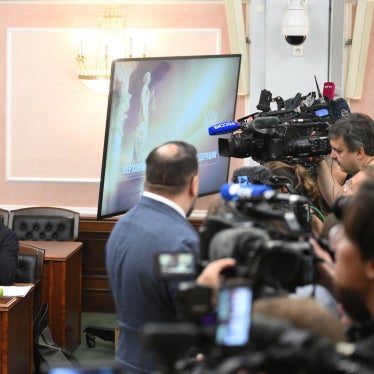
After a night in jail, Moniava appeared at a remand hearing. The public outcry over her arrest was so intense that the authorities released her from custody pending trial, imposing a ban on internet use and an 8 p.m. to 8 a.m. curfew. The politically motivated criminal case against Moniava threatens to harm the children and families who rely on her support. Russian authorities should immediately drop the charges against Moniava so that she can continue her vital charitable work and – if she chooses – continue to speak out against the war.