Who is Rodrigo Duterte?
What happened during the “war on drugs” in the Philippines? Is the “war on drugs” still happening?
What are the charges against Duterte?
What will happen during the confirmation of charges hearing?
What rights does Duterte have during the confirmation of charges hearing?
Can victims of alleged crimes participate in the hearing?
What measures are in place to protect witnesses at the ICC?
How will people in the Philippines follow the proceedings in The Hague?
What happens after the confirmation of charges hearing?
Did the Philippines not leave the ICC? Why can the ICC prosecutor still investigate and pursue a case against Duterte?
Can the ICC prosecute anyone else for killings or other crimes committed during the Philippines’ “war on drugs”?
Has anyone been held to account in the Philippines for crimes committed during the “war on drugs”?
What actions should the current administration under President Ferdinand Marcos Jr. take?
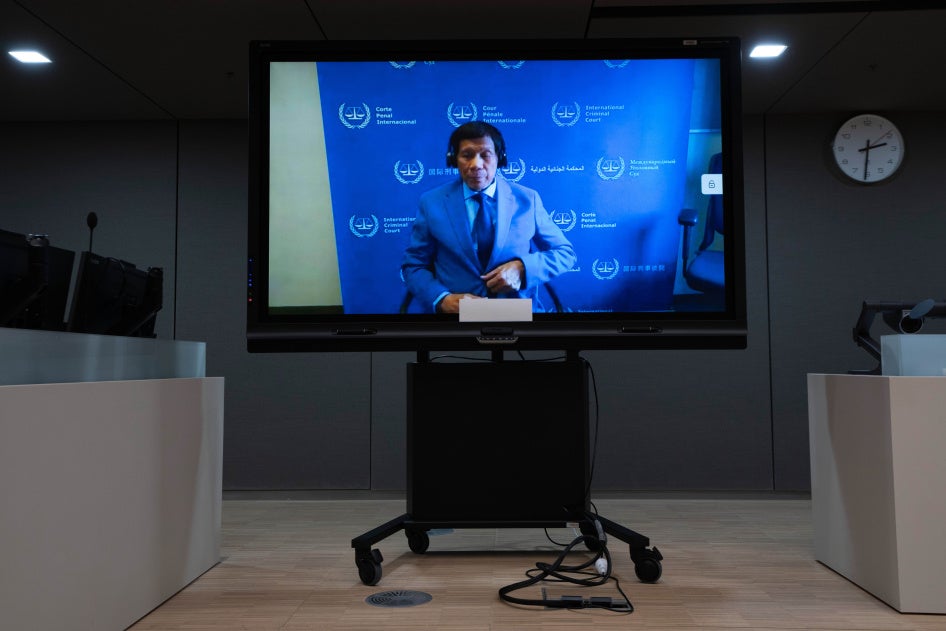
From February 23 to 27, 2026, judges at the International Criminal Court (ICC) in The Hague will hear evidence against former President of the Philippines Rodrigo Duterte in a “confirmation of charges” hearing to determine whether the case against him should proceed to trial.
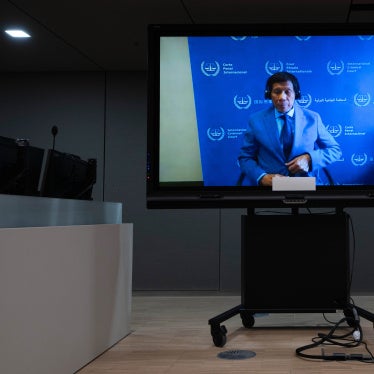
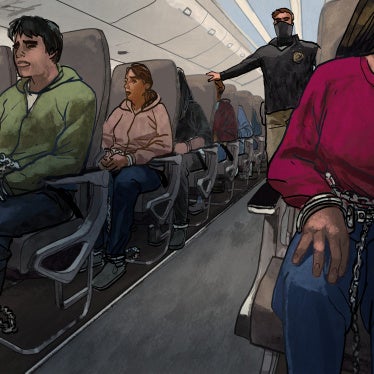
Duterte was arrested in Manila on March 11, 2025, by Philippine authorities acting on an arrest warrant issued by ICC judges and sent to Interpol, the international criminal police organization. He first appeared before the court, via video link from the detention center in The Hague, on March 14, 2025.
The ICC Office of the Prosecutor opened an investigation into crimes in the Philippines within the jurisdiction of the court in September 2021. The investigation covers alleged crimes committed from November 2011 until March 16, 2019, a day before the Philippines’ withdrawal from the ICC’s founding treaty—the Rome Statute—took effect. The alleged crimes include the large number of extrajudicial killings in Davao City while Duterte was mayor, as well as across the country during his presidency.
The following question-and-answer document provides background information about the case, the upcoming confirmation of charges hearing, and potential next steps in the proceedings.
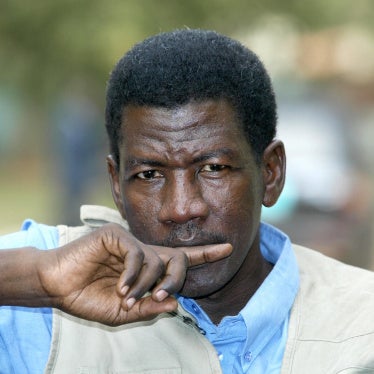
Rodrigo Duterte, born in 1945, was president of the Philippines from June 2016 until June 2022. Prior to being elected president, Duterte was the mayor and vice mayor of Davao City in the southern Philippines for more than two decades.
President Duterte initiated a nationwide “war on drugs” after taking office in 2016, purportedly to combat drug distribution and consumption, particularly in low-income urban areas. Duterte had launched a similar campaign when he was the Davao City mayor.
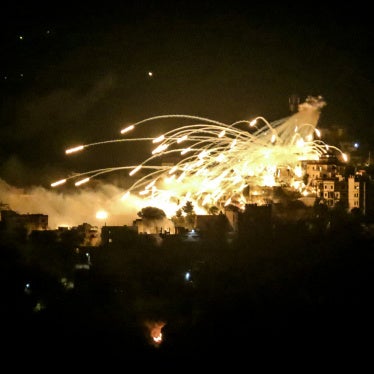
The “war on drugs” resulted in thousands of summary killings, mostly of the urban poor. Human Rights Watch and others found that the police regularly falsified evidence, such as by planting handguns, to justify the killings. The government reported that members of the Philippine National Police and the Philippine Drug Enforcement Agency killed 6,252 people during anti-drug operations from July 1, 2016, to May 31, 2022. After Ferdinand Marcos Jr. became president in 2022, the government stopped releasing statistics, but killings continued.
The official death toll does not include those killed by unidentified gunmen who Human Rights Watch and other rights monitors have credibly determined operate at the behest of local police and officials. The United Nations Office of the High Commissioner for Human Rights calculated in a 2020 report that the overall death toll was at least 8,663. Domestic human rights groups and the government-appointed Philippine Commission on Human Rights state that the real number of “drug war” killings is possibly triple that number.
Killings by police and unidentified assailants during drug raids have persisted in the Philippines after Duterte’s term as president ended. In 2025, monitoring by the independent research group Dahas showed that 271 people were killed in “drug war” related incidents across the Philippines. After Marcos took office on July 1, 2022, more than 1,000 people have died as part of the anti-drug campaign.
The ICC Office of the Prosecutor is seeking confirmation of three counts of the crime against humanity of murder against Duterte based on the following incidents set out in its “Document Containing the Charges”:
- Nine incidents relating to 19 murders in Davao City between 2013 and 2016, when Duterte was mayor;
- Five incidents relating to 14 murders of “individuals labelled as ‘high-value’,” including for their alleged involvement in drug manufacturing or drug syndicates,” in locations across the Philippines in 2016 and 2017, when Duterte was president; and
- Thirty-five incidents relating to 45 murders and attempted murders committed in clearance operations in barangays (villages or neighborhoods) across the Philippines in 2016 and 2018 when Duterte was president.
The Office of the Prosecutor has indicated that the specific incidents outlined in the document containing the charges are “a non-exhaustive list of examples of the conduct underlying the charge,” and that the 78 victims included in the document are “are a non-exhaustive list of victims in this case.” It further noted that should the charges against Duterte be confirmed, the prosecution may seek to present at trial evidence of additional incidents and victims within the framework of the confirmed charges.
The prosecution is alleging that Duterte is criminally responsible for these crimes in several different ways: for having indirectly committed them with others, through the control he exercised over and the support he provided to Philippine law enforcement agencies and the so-called Davao Death Squad; for having ordered and instigated them; and for having aided and abetted them.
At the ICC, arrest warrants are issued by a pretrial chamber on the basis of an application by the Office of the Prosecutor. In its arrest warrant application against Duterte, the Office of the Prosecutor requested the inclusion of charges of torture and rape as crimes against humanity in addition to murder. The pretrial chamber judges acknowledged that the information provided by the prosecution supported the conclusion that acts of torture and rape may have happened. However, they did not find a sufficient link between these acts and a broader attack on a civilian population—a required element of crimes against humanity—to justify including those charges in the warrant.
The hearing to confirm the charges against Duterte is not a trial. It is held before a pretrial chamber composed of three judges. The hearing will allow the judges to evaluate whether the prosecution has enough evidence to move ahead with a trial on one or more of the charges cited. The prosecution need not present all of its evidence at this stage but enough to satisfy the judges that there are “substantial grounds to believe” that Duterte committed the alleged crimes. This is a higher burden than the “reasonable grounds to believe” standard used by the chamber when issuing the arrest warrant.
Duterte, through his defense counsel, can object to the charges, challenge the prosecution’s evidence, and put forward his own evidence. However, the hearing is not aimed at determining guilt or innocence.
The confirmation of charges hearing was initially scheduled to begin on September 23, 2025. However, on September 8, the pretrial chamber decided to postpone the hearing indefinitely because Duterte’s lawyers contended that he was unfit to take part in the proceedings due to “cognitive impairment in multiple domains,” and requested an adjournment of the proceedings.
On January 26, 2026, the pretrial chamber rejected the defense’s arguments and found that Duterte was fit to take part in the confirmation of charges hearing. The chamber scheduled the hearing to begin on February 23. To assist their assessment, the judges had appointed a panel of three independent medical experts who conducted a medical assessment of Duterte and submitted their findings to the chamber on December 5.
Duterte’s rights during this hearing are similar to his rights at trial. He is presumed innocent until proven guilty, and is entitled to a fair and expeditious hearing conducted impartially.
Ahead of the hearing, Duterte was provided with the document containing the charges sought by the prosecutor, as well as a list of the evidence the prosecutor intends to rely on at the hearing. The disclosure of this evidence has been ongoing for several months.
Duterte has been in detention since his transfer to The Hague in March 2025. The Rome Statute provides for the right of an individual in ICC custody to request interim release pending trial. Judges may set one or more conditions to authorize such release, including limits to the individual’s travels and communications. Duterte submitted a request for interim release on June 12, 2025—citing, among other reasons, his advanced age—followed by an updated request on August 19. On October 10, the pretrial chamber denied that request, which was subsequently confirmed on appeal.
Following a ruling on a person’s release or detention, the Rome Statute provides that the pretrial chamber periodically review its decision. On January 26, 2026, the pretrial judges conducted the first periodic review of Duterte’s detention and found that there were no changed or new circumstances that would justify Duterte’s release. Duterte has appealed the decision. The court’s regulatory framework also requires the pretrial chamber to hold a hearing at least once a year to review an individual’s detention. The first such hearing for Duterte’s detention is scheduled to take place at the end of the confirmation of charges hearing, on February 27.
Based on recommendations from the panel of medical experts who assessed Duterte, as well as the medical officer of the court’s detention center, the judges ordered certain accommodations for the confirmation of charges hearing including limiting the length of the daily sessions, and allowing frequent breaks.
The Rome Statute provides for victim participation in proceedings before the ICC, a role that is distinct from that of testifying as a witness. This system—which permits victims to make their views and concerns known to the court through legal representatives—is an important innovation with the potential to ensure that the proceedings engage those directly affected by the alleged crimes.
Victim participants who cannot afford legal representation may benefit from financial assistance provided by the court, and the court has an obligation to victim participants to ensure their safety and well-being. The judges, in their role, ensure that victims’ participation is not prejudicial to, or inconsistent with, the defendants’ fair trial rights.
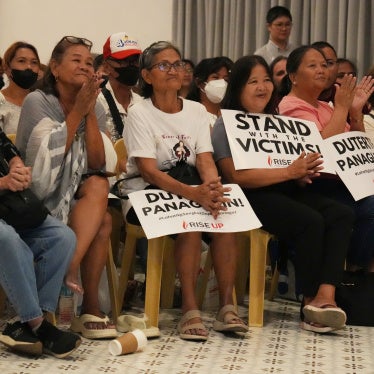
The pretrial chamber authorized 539 victims to participate in Duterte’s confirmation of charges hearing. The judges also appointed three legal representatives for the participating victims who will appear before the ICC judges on their behalf, including to make opening and closing statements as well as submissions during the confirmation hearings.
The Rome Statute and the court’s Rules of Procedure and Evidence contain comprehensive provisions for the protection of victims and witnesses participating in the work of the ICC, including during in-court proceedings. The court has a dedicated Victims and Witnesses Unit mandated specifically to provide necessary support and protection to victims and witnesses.
ICC judges can order a variety of protective measures, depending on the specific circumstances and vulnerabilities of individual witnesses. During in-court proceedings, these may include measures to conceal the witness’ identity, such as face and voice distortion while they are giving evidence, the use of pseudonyms, or conducting hearings in private or closed sessions. The court also provides protective measures for witnesses outside of in-court proceedings. These are targeted security arrangements aimed at concealing the witness’ interactions with the court. This can include conducting interviews in a safe, secret location, and as a last resort, the relocation of witnesses and their close relatives to a different country.
The opening of proceedings against Duterte at the ICC bears great significance for the tens of thousands of people across the Philippines who have suffered, witnessed, or documented abuses in the context of the “war on drugs.” It also sends a strong warning to others who may think of themselves as beyond the reach of justice.
However, the ICC is located far from the Philippines. The court faces the challenge of ensuring that its proceedings are meaningful for the people most affected by the alleged crimes and that victims are informed of their rights.
Following Duterte’s arrest and in the lead up to the confirmation of charges hearing, the court has increased its outreach activities with civil society organizations in the Philippines, which are the court’s main point of contact with victims and affected communities. This has included monthly, thematic interactive sessions to increase understanding of specific issues related to the proceedings before the court (such as victim participation). Key court information tools, such as news releases and documents explaining relevant elements of the court proceedings, have been translated into Filipino and Cebuano and shared with civil society organizations in the Philippines.
To counter dangerous misinformation in the Philippines about the court and the proceedings against Duterte, the court also engages actively with media in the country to ensure that factually correct reports reach the population.
The confirmation of charges hearing will be streamed, with a 30-minute delay, on the court’s website as well as its Facebook account and YouTube Channel. Transcripts will also be available on the court’s website.
After the hearing, the pretrial chamber will have 60 days to issue a written decision. If the chamber decides that there are “substantial grounds to believe” that Duterte committed the alleged crimes, the charges will be confirmed, and the case will proceed to trial.
If the judges decide that there is not enough evidence to confirm some or all of the charges, the prosecution can submit additional evidence and request a new confirmation of charges hearing.
The judges could also adjourn the hearing and ask the prosecution to consider providing more evidence or conduct further investigations in relation to a particular charge. In addition, they could ask the prosecution to consider amending a charge if it appears that the evidence presented establishes a different crime.
Did the Philippines not leave the ICC? Why can the ICC prosecutor still investigate and pursue a case against Duterte?
On March 17, 2018, then-President Duterte formally notified the United Nations secretary-general that the Philippines was withdrawing from the ICC’s Rome Statute. In accordance with the ICC treaty, the withdrawal took effect one year later. The provisions of the Rome Statute permit the court to retain its jurisdiction over crimes committed prior to withdrawal. In the case of the Philippines, this was from November 1, 2011—the date on which the Rome Statute went into effect in the Philippines—up to and including March 16, 2019.
The pretrial chamber judges confirmed the court’s jurisdiction over crimes allegedly committed in the Philippines during this period, when they authorized both the opening, and subsequently, the resumption of the Office of the Prosecutor’s Philippines investigation. Following a request by the ICC prosecutor, the court’s judges authorized the opening of an official investigation into the situation in the Philippines in September 2021.
Following a request by the ICC prosecutor, the court’s judges authorized the opening of an official investigation into the situation in the Philippines in September 2021. The investigation was temporarily suspended following the Philippine government’s request to defer the probe to national authorities. In November 2022, the ICC prosecutor asked the judges for authorization to resume his office’s investigation in the Philippines, which they granted in January 2023. This decision was upheld on appeal in July of the same year.
While the majority of the appeals judges who upheld the pretrial decision on the resumption of the investigation decided not to rule on the issue of jurisdiction, two judges dissented. They argued that the court does not have jurisdiction over the situation in the Philippines because the prosecutor’s request to open an official probe came after the Philippines’ withdrawal from the Rome Statute came into effect.
On May 1, 2025, Duterte challenged the court’s jurisdiction over the case following the same line of argument as the dissenting opinion. On October 23, the pretrial chamber dismissed that challenge, finding that because the prosecution had commenced its preliminary examination prior to the Philippines’ withdrawal from the Rome Statute, the court could retain jurisdiction in the case. Additionally, the judges concluded that enabling a state party to evade the court’s jurisdiction under these circumstances—given that its decision to withdraw came only after the prosecution’s preliminary examination had been initiated—would have undermined the object and purpose of the Rome Statute. Duterte has appealed the pretrial chamber’s decision and the matter is pending before the appeals chamber.
Can the ICC prosecute anyone else for killings or other crimes committed during the Philippines’ “war on drugs”?
The Office of the Prosecutor’s investigation into the situation in the Philippines is ongoing, and the prosecutor has the authority to determine which cases to pursue based on that. It is the ICC prosecutor’s policy to target those most responsible for crimes identified during an investigation.
Criminal liability before the ICC can apply to those who commit crimes but also to those who give orders as well as those in a position of command who knew or should have known of the abuses, and failed to prevent them or report or prosecute those responsible. At the ICC there is no exemption from liability based on official position.
There have been very limited domestic criminal efforts to investigate and prosecute those responsible for extrajudicial killings and other crimes committed during the “war on drugs.” Only five cases have resulted in convictions of members of the police, with a total of nine officers convicted nationwide. The most recent case was the September 2025 conviction of a police colonel for homicide: he shot a man at his home in Baguio City during a “buy-bust” operation in July 2016.
In November 2021, the Philippine government asked the ICC prosecutor to defer the investigation, claiming that national authorities had begun their own investigations into cases of extrajudicial killings attributed to the police during “drug war” operations. A panel of ICC judges reviewed various domestic proceedings, which included a review of administrative and criminal cases against the police by the Philippine Department of Justice, and internal disciplinary proceedings by the Philippine National Police, among other efforts.
In a January 2023 decision, the ICC judges concluded that the Philippine government had failed to substantiate its assertions that it was taking sufficient action to investigate and prosecute the killings under President Duterte’s administration. The decision was upheld on appeal.
President Marcos has never repudiated the “war on drugs” as a state policy and has yet to rescind the orders, and other policy statements, issued by then-President Duterte. Marcos should formally announce an end to the “drug war” and order investigations into the police and other officials implicated in unlawful killings. Government agencies should provide adequate and consistent support to the families of “drug war” victims, especially children. Marcos should also begin the process of rejoining the Rome Statute to demonstrate a commitment to international justice and accountability for atrocity crimes.