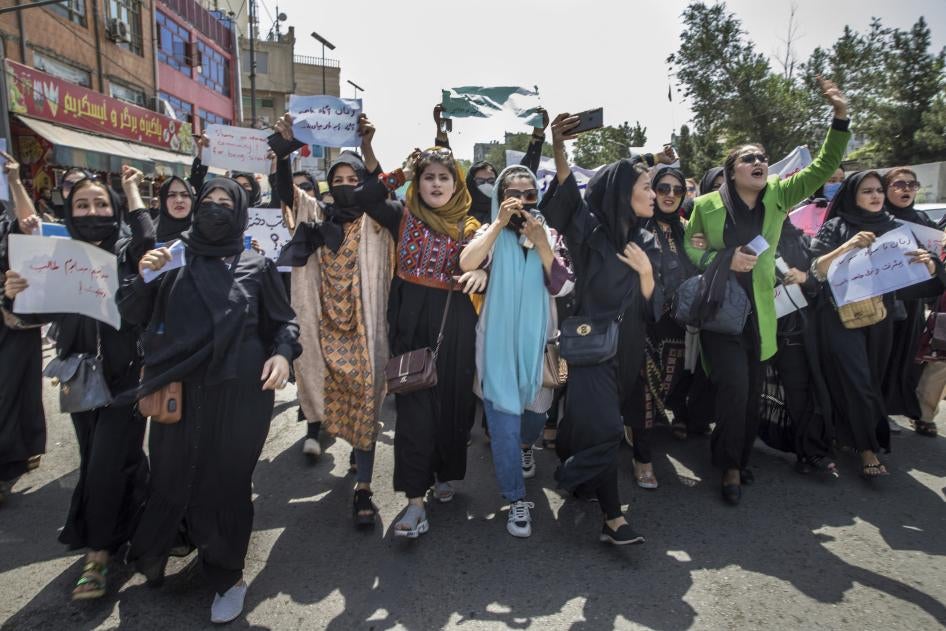
Today, August 15, marks four years since the Taliban regained power in Afghanistan. It is a somber anniversary for me and for the millions of fellow Afghans whose daily reality is marked by hunger, oppression and fear. Even more so Afghan women and girls, who face constant struggle of erased freedoms. But it is also an anniversary of broken promises made by Western democracies such as Germany, which has been heavily involved in Afghanistan with promises of protection and refuge for people at risk.
All this seems to be barely acknowledged in the debate in Germany. After the Taliban took power four years ago, Germany suspended deportations to Afghanistan. But last August, Germany sent 28 Afghans back. Meanwhile politicians are seriously discussing deporting more refugees. Just days after the International Criminal Court in The Hague issued arrest warrants against leading Taliban officials for crimes against humanity and the targeted persecution of women and girls, the German government sent back 81 Afghans to the country on July 18. This is a tragedy for the people affected and a signal that the situation in Afghanistan is being normalized.
Chancellor Friedrich Merz has since announced further deportations. Although Germany does not recognize the Taliban leadership, it has “technical contacts” regarding the deportations, which are supported by Qatar; a disastrous move for all Afghans.
Afghanistan is facing one of the worst humanitarian crises in the world. More than half of the Afghan population – around 23 million people – depend on food aid. The cut in foreign aid has forced hundreds of clinics and hospitals to close. Malnutrition rates among children are rising rapidly. The United Nations has repeatedly warned that Afghanistan is on the brink of famine.
The Trump administration's funding cuts for US aid programs – which accounted for more than 40 percent of humanitarian aid to Afghanistan until January 2025 – have shut down programs that were essential for food security.
As an Afghan woman, I believe that the Taliban’s abuses against women and girls in Afghanistan amount to an attack on women’s rights globally and needs a global response.
Women and girls are not allowed to attend secondary school or university, are barred from most professions, and cannot travel without a male guardian. The Taliban arrest and punish women for such “crimes”.
As the UN refugee agency has explicitly stated, Afghanistan is not a safe country for any refugee to return to. And Germany is not the only country turning its back on Afghan refugees. Iran and Pakistan have deported almost two million people in the last year, placing an even greater strain on already overburdened humanitarian systems.
Instead of considering deportations, the German government should reflect on its own humanitarian and political responsibility and take concrete action to promote human rights in Afghanistan. There are starting points for this. They should follow through on an initiative to seek to hold the Taliban accountable for their violations under the Convention on the Elimination of All Forms of Discrimination against Women.
Germany should also do all it can to back the International Criminal Court with political and practical support across its docket, including in its investigation in Afghanistan. This is all the more important now as the ICC faces threats to its independent mandate.
A coalition of Afghan and international human rights organizations last year relaunched a long-standing appeal to the United Nations Human Rights Council to establish an independent international accountability mechanism for Afghanistan. The mechanism would collect, preserve, and evaluate evidence of serious violations and human rights abuses in Afghanistan, with the aim of supporting efforts to hold perpetrators of such abuses to account. This would be a crucial tool on the long road to greater justice for the oppressed people of Afghanistan.
The anniversary of the Taliban's takeover is not just a date – it is a reminder of the broken promises of the international community. Even after four years, we Afghans have not given up hope. We continue to resist oppression, educate our girls in secretly run schools, , raise our voices—despite the immense danger to our lives and stay hopeful for a better future for Afghanistan.
That takes courage. It is a quality that Afghan women possess to an impressive degree. I therefore call on the German government to show more courage. The courage to clearly condemn human rights violations in Afghanistan, to unequivocally advocate for international justice, to resist populist myths about refugees from Afghanistan, and to clearly acknowledge its own responsibility to act.