Kahramanmaraş 3rd Administrative Court
June 25, 2025
Ministry of Environment, Urbanization and Climate Change
v.
Turkish Medical Association
AMICUS CURIAE BRIEF by HUMAN RIGHTS WATCH ON AFŞİN ELBİSTAN A COAL PLANT EXPANSION PROJECT
Interest of Amici Curiae
Human Rights Watch (“HRW”) submits this Amicus Curiae to the Kahramanmaraş Administrative Court in support of the court case, filed by the litigants requesting the suspension of execution and the cancellation of the Environment, Urbanization and Climate Change Ministry’s (“Ministry of Environment”) Environmental Impact Assessment decision (“EIA”), dated December 27, 2024. The decision approved the expansion of the Afşin Elbistan Coal Power Plant A with the installation of two additional units, and the litigant contends that the EIA does not meet the legal requirements as it lacks precise environmental evaluations and contains numerous deficiencies.
This submission analysis government air quality data from Elbistan, Kahramanmaraş, drawing on HRW’s expertise and research on the health risks of air pollution over decades from various regions of the world.[1] HRW has conducted on-the-ground research including interviews with members of the local community in Afşin Elbistan affected by environmental pollution, setting the issues in the context of national and international human rights law standards.
HRW is a non-profit, independent, non-partizan organization established in 1978 that investigates and reports on violations of fundamental human rights in over 100 countries worldwide with the goal of securing the realization of these rights for all persons. It is one of the largest international human rights organizations and has filed amicus briefs before various judicial bodies including national courts in Europe, Asia, Latin and North America, the European Court of Human Rights (ECtHR), the Inter American Court of Human Rights (IACHR) and the African Commission on Human Rights (ACHR), as well as interventions with United Nations (UN) bodies. HRW consistently advocates for the realization of all human rights including the right to a healthy environment.
For years, HRW has investigated structural barriers to the enjoyment of the right to a healthy environment in various regions of the world. In this submission, we have drawn from our 2024 report investigating health impacts of air pollution in Afşin Elbistan,[2] with additional context and updated air quality analysis, to discuss the environmental impact assessment for the Afşin Elbistan A Plant coal expansion project which the litigant is challenging, and which we hope will help inform court and the experts to decide the case.
HRW’s submission before the Kahramanmaraş Administrative Court is related to two broad matters:
(a) factual information, including from HRW’s own research as well as from experts, combined with analysis of air quality monitoring results between January 1, 2019-June 30, 2024 and interviews with local communities living nearby, and
(b) relevant standards under domestic and international law, drawing upon the HRW’s expertise in international human rights law.
In May 2024, HRW interviewed 28 residents about their experiences of air pollution in Afşin Elbistan, including 11 women and 4 older people; 2 elected village headmen from nearby villages; the mayor of the nearby town of Elbistan, 2 academics, 5 health professionals working in the region, 2 lawyers, 1 public official and 6 local activists.
HRW also reviewed and analyzed recent air quality data from the closest governmental monitoring station whose data is publicly available, satellite data of air pollution from the EU Copernicus program, and official government documents.
HRW wrote letters sharing research findings and asking a series of detailed questions to the relevant authorities about the underlying factors behind air pollution in the region and what measures had been taken to protect local communities from the health risks. Letters were sent to the relevant seven divisions at the Environment Ministry, and the Health Ministry, and to the parent company of the firm operating the coal plant which had applied for the additional units; to the state-owned electricity generation company; and to local government authorities. HRW also wrote to the Turkish Statistical Institute requesting health data related to Afşin and Elbistan districts. None responded. HRW representatives met with the deputy head of the EIA division at the Ministry of Environment on September 17, 2024, to share research findings and to inform them that the organization would be resubmitting in writing questions previously directed at the ministry. To date the Ministry of Environment has not responded to our re-submitted questions.
Our air quality analysis in Afşin-Elbistan reflects the assessment of the data gained from government-owned Elbistan air quality monitoring station and open-source satellite data resources.
Summary
This Amicus Curiae contends that the EIA fails to meet national and international legal standards in Türkiye and that the expansion should therefore not have been approved. Our assessment finds that the EIA:
- Lacks an adequate assessment of baseline air quality which fails to integrate the existing air pollution problem of the region.
- Ignores the impact of air pollution on human health.
- Fails to adequately evaluate the worst-case scenario as technological deficiencies of the Afşin Elbistan A Plant are not taken into account.
- Lacks a cumulative impact assessment based on the planned projects and relevant existing industrial installations.
- Fails to realize consultation and participation rights.
Academic studies conducted in the region and in areas where coal plants are located, with conditions similar to those in Afşin-Elbistan point out the coal plants' dangerous proximity to residential areas resulting in severe health impacts on local communities.
While the health risks related to air pollution in Afşin-Elbistan have long been a growing concern, the approval of two additional units with a total capacity of 688 MW to the Afşin Elbistan based on the flawed approach and shortcomings in the EIA would result in violations of the right to a healthy environment, the right to health, the right to life, and the right to family, home and private life, as guaranteed under the Turkish Constitution and by international treaties to which Türkiye is a party.
1. The EIA Lacks an Adequate Assessment of Air Quality
The EIA’s assessment of air quality is inadequate because of its extremely limited scope and its failure to integrate crucial information, including Elbistan’s existing air pollution problem and related health risks.
According to the Turkish EIA Regulation and the Türkiye’s Environment Law, numbered 2872, an EIA is undertaken to determine both positive and negative impacts of planned projects, to prevent negative impacts, or to minimize them to a level that will not harm the environment.[3] In EIA processes, selecting the correct geographical and temporal scope are critical to evaluate the project’s impacts.[4]
The EIA Regulation indicates that scientific research and data collection should be carried out in determining the environmental impacts of a project in order to prevent or minimize harm in the area where the project is planned.[5]
The EIA Regulation has established the legal requirement that a single EIA process should be carried out for integrated projects involving multiple activities that are interconnected and complementary in terms of their subject.[6] The case law in Türkiye has emphasized the importance of conducting an “integrated assessment of the impacts” as per this legal requirement.[7] The Council of State has also ruled that EIA approval reports issued separately for multiple facilities within an integrated project should not be evaluated in isolation but as a whole.[8] The importance of an integrated approach is also enshrined in the Air Quality Management and Assessment Regulation.[9]
The World Health Organization, in its guidance on the integration of health into environmental assessments, underscores that health inclusive environmental assessments are essential to preventing disease and averting unnecessary health cost.[10] According to the guidance, 82 percent of the 39 respondents in 21 countries in Europe implement health considerations within the environmental assessment process.[11] The guidance suggests that “the broader definition of health, beyond environmental determinants, should be considered to promote more informed decision-making and improve identification of health impacts and opportunities to prevent, mitigate and manage these.”[12]
Similarly, the EU EIA Directive requires that “the environmental impact assessment shall identify, describe and assess […] the direct and indirect significant effects of a project on the population and human health.” The degree of risk to human health is also listed among the criteria to determine whether the project should be subject to an environmental impact assessment.[13] To this end, the EU Directive necessitates that an EIA includes human health among factors likely to be significantly affected by the project.[14]
1.1. Inadequate Scope of the EIA Air Quality Assessment
The EIA presents an air quality assessment for the coal expansion project which fails to adequately evaluate the baseline levels of air pollution in the region.[15] Namely, the EIA’s approach to determining these levels relies on air quality measurements conducted by the EIA company within an extremely limited area, over a limited time period, and then uses these problematic results to project future emissions.[16] For reasons of spatial and temporal limitations, as well as a broader failure to integrate key existing data on air pollution, the EIA company’s approach to measuring air quality fails to comply with legal standards and produces misleading conclusions for decision makers.
1.1.1. Spatial Limitation
The EIA Regulation defines the project’s “impact area” as the “area affected by a planned project before operation, during operation, and after operation.”[17] In this context, Annex 3 of the EIA Regulation further describes the framework of EIAs on certain industrial installations, including coal plant projects, and identifies the project impact area as the environment likely to be affected by the project.[18]
Despite this clear definition, the EIA determines the “impact area” of the project through the definition of its “vicinity”, using a term and method that is not referred to in the regulations specific to EIAs and fails to calculate the impact of the planned project considering the meteorological and environmental characteristics in the region.
The EIA defines the “vicinity” as measuring 50 times the radius of the chimney height of the additional units, citing the Industrial Air Pollution Control Regulation.[19] As a result, the EIA wrongfully assesses the air quality standards within a very small radius, omitting the reality that air pollution travels long distances and overlapping pollution sources can lead to wider scale impact.
However, the scope of application of the definition in the latter regulation is very different, designating rules for emission permits, and cannot be used to define the “impact area” of an EIA. Importantly, the 2022 EIA Regulation does not include any reference to the Industrial Pollution Control Regulation of 2009 and cannot be considered lex specialis.[20] Additionally, the specific EIA template of the Afşin Elbistan coal power plant expansion project outlined by the Environment Ministry did not indicate that the “vicinity” definition is relevant in the case at hand.
1.1.2. Temporal Aspect
The temporal scope of an EIA air quality assessment involves correctly determining the baseline levels of air pollution and analyzing the contribution of the planned project over time. To this end, key factors determining the accuracy of the assessment include the timeframe over which air pollution data is collected, seasonal variability to understand how pollution levels fluctuate at different times of the year, short-term and long-term effects, and projection of future impacts to evaluate the planned project’s impact on air quality during its lifespan.
Under the EIA Regulation, the assessment of environmental impacts during construction, operation, and post-operation phases is necessary, mandating the collection of data on current air quality conditions and its potential changes over time, ensuring the evaluation of long-term effects.[21] According to the Regulation on the Control of Industrial Air Pollution, air pollution measurements need to take account of seasonal variations and long-term effects. The regulation stipulates that the operator of a plant needs to provide regular updates on developments over time.[22] The Regulation on Air Quality Assessment and Management also requires the evaluation of temporal variations in air pollution levels for both short-term monitoring and long-term predictions.[23] These legal references confirm that air quality assessments in EIA processes should not rely solely on short-term measurements but must account for time-dependent variations and future projections.
There are also concerns about inconsistencies with regards to the relevant timeframe of meteorological features and characteristics that are key to ensuring sound air quality assessments. The EIA company used meteorological data from the Elbistan meteorology station from 2015, nine years before the EIA dated December 2024 was finalized, and likely not reflecting current meteorological characteristics that have changed due to the effects of climate change.
This decision was based on correspondence with the Kahramanmaraş General Directory of Meteorology in 2019, five years before the finalization of the report. The reference year of 2015 is also inconsistent with the approach taken in a comparable EIA, namely the Afşin coal power plant C, where meteorological data from 2016 was used.
1.1.3. Failure to Integrate Key Data Sources
A key flaw of the EIA is its failure to analyze and integrate historic and current data from the only government-run air quality ground monitoring station in the region, namely the station located in Elbistan.[24] This amounts to a major violation of the EIA Regulation‘s purpose to conduct a full assessment of the planned project‘s potential impacts on the environment.
Considering these characteristics of air pollution and the region, it is essential to evaluate data from long-term monitoring stations and in wider-scale areas. For example, baseline levels of air pollutants may not remain constant over time. For example, PM2.5. and NOx near roadways are usually higher during rush hour periods.[25] Another recent example demonstrating the importance of including data from ground monitoring stations are the February 6, 2023, earthquakes, during which 99.326 buildings in total collapsed or were heavily damaged, contributing to air pollution.[26]
Another key data source which should have been included in the EIA is the ground monitoring station owned by the state-run Electricity Generation Company, the previous operator of the Afşin Elbistan A Plant. This data is also omitted from the EIA’s assessment, as is the air pollution inventory report from authorities. [27]
1.2. Lack of Integration of Existing Air Pollution Problem
A major shortcoming of the EIA is the missing integration of an assessment of the persistent air pollution in the region, despite systematic exceedances of air pollutant limits recorded by the government-operated monitoring station. This omission contradicts the ultimate objectives of the EIA and Türkiye’s air pollution control regulations.
The EIA should not only include the collection and analysis of data specific to the project but should have also conducted an air quality assessment, taking into account all available sources of air pollution data, comparison between public data and the data reached through passive diffusion measurements included in the current EIA and an evaluation and justification of the systematic pollution in the region based on the data published by the Ministry of Environment.
In our research, we assessed air pollution levels for the region over the past five years, relying on the published data from the Elbistan Air Monitoring Station located 22km away from the coal plant.[28] According to this government data PM10 and SO2 pollutants have systematically exceeded the limits set by the Air Quality Assessment and Management Regulation over the past five years.
A second air quality monitoring station, observed on-site by HRW researchers, is located in the vicinity of the former municipal building in Çoğulhan and is operated by Electricity Generation State-run Corporation. However, the data from this station is not publicly available. To date, its data has never been published, and despite HRW’s requests lodged repeatedly to the authorities, these records have not been shared.
In addition to HRW’s reporting, similar research findings have been shared in various reports published by the Right to Clean Air Platform, which was established by medical professional organizations and environmental institutions.[29]

1.2.1 Dangerous Sulfur Dioxide Pollution Levels
HRW’s analysis of air quality data from January 1, 2019, to December 30, 2024 found dangerously high levels of air pollution in the area surrounding the Afşin-Elbistan coal plants. Analysis of satellite data from the Copernicus Sentinel-5P mission shows that the average concentration of sulfur dioxide (SO2) was significantly higher over the plants and in the surrounding villages than over Elbistan, the location of the closest air quality monitoring station whose data is published. Residents living in villages close to the coal plants said they have not received any information about the risks from the plants in the region or how to help protect themselves.
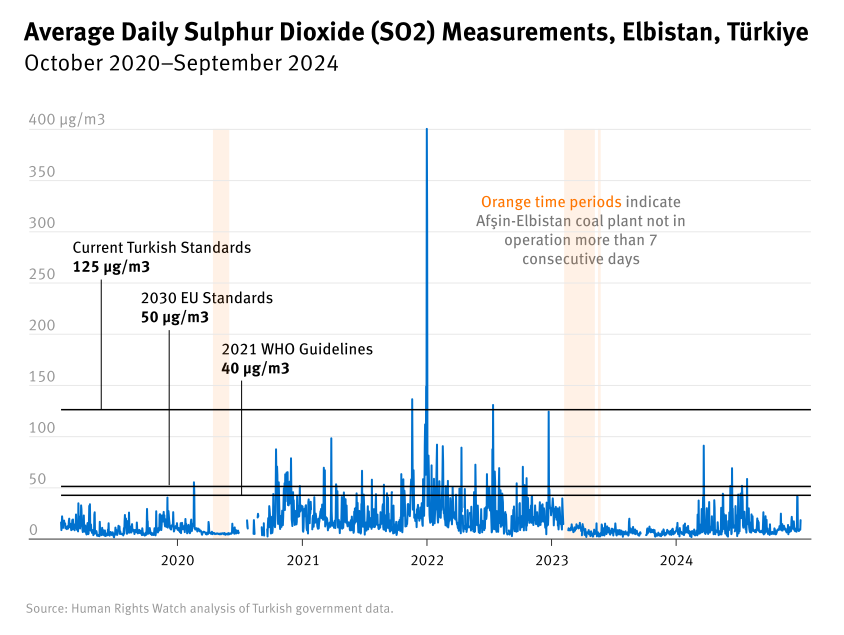
The graph above represents the daily average of SO2 concentration between January 2019 and December 2024 measured at Elbistan air quality monitoring station. Pollution levels started to decrease when operations temporarily ceased between February and May 2020. Pollution levels decreased more significantly when operations also ceased for most of 2023 after the two earthquakes of February 6, 2023. For comparison, the graph above includes the daily WHO recommended SO2 concentration limit of 45 µg/m³, the proposed EU 2030 standards limit of 50 µg/m³ limit, and the 2019 Turkish standards limit of 125 µg/m³. © 2025 Human Rights Watch
The SO2 values recorded at the government ground level monitoring station in Elbistan are very likely to be much lower than at the levels at locations closer to the plant. The average SO2 vertical column density at ground level from January 1, 2019 to December 31, 2024, over the village of Çoğulhan, directly adjacent to the plant, was almost three times higher than the average density recorded over the monitoring station in Elbistan during that period.

Map of the average SO2 concentration from January 1, 2019, to June 30, 2024, around the Afşin-Elbistan coal power plant A showing significantly higher levels in the immediate vicinity of the plant than over the closest monitoring station, 22km away in the town of Elbistan. Data © Copernicus Sentinel-5P processed with Google Earth Engine. Analysis and graphic © Human Rights Watch.
The Afsin-Elbistan A plant had been allowed to operate without desulphurization filters required by environmental regulations for many years. Despite repeated legal challenges and campaigning that resulted in its closure on January 1, 2020, for failure to comply with environmental regulations, the government permitted the plant to reopen in May 2020 and to continue operating until the earthquakes, which damaged the plants.
HRW analysis of SO2 concentrations recorded at the Elbistan ground monitoring station between 2019 and December 2024 shows that pollution levels started to decrease when operations of plant A temporarily ceased between February and May 2020 because the government said it had failed to comply with regulatory requirements.
Pollution levels decreased even more significantly when operations of plants A and B ceased for most of 2023 after the two earthquakes of February 6, 2023, affecting the entire region and slightly damaging the plant.
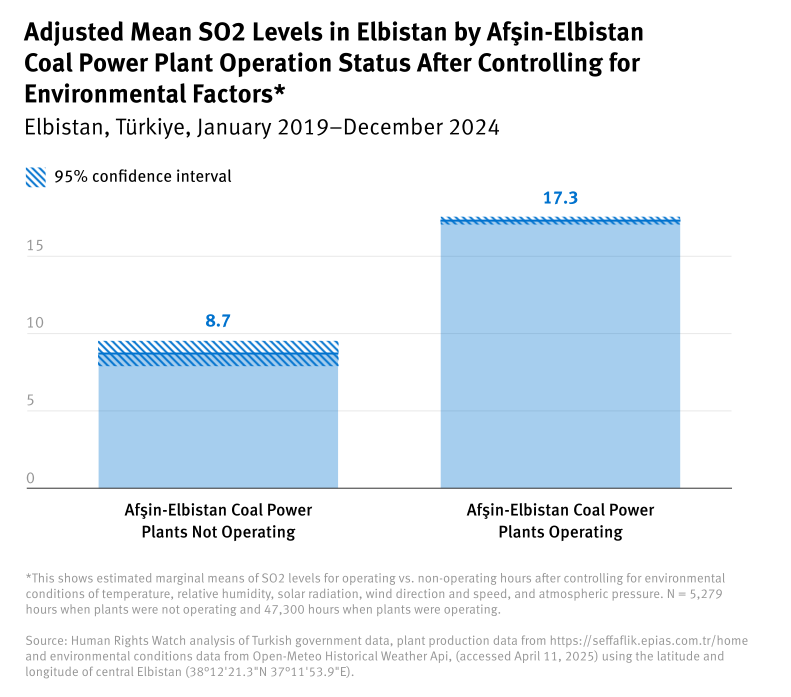
Whether the plants are running or not is the strongest predictor for SO2 levels and plant operation has a much larger effect on SO2 levels than any environmental factors. When controlling for the environmental conditions of temperature, relative humidity, solar radiation, wind speed and direction, and atmospheric pressure, SO2 levels are 8.6 µg/m3 higher an average when the plants are in operation than when they are not.[30]
1.2.2. Dangerous PM10 Pollution Levels
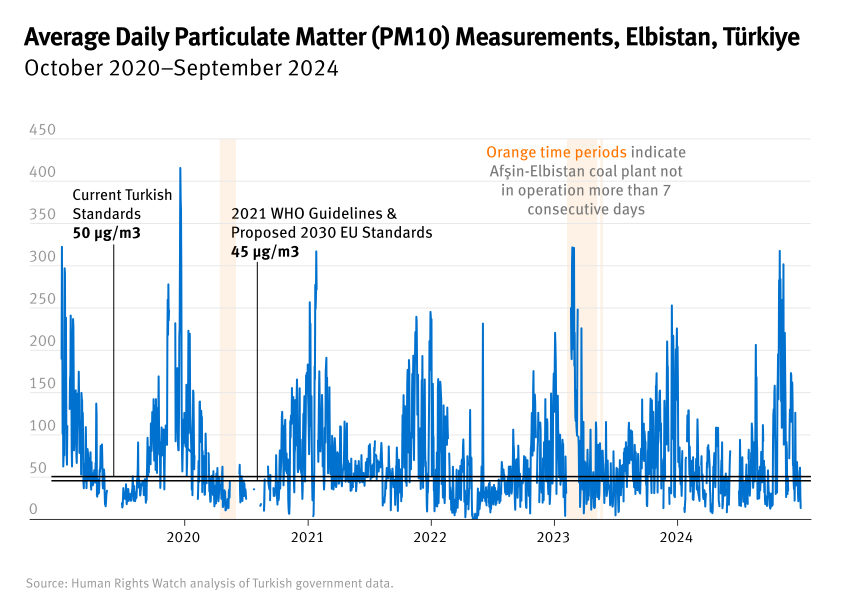
The graph above represents the daily average of PM 10 concentration between January 2021 and June 2024 measured at Elbistan air quality monitoring station. Over the course of the year, the daily standards are exceeded regularly. In fact, 2024, the PM10 standards were exceeded in nearly half of the days of the year. For comparison, the 2019 Turkish daily standard (50 µg/m³), the WHO recommendation and the proposed EU 2030 daily standard (45 µg/m³) are also displayed. © 2025 Human Rights Watch
Human Rights Watch analysis of PM10 concentrations at the Elbistan air quality monitoring station between January 2021 and December 2024 also shows that pollution levels have remained high in recent years, with an average PM10 concentration more than four times the annual WHO recommended level and 1.75 times the 2019 Turkish standard.
1.2.3. Dangerous PM2.5 Pollution Levels
The impact of particulate matter of less than 2.5. micrometers (PM2.5) on human health is substantial. PM2.5 can reach deep into the lower respiratory tract, leading to serious respiratory and cardiovascular problems, and can easily enter the bloodstream and penetrate the lungs.
Türkiye’s air quality standards are less strict than those recommended by WHO and do not include a limit for the harmful PM2.5 pollutant, responsible for the most deaths worldwide of any pollutant, leaving a major regulatory gap. Nevertheless, based on the pollution prevention principle enshrined in Article 3 of the Environment Law, conducting an assessment of PM2.5 in the EIA is necessary. Despite the lack of legal limit value for the PM2.5, the Elbistan air quality monitoring station has been measuring PM2.5 since 2019. Such an evaluation would also have been necessary in light of expected future developments of air quality standards in Turkey during the lifespan of the project.
Türkiye has made clear commitments to fully align with EU Directives, including setting a pollutant limit for PM2.5. These commitments alongside with precautionary principle in environment related decision-making process require the thorough analysis of PM2.5., the most harmful air pollutant for the human health, highly emitted from the coal plants.
In fact, the additional units are expected to be operational from 2027 to 2062. The EIA is a process to evaluate the future environmental impacts and whether those impacts including emissions are compliant with the law. As the Turkish government has repeatedly stated its intention to harmonize Turkish law with EU air quality standards, this requires an assessment of compliance under 2024/2881 EU directive which will be in force as of 2030 in the EU. Additionally, the EIA guidance, published by the ministry suggests EIA companies to take 2008/50/EC which is a directive in force in EU and includes PM 2.5. limit value.
Human Rights Watch analysis of PM2.5 levels recorded at the government monitoring station in Elbistan from January 2021 to June 2024 found that the average PM2.5 concentration was more than five times the annual WHO recommended level and almost three times the proposed 2030 EU standard.
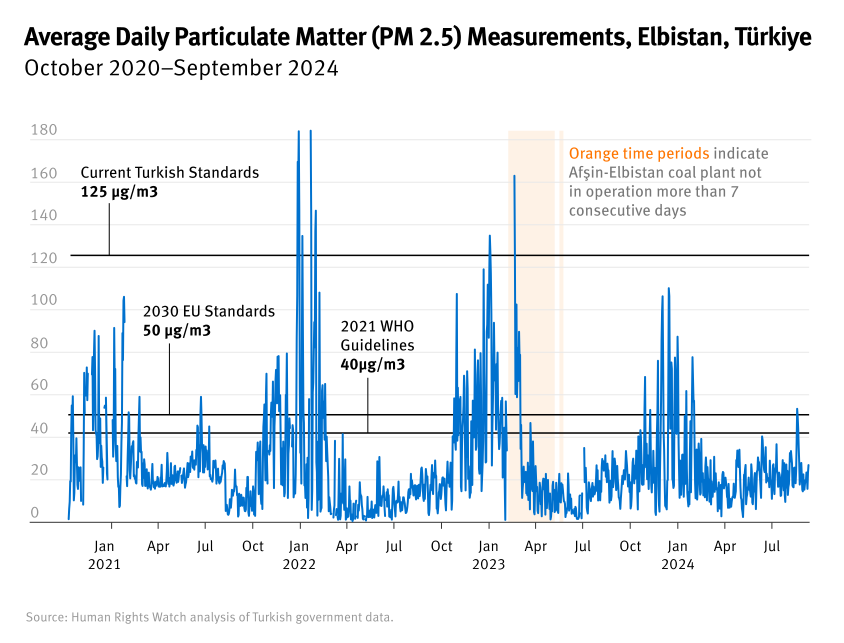
The graph above represents the daily average PM2.5 concentration between January 2021 and December 2024 measured at Elbistan air quality monitoring station. For comparison, the WHO recommendation (daily average no higher than 45 µg/m³) and proposed EU 2030 standard (daily average no higher than 25 µg/m³) are also displayed. © 2025 Human Rights Watch
1.3. Lack of Integration of Health Risks
The high levels of air pollution in the Afşin-Elbistan region, where the coal expansion project is planned, pose significant health risks. Current environmental legislation in Türkiye, from international agreements to regulations aimed at preventing environmental pollution, reference the consideration of health impacts of projects that may harm the environment. In this context, the lack of a health risk assessment in the EIA Report regarding the coal expansion project in Afşin Elbistan, is not consistent with the goals and principles of current legislation concerning environmental and health protection.[31]
The pollutant limit values contained in the Air Quality Assessment and Management Regulation serve the purpose of protecting human health.[32] Therefore, any EIA process should evaluate environmental impacts with the goal of mitigating or reducing adverse health impacts including those linked to exposure to air pollution. The failure to examine health impacts in an appropriate and consistent manner in the EIA amounts to a broader failure to uphold the positive obligation of the administrative authorities to take measures to protect health.
1.3.1 Health Risks of Air Pollution in Afşin Elbistan
Scientific research has found that exposure to air pollutants from coal power plants is associated with a risk of mortality more than double that of exposure from other sources and that canceling new coal plants would reduce air pollution related mortality globally.[33]
The impact of particulate matter of less than 10 micrometers (PM10) and of less than 2.5 micrometers (PM2.5) on human health is substantial. PM2.5 can reach deep into the lower respiratory tract, leading to serious respiratory and cardiovascular problems, and can easily enter the bloodstream and penetrate the lungs. Another pollutant of concern is SO2 which can cause harmful effects to the lungs, damage the cardiovascular and nervous systems and contribute to type 2 diabetes and even death.[34]
In 2002, the head of the Health Ministry’s Cancer Control Department made a statementthat a cancer explosion was expected in Afşin-Elbistan, in the ensuing five years.[35] The official noted that a coal power plant had been built there 30 years earlier and that the coal plant posed a serious danger to the people of the region.
Çelikler Holding says on their website that they “aim to prevent negative impacts on the environment and society and to take appropriate measures [to reduce such impacts] where they cannot be prevented.”[36] The company did not respond to questions about the measures taken to minimize the release of harmful air pollutants and requested projections once filtration is fully installed at the plant.
People living in the vicinity of the coal plants in Afşin-Elbistan described health problems that they believe could be related to the toxic air they are breathing. Children from Çoğulhan and six neighboring villages attend schools close to the plant. A health professional in Elbistan told Human Rights Watch that they had observed a high incidence of respiratory diseases, particularly among children.
People with certain health conditions, such as asthma or cardiovascular problems, children, older people, pregnant women, workers, those living in poverty, and members of other socially and economically marginalized groups are among those most at risk of exposure and adverse effects of air pollution.[37]
Scientific research drawing on data from 83 countries suggests that the more a country relies on coal power plants to generate energy, the greater the lung cancer risk.[38] While research specific to the health impacts of air pollution for people in surrounding areas of the Afşin-Elbistan coal plant is scarce, a 2009 PhD thesis found that nonsmokers in nearby villages were more likely to experience genotoxic damage than those further away from the plant, which may increase the risk of cancer.[39] Similarly, a 2007 academic study found nonsmoking workers employed in the transportation of fly ash at Afşin-Elbistan A power plant to be more likely to experience cytogenetic damage (changes in their chromosomes which can lead to cancer).[40]
1.3.2. Health Risks of Expansion
The EIA lacks any data collection, analysis, or assessment regarding the health risks attributed to air pollution. While the EIA discusses the health impacts of climate change at the global level,[41] the absence of a health assessment on air pollution – arguably the most pressing public health concern in the region- is a significant shortcoming.
In the section analyzing the socio-economic characteristics of the project area, the EIA lists healthcare centers and hospitals in the province of Kahramanmaraş, but falls short of discussing the relevant specialties offered. It is worth nothing that a 2017 report by the health ministry identified Elbistan as a priority region for establishing an oncology service, a recommendation that has not been followed.[42] The Health Ministry did not respond to HRW’s questions regarding cancer prevalence in Afşin and Elbistan districts and whether further studies had been carried out.
Exposure to air pollution causes a wide range of health effects including respiratory illness and infections, heart disease, stroke, lung cancer and negative birth outcomes. To this end, poor air quality has implications for a wide range of human rights, including the rights to life, health, water, food, housing and an adequate standard of living. The UN Special Rapporteur Report’s on the issue of human rights obligations relating to the enjoyment of a safe, clean, healthy and sustainable environment contain extensive references to the interrelated imperatives of respecting human rights and improving both ambient and household air quality.[43] The UN Special Rapporteur concludes that states must not violate the right to breathe clean air through their own actions; must protect the right from being violated by third parties, especially businesses; and must establish, implement and enforce laws, policies and programs to fulfil the right.[44]
1.4. Inadequate Worst-Case Evaluation
According to the EIA Regulation, maximum emissions and worst-case dispersion conditions must be considered together under maximal production of activity levels to ensure an adequate assessment.[45] According to the EIA, baseline measurements were carried out in locations within the so-called “vicinity,” referencing the Regulation on the Control of Industrial Air Pollution.[46] These measurements were conducted in two periods, August-September 2022 for the summer period and November-December 2022 for the winter period, in four different locations.
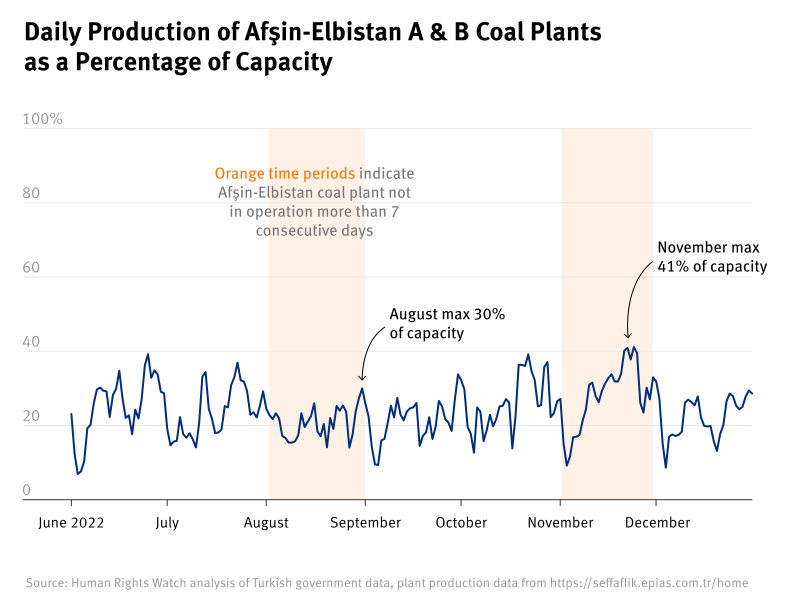
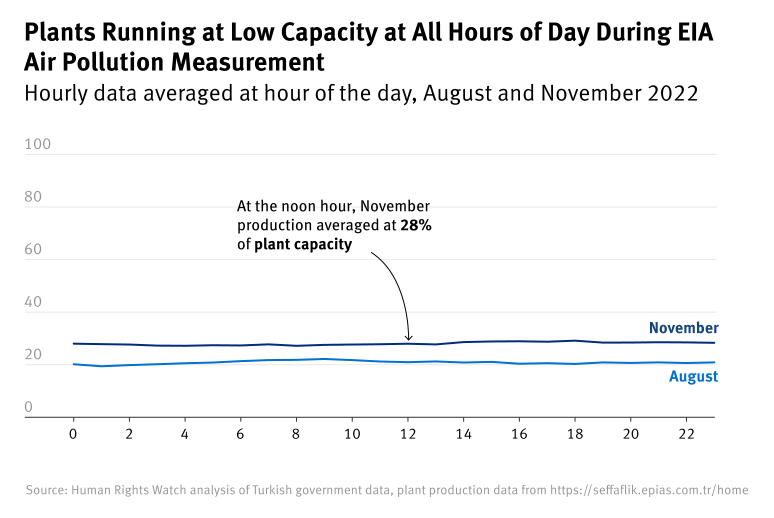
Data obtained from the Electricity Generation Transparency Platform shows that the measurements conducted by the EIA company using the passive diffusion sampling methods were carried out during periods when the Afşin A and B Power Plants were not operating at full capacity raising doubts about accuracy in terms of the baseline.
Human Rights Watch compared total energy production against the Afşin plant’s capacity of 2795 MWe (Plant A (4 units with total capacity of 1355 MWe) + Plant B (4 units with total capacity of 1440 MWe) = 2795 MWe). Specifically, we examined the periods of August 1, 2022 – August 31, 2022 and November 1, 2022 – November 30, 2022 when the EIA company conducted its own air pollution measurements near the coal plant and used the results for it’s environmental impact assessment report. During those time periods, the plant was operating at an average of 24 percent of total capacity. August averaged 21 percent of capacity and November 28 percent.
The technical shortcomings of the current plant raise further concerns about the accuracy of the worst-case assessment. As of December 26, 2023, only one of four A plant units, for the first time fitted with a desulfurization filter, had been permitted to restart. The EIA itself reveals that the other three units of the existing coal plant lack proper and fully installed filters for SO2 and there is no NOx pollutant control system in any of the units in the Afşin Elbistan Plant A.[47] It is unclear from the EIA whether the projected emissions from these units which do not have complete and adequate desulphurization and DeNOx systems have been taken into account.[48]
An additional reason for concern regarding the assessment of the worst-case scenario are the common exceedances of pollutant limits at the unit that is currently operating, as demonstrated by severe administrative fines imposed in recent years.[49] Unless these exceedances, based on malfunctions, are taken into account, the assessment of the baseline and worst-case scenario will not be reliable.
Additionally, the efficiency of these filtration systems varies depending on the technology used and their operational lifespan.[50] The EIA, which presents these filtrations and treatment facilities as a solution to air pollution, fails to provide any information on what measures will be taken in case of efficiency shortcomings, malfunctions, or deterioration over time.
While the best available technology for desulfurization can drastically lower SO2 emissions, it is unclear which technology is used at the unit that has been permitted to restart.[51] There are also concerns that air pollutant filters lose performance efficiency over time.[52] As is acknowledged in the environmental impact assessment, if new units are added to the existing coal plant, SO2 pollution levels in the area will rise.[53] In addition, while the best available desulphurization technology can significantly limit exposure to SO2, it cannot undo the health harm caused by prior exposure.
Other references in the EIA also indicate that the assessment may not be best on the status quo of the installed technology. For example, the EIA states that a reference document adopted in July 2006 is taken as reference for the application of electrostatic filtration planned to prevent and reduce the emissions of the additional two units. However, the said reference document was updated in 2017,[54] mandating new technologies such as advanced filtration and chemical systems to further reduce NOx, SO2, PM and mercury emissions.
2. The EIA Fails to Account for Cumulative Impacts
Türkiye’s EIA Regulation requires the identification and analysis of environmental risks and impacts that the planned project may have on determined areas or resources directly affected by the project, in conjunction with existing, planned, or potentially related activities. However, the EIA fails to include a full cumulative impact assessment in that its modelling omits all existing and planned pollutant-generating activities and projects in the region.
According to the EIA, the planned fifth and sixth units under the expansion project are intended to be built within the Afşin-Elbistan districts, where there are the following existing or planned facilities:
- Existing A plant (in operation)
- Existing B plant (in operation)
- Elbistan Energy Plant Integrated Project (including a coal plant, industrial waste storage area, and coal mines) (at planning stage)
- Diler Elbistan Coal Plant Integrated Project (at planning stage)
- Afşin C Coal Plant, open pit coal mine, and regulated waste project (at planning stage)
However, no findings or conclusions of any cumulative impact assessment which includes Diler Coal Plant Integrated Project and the non-coal projects are shared in the relevant section.[55] In fact, the EIA states that Afşin A, B plants and C plant, which is at planning stage, are included in cumulative impact assessment.[56] In contravention of existing legal precedents and the regulation, it appears that the other planned projects (energy plant projects of Diler and Elbistan) or pollution-generating industrial installations (Kipaş paper factory), which are also mentioned at the EIA[57], were not included in evaluating the cumulative impact.
In judicial review, when assessing cumulative impacts “other polluting facilities operating in the region (such as thermal plants, steel mills, iron and steel facilities, refineries, petrochemical plants etc.)” must also be taken into account.[58] In a 2018 ruling, the Council of State underlined that cumulative impact assessment is essential for applying the precautionary principle and protecting the right to a healthy environment.[59]
Another crucial shortcoming to assess cumulative impacts in the EIA is the lack of clarity over whether or not plants were taken into account by calculating their emissions when operating at full capacity. In other words, it is unclear whether the projected emissions will fall within legal limit values when all existing plants plus the new plants operate together at full capacity.
The EIA relating to the expansion of Afsin Elbistan plant A also fails to give consideration to the appropriacy of expanding the power plant, ignoring the option of not implementing the project. The Thermal Plants EIA Guide published by the Ministry of Environment, states that “the alternative of not implementing the project must always be considered and compared when evaluating alternatives for a thermal power plant project.”[60]
3. The EIA Fails to Respect Consultation and Participation Rights
The EIA’s analysis is flawed in that it fails to ensure adequate consultation and participation of impacted communities, as required by international norms and the procedural EIA standards in Turkish law.[61]
3.1. Lack of Consultation of Affected Community
Under the EIA Regulation, people living near the project site are considered “affected community” whose participation in the decision-making process is a legal requirement.[62] The EIA process did not include meaningful participation by the public likely to be affected by the project which constitutes a major shortcoming in the decision-making process.
The public participation meeting was held approximately 24 km away from the project site and was not easily accessible to those communities of Çoğulhan and Berçenek.[63] Given that the planned coal expansion project is to be located just 200 meters from the nearest residential areas in Çoğulhan village, and 5 km from Berçenek, it is of central importance that the court consider whether or not there was effective public participation from these communities in the EIA process.
The map below illustrates the proximity of residential areas, as well as primary and secondary schools, to the project site and the conveyor belts that will be used to transport coal as part of the project.

People interviewed by HRW in Çoğulhan and Berçenek, who suffer from various health issues that they believe are linked to air pollution, stated that they had not received any official communication from the authorities about the planned expansion. Residents of Çoğulhan and Berçenek stated that there was no public transportation or shuttle service available to take them to nearby districts such as Afşin and Elbistan. In particular, residents of Berçenek reported that they have had no transportation service to nearby districts for years, making visits to hospitals in those areas difficult and costly.
For residents of these neighborhoods, who were not provided with any public transportation or shuttle services, attending the public participation required them to rely on their own means, creating an additional burden and acting as a barrier to effective participation.
The meeting minutes under the Public Participation Section within the EIA show that none of the residents from the neighborhoods closest to the project attended the meeting.[64] The meeting records and photos also indicate that few women attended.[65] Women who participated in HRW’s research stated that they are severely affected by the existing coal plants, which are dangerously close to the residential areas.
3.2. Lack of Substantive Response to Health Concerns Raised
The concerns and questions raised by participants in the EIA public participation meeting held on April 27, 2022 at the Afşin Municipality Wedding and Conference Hall, 24km from the plant, regarding health issues linked to severe air pollution were not adequately addressed by the EIA company and the relevant authorities.
Participants in the meeting specifically raised concerns about the severe air pollution in residential areas near the site where the coal expansion project is planned. The EIA cites individuals who attended the meeting expressing serious concerns about air pollution and its health risks, including various respiratory health issues and lung cancer.[66] The interviewees expressed significant concerns about air pollution as a factor contributing to diseases.[67]
Air pollution levels near plant A – and the later built plant B located two kilometers away – are dangerously high and residents are experiencing health conditions such as respiratory diseases, allergies and cancer that they believe are attributable to toxic air. Moreover, these health concerns were officially acknowledged in the media in 2002,[68] when the head of the cancer department at the Ministry of Health at the time stated that cancer rates in the Afşin Elbistan region were expected to rise.
The official record of the April 2022 public participation meeting indicates that responses to public concerns about air pollution impacting health were mainly formulated as technical explanations on how emissions could be reduced.[69][70] In fact, it appears that the EIA company and authorities sidestepped the participants’ serious health concerns by answering with vague, abstract, complex, and difficult to understand explanations. Importantly, none of the responses given either at the meeting itself or in the EIA are sufficient to address the questions and health concerns raised by the public because they provide no clear information on the current state of air quality in the region, potential health risks, or measures to mitigate these risks.
3.3. Other Consultation Shortcomings
According to the information in the EIA, no specific institution related to public health under the Ministry of Health or Elbistan Municipality was included in the Review and Evaluation Commission established during the EIA process. The EIA Regulation states that “a commission shall be established by the Environment Ministry, consisting of relevant public institutions and organizations as well as ministry officials, taking into account the information in the project application file.[71]
Considering that the project’s impact area overlaps with the boundaries of Elbistan district and that the closest air monitoring station to the project site is located in Elbistan, the exclusion of Elbistan Municipality represents further non-compliance with the public participation process.[72] The Mayor of Elbistan, in an interview with HRW, stated that during the EIA process, authorities neither informed nor consulted the Elbistan Municipality in any way.
The absence of a local government within the project’s vicinity area in the EIA review and evaluation process is a shortcoming not only in terms of the municipality’s environmental and health-related work but also in ensuring that the experiences of the local population are taken into account. Excluding a local government authority that interacts with the local community is likely to result in the disregard of local resident’s concerns and experiences.
4. Relevant International Human Rights Law
The right to a healthy environment has been recognized by the United Nations (UN) General Assembly,[73] and its realization is essential to the fulfillment of other human rights. Human rights obligations to respect, protect, and fulfil the rights to life, to bodily integrity, to private, family and home life, to health, to information and to a healthy environment, among others, require governments to take action to prevent air pollution and strive to ensure clean air. Türkiye is a party to many human rights treaties including the European Convention on Human Rights (ECHR),[74] the International Covenant on Civil and Political Rights (ICCPR),[75] the International Covenant on Economic, Social and Cultural Rights (ICESCR)[76] and the Convention on the Rights of the Child (CRC),[77] which guarantee these rights and require such action. Under article 90 of Türkiye’s Constitution international treaties duly put into effect have the force of law, meaning that these treaties, properly signed and ratified by the state, are part of Türkiye’s domestic law.
4.1. European Convention on Human Rights
Articles 2 and 8 of the ECHR protect the right to life and right to private, family and home life, respectively. Both articles impose negative obligations to refrain from acts which interfere with the enjoyment of rights, and positive obligations to put in place a framework to ensure respect for and protection of these rights. The European Court of Human Rights (ECtHR) has determined that the positive obligations under article 2 largely overlap with those under article 8 in the context of dangerous activities, including forms of environmental harm, and that the state is expected to take the necessary measures under both articles. The state’s primary duty is to put in place a legislative and administrative framework designed to provide effective deterrence against threats to the right to life and right to private, family and home life.
Adverse effects from environmental pollution which reach a minimum level of severity will engage the state’s obligations under article 8. Ascertaining that minimum level of severity is relative and depends on all the circumstances, such as the intensity and duration of the nuisance, and its physical or mental effects. The general context of the environment should also be taken into account.[78] When the effects of severe environmental pollution and noise, emissions, smells, or other forms of interference affect individuals’ well-being – their health (including mental health) or their ability to enjoy their homes – the state’s obligations under the Convention are engaged and violations of the right to private, family and home life may arise.
The ECtHR has found in several cases that severe environmental pollution affecting individuals’ well-being violated their rights to private and family life. In finding violations of human rights, the ECtHR has taken into account the proximity of homes to the source of pollution.[79] In its case-law, the court has established that governments have a positive obligation to undertake due diligence with respect to pollution hazards, weigh the impact they have on personal and family lives against any competing interests, and take effective measures to protect people’s lives and health, including by preventing or reducing the harmful impacts and providing adequate information to people. The EIA procedure is clearly an integral part of the state’s positive obligation.
In Cordella and Others v. Italy, the ECtHR concluded that the local authorities’ failure to ensure the decontamination of a polluted area in relation to air pollution caused by a steel plant and endangering the health of the population living in the vicinity amounted to a violation of the right to respect for private life.[80] The ECtHR emphasized that the national authorities had failed to take the necessary measures to ensure the effective protection of the applicants' right to respect for private life, noting that the situation had persisted for years despite official scientific studies proving that environmental pollution endangered the applicants' health
4.2. United Nations Treaties
The UN Human Rights Committee has found that environmental degradation and pollution, can lead to violations of the rights to life and to private, family and home life under articles 6 and 17 of the International Covenant on Civil and Political Rights respectively. With respect to the right to life, the Committee has instructed states that they have an obligation to take appropriate measures to address the general conditions in society including pollution of the environment that may give rise to direct threats to life or prevent individuals from enjoying their right to life with dignity.[81] The Committee has also held that article 17 requires states to adopt positive measures to protect the right to private and family life, which includes placing appropriate controls upon activities causing pollution. If pollution has direct repercussions on the right to private and family life and home, and the adverse consequences of that pollution are serious because of its intensity or duration and the physical or mental harm that it does, then the degradation of the environment may constitute violations of private and family life and the home.[82]
According to Article 12.2-b of the International Covenant on Economic, Social and Cultural Rights, to which Turkey is a state party, achieving full realization of the right to health requires the prevention and control of environmental pollution.
Article 24(2) of the Convention on the Rights of the Child explicitly requires states to pursue full implementation of the right of children to the highest attainable standard of health, “taking into consideration the dangers and risks of environmental pollution.” And the Committee on the Right of the Child, has stated that children have the right to a clean, healthy and sustainable environment, a right directly linked to several rights including the rights to life, survival and development and to the highest attainable standard of health. An immediate obligation that flows from the realization of this right for children is to take action to improve air quality, by reducing both outdoor and household air pollution.[83]
5. Türkiye’s Constitutional Law
Article 56 of Türkiye’s Constitution states that “everyone has the right to live in a healthy and balanced environment”. In several judgments, the Turkish Constitutional Court has deliberated on applications concerning environmental impact to determine whether they were of sufficient gravity to trigger the guarantee to the right to live in a healthy environment (article 56) and the right to private life (article 20) under the Constitution.[84] The Constitutional Court determined the proximity of the applicant’s house to the facility, enterprise or other activity that resulted in environmental impact is sufficient to make rulings under both articles.
According to the decisions of the Constitutional Court, the decision-making process in addressing and resolving complex environmental problems should be established in a way to pre-evaluate and prevent the effects of activities that may harm the environment and individual rights.[85] In this way, a fair balance between individual and public interests will be established and the necessary studies and evaluations will be carried out to allow opposing views to be expressed. In this context, in addition to access to information and active participation in the decision-making process, it is of utmost importance that individuals who may be affected by the decision have the right of judicial recourse against any and all relevant acts in order to express that their views and interests are not sufficiently taken into account in the decision-making process and that their claims are carefully evaluated by the judicial authorities. In this sense, it is necessary to conduct a judicial process that respects the aforementioned constitutional guarantees and to explain the result with relevant and sufficient reasons.
Turkish legislation and the Constitutional Court judgments have also recognized as a violation the failure to fulfill procedural obligations to ensure the effective participation of persons affected by a project with anticipated environmental impacts. The procedural obligations of the state in the context of environmental issues have been previously set forth in various decisions of the Constitutional Court. Accordingly, in order to achieve the aim of preventing or minimizing possible adverse environmental impacts, the interests of the parties involved in the process must be carefully assessed, and in order for this assessment to be carried out properly, the effective participation of the relevant parties in the process must be ensured.[86]
The level of air pollution in Afşin-Elbistan underpins that there is a serious and foreseeable risk of harm posed by dangerous and constant limit exceedances as evidenced by numerous academic studies, including HRW’s report dated September 2024. The failure to assess air quality holistically in the EIA process, to collect data on the air pollution inventory of the region and to conduct analyses is a deficiency at the heart of the EIA process. In light of Constitutional Court precedents, such a deficiency should be deemed as undermining the constitutional guarantees that individuals are entitled to enjoy.
Conclusion and Requests
This submission contends that in the event of the expansion of Afşin A Power Plant being permitted on the basis of the present EIA, the human rights violations identified by HRW in its research will be exacerbated and constitute a violation of Turkish government’s human rights obligations.
HRW’s findings do not confirm the air quality assessments in the EIA. Given the region’s vulnerability to air pollution and health risks, the project will exacerbate existing conditions and lead to rights violations.
In light of Türkiye’s human rights obligations, we invite the court to address the following questions in its review of whether the action or inaction by the authorities, including the EIA and decisions taken based on it, are compatible with those human rights obligations.
Question 1: Air pollution in Afşin Elbistan has become a significant public health issue, threatening the lives of many people. In this context, are the EIA company’s air quality measurement methods, duration, locations, and number of measurements sufficient for determining the current baseline levels and projecting future air pollution impacts? [87]
Question 2: During the preparation of the EIA, did the company enter into any official correspondence with the relevant provincial environmental authorities to request information regarding the duration, locations, and number of air quality measurements conducted and also whether to include the existing air pollution data publicly available? If it did not request such information or ask such questions, why did it make the decision not to?
Question 3: In the air quality measurements conducted by the EIA company during one-month periods in both summer and winter, are the similar pollutant levels (for PM10 and SO2) reported in both seasons considered reliable data?[88]
Question 4: Would it be a sound approach for the EIA to assess air quality based on pollution measurements taken on days when highly polluting power plants in the region were operating at low capacity or not at all? Does this assessment comply with the worst-case scenario evaluation rule under the specific template of the EIA?
Annex
Human Rights Watch asked information for its research from The Air Quality Management Department at the Ministry of Environment, Urbanization and Climate Change, The Environmental Impact Assessment and Environment Inspections Department at the MoEUCC, Kahramanmaraş Provincial Directory of MoEUCC, Elbistan Municipality, Afşin Municipality, Public Health Directory at the Ministry of Health, Electricity Production State Company and Çelikler Holding.
Original Correspondence
The following is the original letter and the request for information issued by Human Rights Watch to above mentioned entities, as well as questions tailored for individual institutions and companies.
Since March 2023, Human Rights Watch has been researching air pollution in the districts of Afşin and Elbistan in Kahramanmaraş, Türkiye and its impact on the human right to the highest attainable standard of health and the right to a healthy environment. Our research to date has included interviews with people impacted by air pollution, local government officials, academics, health professionals, company representatives and civil society, as well as a review of air quality data and government published sources including press statements, administrative decisions and government responses to parliamentary questionnaires.
We write to you now to share some of our preliminary findings and to request further information about air pollution policies and monitoring.
Like many countries around the world, Türkiye has high levels of air pollution that contribute to a range of negative health outcomes, including respiratory conditions, heart disease and even death. The health impacts of air pollution and climate change are directly linked as many of the drivers of air pollution, namely burning of fossil fuels, are also significant sources of greenhouse gas emissions.
Our research to date indicates that:
- Türkiye has high air pollution levels, creating major health risks for its citizens and residents. According to government data, the levels of fine particulate matter, nitrogen dioxide, sulphur dioxide and other deadly pollutants regularly exceed domestic air pollution standards and what the World Health Organization (WHO) says is safe for human health.
- The current Turkish air quality standards (By-law on Air Quality Assessment and Management) are much weaker than what the WHO recommends is safe for human health. In particular, Türkiye has failed to set a regulatory limit for PM2.5 levels.
- Additionally, even these weak standards are not implemented in practice.
- Türkiye’s continued reliance on lignite coal for power generation, providing more than 35 percent of the country’s energy supply, contributes to air pollution and results in severe health harms for communities near coal power plans and workers in these plants. In this context, we are particularly concerned about plans to expand existing coal power plant capacity at Afşin Elbistan coal power plant A.
- There is no information on whether air quality measurements are carried out in Çoğulhan, Berçenek and Alemdar villages in Afşin district and there is no air quality measurement data from areas in the vicinity of the Afşin Elbistan coal power plants available to the public.
- Government authorities at the Ministry of Environment, Urbanization and Climate Change, Ministry of Health, Ministry of Energy, Electricity Production State Company, Kahramanmaras Provincial authorities, Afşin and Elbistan Municipalities, provincial and district levels may not have taken adequate steps to either address the sources of air pollution or to adequately assess, monitor and communicate the risks that current levels of air pollution pose to human health.
Human Rights Watch is committed to producing analyses that are accurate, well-informed, and objective. We will publish our full findings soon but would appreciate your response to the questions below by May 31, 2024 so that our reporting properly reflects your views, policies, and practices. Please note we may publish your responses at our discretion and when appropriate, either in full or in part.
[Questions for different institutions and companies]
For Ministry of Environment:
- How many functioning air quality monitoring stations exist in a 35km radius of the coal plant Afsin Elbistan A? Where are they stationed? What pollutants do they measure?
- How are air quality data from the above stations and associated health risks communicated to the public and how can Human Rights Watch access them?
- How long has the air quality monitoring station in Çoğulhan been working and how can its historical data be accessed? If it is no longer working, what are the reasons? If it is still working, how are the results and associated health risks communicated to the public and how can Human Rights Watch access them? Similarly, are there other functioning air quality monitoring stations in villages surrounding coal power plant Afşin Elbistan A and if so, where are these located?
- Since 2018, what is the total number of environmental inspections carried out at Afşin Elbistan coal power plants A and B, respectively? Since 2018, what environmental violations have been identified in the environmental inspections carried out at Afşin Elbistan coal power plants A and B, what penalties have been imposed as a result of these inspections, and what measures have been taken to prevent the recurrence of violations?
- How many times did Afşin Elbistan coal power plants A and B exceed the annual emissions limits determined in the Control of Industrial Emissions regulation in the past five years for any of the following pollutants: SO2, NO2, PM10, Pb, CO, Cd? How did the relevant authorities respond to this situation?
- What steps, if any, does the Ministry of Environment take to understand risks of air pollution from coal power plants? What strategies, including warnings or restrictions on activities, do the authorities take to minimize the impact of air pollution from coal power plants on people?
- What policies and practices does the Ministry of Environment have in place to ensure that the provincial level environmental authorities adhere to national air quality standards?
- Has the government considered denying new permits for additional operations and expansions of existing fossil fuel operations in light of health risks and the worsening climate crisis?
- Why is there no regulation of PM2.5 and how do the authorities monitor this extremely dangerous pollutant? What is the timeline for including PM2.5 limit values into the Turkish regulation of air quality management and how will they be enforced?
- Please explain what steps, if any, the government is taking to align the national standards with WHO air quality guidelines and the revised EU Ambient Air Quality Directive?
For Ministry of Health:
- What steps, if any, does the ministry take to understand the health risks from air pollution from coal power plants?
- What strategies, including warnings or restrictions on activities, does the ministry and relevant local health authorities take to minimize the impacts of air pollution from coal power plants on people?
- How does the ministry of health integrate the results of air quality monitoring carried out by the ministry of the environment into its health impact assessments? What actions, if any, are taken to address health concerns related to coal power plants?
- Can you please share any existing data about the prevalence of respiratory diseases, cardiovascular illness or cancer and other illnesses that could be related to living in the vicinity of the coal plant Afsin Elbistan A? How do you ensure access to health care for people impacted by these diseases?
- Can you please share data on air pollution deaths in Afsin and Elbistan districts, if possible disaggregated by at-risk groups?
- What steps does the ministry of health take to understand the risks from air pollution on populations most vulnerable to exposure, including people with certain health conditions, pregnant women, children, older people, people with disabilities, migrant workers including outdoor workers, people living in poverty and other socially and economically marginalized populations?
- What strategies, including warnings or restrictions on activities including outdoor work, does the ministry of health take to minimize the impact of air pollution on people? How does the government ensure that the information reaches the populations most vulnerable to exposure? Is there free health care available to everyone impacted by air pollution including populations most at risk?
- How can populations at higher risk of negative health effects linked to air pollution exposure be protected and what steps is the ministry of health taking to do so? What steps, if any, is the ministry taking to improve access to information regarding the health hazards of pollution and the availability of resources to mitigate exposure? How does the government ensure that at-risk populations including older people, people with disabilities and chronic health conditions, children, pregnant women and migrant workers have access to information about air pollution and how to protect themselves from exposure?
For Afşin district and municipality/Elbistan district and municipality/Kahramanmaras province:
- How many functioning air quality monitoring stations are in Afşin district and municipality/Elbistan district and municipality/Kahramanmaraş province? What pollutants do they measure and where are they stationed? How are the results and associated health risks communicated to the public and how can Human Rights Watch access the results?
- What steps does Afşin district and municipality/Elbistan district and municipality/Kahramanmaraş province take to understand risks from air pollution? What strategies, including warnings or restrictions on activities, do you take to minimize the impact of air pollution on people?
- Over the last 5 years, how many times your provincial governorate issued public warnings when air pollutants exceeded legal limit values? What were the measures taken to prevent air pollution in Afsin and Elbistan districts accordance with Kahramanmaras clean air action plan?
- According to media reports, the clean air action plan of Kahramanmaras was amended under an EU-funded project called CityAir. Can you confirm that this information is accurate? If so, have you organized public participation meetings in Afsin and Elbistan during the implementation of this project and in revising Kahramanmaras clean air action plan? If so, have you included local communities from Çoğulhan, Alemdar and Berçenek villages? Did any civil society organisations attend? If so, please specify.
For Ministry of Energy/state energy company:
- What plans, if any, do you have to decommission your coal-fired power plants?
- As part of a transition to renewable energy, what steps are you taking to ensure that employees in coal plants and lignite mines are retrained to prepare them for jobs in the renewable energy sector?
- What plans, if any, do you have to increase the share of renewable energy in Türkiye’s balance of primary energy sources?
- Is there any planning made by your Ministry/company or any expropriation and relocation plan within the knowledge of your Ministry/company for the expropriation and relocation of Çoğulhan neighborhood, which is located near Afşin Elbistan coal power plant A?
- What steps do you take to ensure that ambient air quality measurements and health screenings are regularly carried out in residential areas located near Afşin Elbistan coal power plant A? We request information about the time, content and the results.
- What steps are you taking to mitigate the impact of the coal plant on air quality and how to you address the fact that coal plants continue to emit significant emissions even when retrofitted with filters?
- Once the contract with Çelikler company expires in 2038, what is the Ministry’s plan regarding the operation of the Afşin Elbistan coal power plant A?
- Who is financing the project to add 2 units to Afşin Elbistan coal power plant A?
For Çelikler Holding Energy Group
- Can you please confirm the current status of the financing for the proposed expansion of the Afsin-Elbistan A coal power plant? Has your company secured the necessary financing for the expansion and from whom?
- What air pollutants emissions data do you measure for at your coal power plant Afsin-Elbistan A as per regulatory requirements? How often do you measure and to what standards? To whom do you submit this data? Is this data publicly available? If so, please specify how Human Rights Watch can access this data. If not, can you please share it with Human Rights Watch?
- What steps, if any, are you taking to minimize the release of harmful air pollutants, including Pm2.5, PM10, SO2, NOx, O3, and heavy metals from coal- power plants under your management? Specifically, what are the projections for the release of these pollutants once you have installed all new filters at the Afşin-Elbistan coal power plant A?
- To your knowledge how many government-run functioning air quality monitoring stations exist in the vicinity of the coal power plant Afsin Elbistan A? Where are they stationed? What pollutants do they measure? What processes and practices do you have in place to review the results of government air quality monitoring stations in the vicinity of the plant?
- How are you addressing the health risks relating to air quality in the vicinity of Afşin Elbistan A plant?
- Coal power plants produce significant amounts of coal ash and other waste streams, which contain toxins (such as arsenic, mercury and other heavy metals) that can impact environmental and human health. What steps are you taking to remedy potential health risks related to coal waste management at the Afsin-Elbistan coal power plant A? Is the capacity of the coal ash storage of Afşin Elbistan coal power plant A sufficient, considering the additional 2 units planned to be added to the plant? What measures has your company taken to avoid leaching at the ash storage location?
- How do you educate communities on the levels of air pollution in the vicinity of the coal plant, its risks to health, and necessary mitigation and remediation measures?
- What steps does your company take to provide access to medical examination and treatment for communities and workers in the vicinity of the power plant? If you provide medical exams, please describe which ones and how often they are offered and how the results are shared with affected individuals.
Sincerely,
[1] Human Rights Watch, “Bosnia and Herzegovina: Deadly Air Pollution Killing Thousands. Needs Government Action, Less Reliance on Coal”, August 26, 2022, https://www.hrw.org/news/2022/08/29/bosnia-and-herzegovina-deadly-air-pollution-killing-thousands (accessed March 14, 2025); Human Rights Watch, “’You Can Smell Petrol in the Air’ UAE Fossil Fuels Feed Toxic Pollution, December 4, 2023, https://www.hrw.org/report/2023/12/04/you-can-smell-petrol-air/uae-fossil-fuels-feed-toxic-pollution (accessed March 14, 2025); Human Rights Watch, “’ We’re Dying Here’: The Fight for Life in a Louisiana Fossil Fuel Sacrifice Zone”, January 25, 2024, https://www.hrw.org/report/2023/12/04/you-can-smell-petrol-air/uae-fossil-fuels-feed-toxic-pollution (accessed March 14, 2025).
[2] Human Rights Watch “Türkiye: Plans for Harmful Coal Expansion”, September 22, 2024, https://www.hrw.org/news/2024/09/02/turkiye-plans-harmful-coal-expansion (accessed March 14, 2025).
[3] EIA Regulation, published in Official Gazette, dated July 29, 2022, numbered 31907, art. 4, (d), https://mevzuat.gov.tr/mevzuat?MevzuatNo=39647&MevzuatTur=7&MevzuatTertip=5 (accessed March 14, 2025); Environment Law, numbered 2872, art. 2, paragraph 20, https://mevzuat.gov.tr/mevzuat?MevzuatNo=2872&MevzuatTur=1&MevzuatTertip=5 (accessed March 14, 2025).
[4] Franco DiGiovanni and Miguel Coutinho, “Guiding Principles for Air Quality Assessment Components of Environmental Impact Assessments”, International Association for Impact Assessment, February, 2017, p.12-15, https://www.academia.edu/126820022/Guiding_Principles_for_Air_Quality_Assessment_Components_of_Environmental_Impact_Assessments (accessed March 14, 2025). The EIA Regulation highlights the importance of geographical and temporal scope in environmental assessment processes by defining the “impact” as, art.4 (r) ; “The possible direct or indirect, short or long-term, temporary or permanent, positive or negative changes that may occur in environmental elements during the preparation, construction and operation or after the operation of a planned project” and impact area as, art.4 (s), “The area affected by a planned project before operation, during operation and after operation.”
[5] EIA Regulation, arts. 1, 2, 4, 12 (4), 12(11-a).
[6] EIA Regulation, art. 25.
[7] Çanakkale Administrative Court Ruling about suspension of Karabiga Coal Power Plant EIA, Case File Number: 2014/217, para 17-18.
[8] Ruling about integrated project under EIA Regulation, dated March 13, 2019, Council of State 14th Division, Case File: 2019/263, Decision numbered 2019/2052, para 12.
[9] Air Quality Assessment and Management Regulation, published in Official Gazette, numbered 26898, dated June 6, 2008, art. 9, https://mevzuat.gov.tr/mevzuat?MevzuatNo=12188&MevzuatTur=7&MevzuatTertip=5 (accessed March 14, 2025).
[10] Nowacki J (2018). The integration of health into environmental assessments – with a special focus on strategic environmental assessment [Dissertation at the University Bielefeld, Germany]. Copenhagen: WHO Regional Office for Europe, p. 46, https://iris.who.int/bitstream/handle/10665/345654/WHO-EURO-2018-3054-42812-59745-eng.pdf?sequence=1 (accessed March 14, 2025).
[11] Ibid, p.27. (accessed March 14, 2025)
[12] Ibid, p.107. (accessed March 14, 2025)
[13] Directive 2014/52/EU of the European Parliament and of the Council, 16 April 2014, art. 3 and Annex III,1 (g), https://eur-lex.europa.eu/legal-content/EN/TXT/?uri=celex%3A32014L0052 (accessed March 14, 2025).
[14] Ibid, Annex IV, 4.
[15] Final EIA Report of Afşin Elbistan Additional Units V. and VII, published by Ministry of Environment, https://www.hrw.org/sites/default/files/media_2025/07/EIA%20Report.pdf.
[16] Using the so-called “passive diffusion method”.
[17] EIA Regulation, art. 4 (s).
[18] EIA Regulation, Annex 3: ”Section II: Environmental Characteristics of Project Location and Impact Area: The population, fauna, flora, geological and hydrogeological characteristics, natural disaster situation, soil, water, air, atmospheric conditions, climatic factors, property status, cultural assets and protected site characteristics, landscape features, land use status, sensitivity level, changes in water base that will affect historical environments and protected areas (Taking into account the List of Sensitive Regions in Annex-5) and similar characteristics of the project area and the environment likely to be affected by the proposed project.”
[19] Industrial Air Pollution Control Regulation, published in Official Gazette numbered 27277, dated July 3, 2009, Annex 2, p. 9, https://mevzuat.gov.tr/mevzuat?MevzuatNo=13184&MevzuatTur=7&MevzuatTertip=5 (accessed March 14, 2025).
[20] While the Regulation on Industrial Pollution Control regulates specific terms for industrial installations, the EIA regulation provides broader and more open-ended definitions by defining the impact area as the area that may be affected by the potential impacts of the project so that this area can only be determined by means of proper scientific methods, certain environmental characteristics specific to the area and through consideration of different pollution types. If the EIA Regulation had intended to define the impact area in the same way as in the Regulation on Industrial Emission Control, it would have either adopted the same definition or made a direct reference to the Regulation on Industrial Pollution Control.
[21] EIA Regulation, art. 2 (c) and Annex 3.
[22] Regulation on the Control of Industrial Air Pollution, Annex-2 arts 2 (2).3,14.
[23] Regulation on Air Quality Assessment and Management, Annex 5.
[24] The Environment Ministry installed an air quality monitoring station in Elbistan, 22 km from the project site, in 2008 and has since then been monitoring levels of PM10, SO2, PM2.5, NO2. The ministry publishes the data on its website havaizleme.gov.tr , (accessed March 14, 2025) Art. 13 of the Air Quality Assessment and Management Regulation obliges the Environment Ministry to inform people about the air quality standards in places where they live. People living near the project site (including people living in villages indicated as falling within the so-called vicinity defined in the EIA Report and near coal plants A and B) can access information about air quality standards through the published data from the Elbistan Air quality ground monitoring station.
[25] Guiding Principles for Air Quality Assessment Components of Environmental Assessments, p.7.
[26] ”2023 Kahramanmaraş and Hatay Earthquakes Report”, T.C. Cumhurbaşkanlığı Strateji ve Bütçe Başkanlığı, Mart 2023, p.36, https://www.sbb.gov.tr/wp-content/uploads/2023/03/2023-Kahramanmaras-ve-Hatay-Depremleri-Raporu.pdf (accessed March 14, 2025).
[27] Public statement by the Ministry of Environment about periodically prepared air pollution inventories, https://cevreselgostergeler.csb.gov.tr/hava-kirletici-emisyonlari-i-85733 , (accessed March 14, 2025).
[28] The air pollution monitoring stations run by the Environment Ministry whose data is accessible at https://www.turkiye.gov.tr/cevre-ve-sehircilik-ulusal-hava-kalite-izleme-agi, PM10, SO2, PM2.5 and NO2 data from the Elbistan Air Quality Monitoring Station published by the Ministry of Environment and accessible at havaizleme.gov.tr, covering the period from January 1, 2019 to December 31, 2024, (accessed March 14, 2025).
[29] The annual reports named “Black Report“ published by Right to Clean Air Platform, established by 18 health and environment organizations, https://temizhavahakki.org/raporlar/ (accessed March 14, 2025). “Black Report 2024, by Right to Clean Air Platform, Editor, Deniz Gümüşel, September 2024, p. 25, 41. https://temizhavahakki.org/wp-content/uploads/2024/12/Kara-Rapor-2024_final.pdf (accessed March 14, 2025).
[30] Linear regression. Effect of operational status on SO2 (µg /m³): β = 8.60, SE = 0.42, t = 20.28, p < 0.0000000000000002, R² = 0.042
[31] Additionally, the EIA fails to adopt a consistent approach by making vague reference to the health impact of climate change at a global scale while excluding any health impact assessment of air pollution regionally, see EIA Report, page 276.
[32] Air Quality Management and Assessment Regulation, art 1.
[33] ”Particulate pollution from coal associated with double risk of mortality than PM 2.5. from other sources,” November 23, 2023, available at https://hsph.harvard.edu/news/particulate-pollution-from-coal-associated-with-double-the-risk-of-mortality-than-pm2-5-from-other-sources/, Harvard T.H. Chan School of Public Health (accessed March 14, 2025); Jon Sampedro, Ryna Yiyun Cui, Haewon McJeon, Steven J. Smith, Nathan Hultman, Linlang He, Arijit Sen, Rita Van Dingenen, Ignacio Cazcarro ”Quantifying the reductions in mortality from air pollution by cancelling new coal power plants”, ,Volume 2, 2021, 100023, ISSN 2666-2787, para. 2, https://doi.org/10.1016/j.egycc.2020.100023. (accessed March 14, 2025).
[34] “Effects of sulfur dioxide inhalation on human health: a review. Rev Environ Health.”, Khalaf EM, Mohammadi MJ, Sulistiyani S, Ramírez-Coronel AA, Kiani F, Jalil AT, Almulla AF, Asban P, Farhadi M, Derikondi M. 2022 Dec 22;39(2):331-337. doi: 10.1515/reveh-2022-0237. PMID: 36635910.
[35] “Cancer Alert for Afşin Elbistan”, Hürriyet, September 26, 2002, https://www.hurriyet.com.tr/gundem/afsin-elbistan-icin-kanser-uyarisi-99981, (accessed March 14, 2025)
[36] Çelikler Holding web site, Sustainability section, https://celiklerholding.com/en/page/su (accessed March 14, 2025).
[37] ”Air Pollution: A Threat to Children”, published by UNICEF, https://www.unicef.org/stories/air-pollution-threat-childrens-rights (accessed March 14, 2025); “Equity Impacts of Air Pollution”, published by WHO, https://www.who.int/teams/environment-climate-change-and-health/air-quality-and-health/health-impacts/equity-impacts (accessed March 14, 2025).
Anderson D'Oliveira, Fábio Hech Dominski, Loiane Cristina De Souza, Joaquim Henrique Lorenzetti Branco, Darlan Lauricio Matte, Whyllerton Mayron da Cruz, Alexandro Andrade, Impact of air pollution on the health of the older adults during physical activity and sedentary behavior: A systematic review, Environmental Research, Volume 234, 2023, 116519, ISSN 0013-9351, https://doi.org/10.1016/j.envres.2023.116519, https://www.sciencedirect.com/science/article/pii/S0013935123013233 (accessed March 14, 2025);
”How Air Pollution Impacts Pregnancy,” American Pregnancy Association https://www.who.int/teams/environment-climate-change-and-health/air-quality-and-health/health-impacts/equity-impacts (accessed March 14, 2025); Rentschler, J., Leonova, N. Global air pollution exposure and poverty. Nat Commun 14, 4432 (2023). https://doi.org/10.1038/s41467-023-39797-4, (accessed March 14, 2025).
[38] “A global perspective on coal-fired power plants and burden of lung cancer.”, Lin, CK., Lin, RT., Chen, T. et al. A global perspective on coal-fired power plants and burden of lung cancer. Environ Health 18, 9 (2019). https://doi.org/10.1186/s12940-019-0448-8 , (accessed March 14, 2025).
[39] Emre Durmaz, ”Determination of Possible Genotoxic Risks due to Exposure to Toxic Substances Originating From the Thermal Power Plant in Individuals Living Around Afşin Elbistan Coal Plants Using Comet and Chromosome Aberration Methods,” Gazi University, Phd Thesis, pages 109-214, https://www.hrw.org/sites/default/files/media_2024/08/260931%20HRW.pdf.
[40] Mustafa Celik, Lale Donbak, Fatma Unal, Deniz Yüzbasıoglu, Hüseyin Aksoy, Serkan Yılmaz,
Cytogenetic damage in workers from a coal-fired power plant, Mutation Research/Genetic Toxicology and Environmental Mutagenesis, Volume 627, Issue 2, 2007, Pages 158-163, ISSN 1383-5718,
https://doi.org/10.1016/j.mrgentox.2006.11.003, https://www.sciencedirect.com/science/article/pii/S1383571806003950 (accessed March 14, 2025).
[41] Final EIA Report, page 275 of the report, under the section titled “Determination of the Projected Greenhouse Gas Emission Amount and Measures to Reduce Emissions”.
[42] ”The Restructuring Program on Oncology Services in Türkiye, 2010-2023, published by Ministry of Health, Ankara, 2010, p. 19, https://www.kanser.org/saglik/userfiles/file/11Mayis2011/turkiye_onkoloji_hizmetleri_kitapcik.pdf (accessed March 14, 2025).
[43] Clean Air and Human Rights, Special Rapporteur on the human right to a healthy environment, 2019, https://www.ohchr.org/en/special-procedures/sr-environment/clean-air-and-human-rights (accessed June 11, 2025).
[44] Issue of human rights obligations relating to the enjoyment of a safe, clean, healthy and sustainable environment,“ Report of the Special Rapporteur, UN Human Rights Council, Fortieth Session, February 25 - MArch 22, 2019, para 23, 46, 60, https://docs.un.org/en/a/hrc/40/55 (accessed March 14, 2025).
[45] Evaluation of worst case scenario is necessary as per EIA template under the EIA Regulation, Annex-2. Guiding Principles for Air Quality Assessments, page 8.
[46] Page 148; see discussion of the term “vicinity” above.
[47] Final EIA Report, Annex 12: Air Quality Assessment Report, p. 3.
[48] NOx emission control system.
[49] In 2023, the Minister of Environment responded to a parliamentary question asking about pollutant level exceedances with the information that 19 breaches of the environmental regulations determined at the coal plants in Afşin Elbistan had resulted in fines totaling 5.367.520,00TL. Parliamentary question, dated January 15, 2022 and Environment Minister’s response available at https://cdn.tbmm.gov.tr/KKBSPublicFile/D28/Y1/T7/WebOnergeMetni/98b22168-9626-449a-bbf7-75c86fb36932.pdf; In the Ministry’s response dated November 1, 2022 to local residents’ applications, the ministry stated that 16 environmental inspections had been carried out at Afşin A Plant in 2020 and 7 in 2021, and that fines totaling 1.801,656TL had been imposed, see https://ustaddergi.com.tr/temiz-hava-hakki/ (accessed March 14, 2025). On May 7, 2022, the Environment Ministry inspected the plant and determined that a malfunction had occurred in unit 1 of the plant causing air pollution which resulted in the imposition of a fine of 394.548,00TL. ”Havayı Kirleten Termik Santrale 394 bin 548 Lira Para Cezası Verildi,” (English translation: A fine of 394.548 liras was imposed on the coal plant for polluting the air), May 8, 2022, at https://anlatilaninotesi.com.tr/20220508/havayi-kirleten-termik-santrale-394-bin-548-lira-para-cezasi-verildi-1056179310.html (accessed March 14, 2025).
[50] “Chronic Coal Pollution in Turkey,” published by HEAL, 2021, p. 26, https://www.sivilsayfalar.org/wp-content/uploads/2021/02/Turkiyede-Kronik-Komur-Kirliligi-Raporu.pdf (accessed March 14, 2025).
[51] Air pollution from electricity-generating large combustion plants: an assessment of the theoretical emission reduction of SO2 and NOX through implementation of BAT as set in the BREFs, published by European Environment Agency, 2008, https://www.europeansources.info/record/air-pollution-from-electricity-generating-large-combustion-plants-an-assessment-of-the-theoretical-emission-reduction-of-so2-and-nox-through-implementation-of-bat-as-set-in-the-brefs/ (accessed March 14, 2025).
[52] Health and Environment Alliance, ”Chronic Coal Pollution in Turkey. The health burden caused by coal power in Turkey and how to stop the coal addiction,” January 2021, a.26, https://www.sivilsayfalar.org/wp-content/uploads/2021/02/Turkiyede-Kronik-Komur-Kirliligi-Raporu.pdf (accessed March 14, 2025).
[53] Final EIA Report, p. 213.
[54] For updated version, see: Thierry Lecomte, José Félix Ferrería de la Fuente, Frederik Neuwahl, Michele Canova, Antoine Pinasseau, Ivan Jankov, Thomas Brinkmann, Serge Roudier, Luis Delgado Sancho; Best Available Techniques (BAT) Reference Document for Large Combustion Plants; EUR 28836 EN; doi:10.2760/949, chrome-extension://efaidnbmnnnibpcajpcglclefindmkaj/https://eippcb.jrc.ec.europa.eu/sites/default/files/2019-11/JRC_107769_LCPBref_2017.pdf, (accessed June 25, 2025)
[55] Final EIA Report, at 145, includes a section titled“Existing Pollution Load in the Project Site and Impact Area in terms of Air, Water, Soil and Noise (Cumulative Evaluation of Pollutants from Coal Power Plants subject to EIA decisions, existing or planned coal plants and other projects such as geothermal resources, tourism, housing, industry, water resources, highways, and mining activities).”
[56] Page 23 of the Air Quality Assessment Annex 12.
[57] Final EIA Report, p.70.
[58] Ruling about cumulative impact assessment, dated December 20, 2018, by Council of State 14th Division, Case File: 2018/2676, Decision numbered 2018/7082, para. 13.
[59] Ruling about cumulative impact assessment, dated December 26 2018, by Council of State 14th Division, Case File: 2018/2806, Decision numbered 2018/8205, para 11.
[60] ”The Thermal Power Plants EIA Guide”, published by Ministry of Environment under, (accessed March 14, 2025).https://webdosya.csb.gov.tr/db/ced/icerikler/termik-santraller-20180418123658.docx (accessed March 14, 2025).
[61] EIA Regulation, art. 4, (t), (y), (z).
[62] Article 3, paras indicated as (y) and (z).
[63] Final EIA Report, at 286.
[64] Ibid, at 286-287.
[65] Ibid, at 287.
[66] Section 5 of the EIA, pages 287–91. Afşin Elbistan A Temik Santrali V. ve VI. Ünite İlave Projesi ÇED Raporu, (english translation:The Final EIA Report of the Additional V and VI Units for Afşin Elbistan A Plant), December 27, 2024, page 287-291.
[67] Their comments included the following statements: “I live in this region. I have suffered from a lung disease. I am absolutely against this project;” “Many members of my family have died from cancer due to the facilities;” “I lost my brother to cancer. There are many sick people in this region.”
[68] Cancer Warning for Afşin Elbistan, “The Director of the Cancer Combat Department at the Ministry of Health, reported that a cancer outbreak is expected in Afşin-Elbistan, where a coal power plant established 30 years ago, within the next 5 years”, September 26, 2002,https://www.hurriyet.com.tr/gundem/afsin-elbistan-icin-kanser-uyarisi-99981 (accessed March 14, 2025).
[69] Final EIA Report, under the section named “Public Participation”, at 286-291.
[70] Regulation on the Control of Industrial Air Pollution, art.6, https://mevzuat.gov.tr/mevzuat?MevzuatNo=13184&MevzuatTur=7&MevzuatTertip=5 (accessed March 14, 2025).
[71] EIA Regulation, art. 8.
[72] EIA Regulation, art. 3 (y), (t), (z).
[73] United Nations General Assembly Resolution on ”The human right to a clean, healthy and sustainable environment”, July 26, 2022, https://digitallibrary.un.org/record/3982508?ln=en&v=pdf (accessed March 14, 2025).
[74] Ratified by Türkiye on 18 May 1954.
[75] Ratified by Türkiye on 23 September 2003.
[76] Ratified by Türkiye on 23 September 2003.
[77] Ratified by Türkiye on 4 April 1995.
[78] Fadeyeva v. Russia – Application No, 55723/00, Judgment 9 June 2005 para. 69.
[79] European Court of Human Rights, Application Number: 31612/09, Pavlov and Other v. Russia, para 63: “The Court further observes that in a number of cases where it found that Article 8 was applicable, the proximity of the applicants’ homes to the sources of pollution was one of the factors taken into account by the Court (see, for example, Jugheli and Others, cited above (4.5 meters); Dubetska and Others, cited above (420 and 430 meters); Giacomelli v. Italy, no. 59909/00, ECHR 2006‑XII (30 meters); Tătar v. Romania, no. 67021/01, 27 January 2009 (100 metres); Fadeyeva, cited above (450 meters); and López Ostra v. Spain, 9 December 1994, Series A no. 303‑C (30 meters)), available at https://hudoc.echr.coe.int/tur#{%22fulltext%22:[%22russia%20air%20pollution%22],%22documentcollectionid2%22:[%22GRANDCHAMBER%22,%22CHAMBER%22],%22itemid%22:[%22001-219640%22]} (accessed March 14, 2025).
[80] European Court of Human Rights, Cordella and Others v. Italy, Application Number: 54414/13, January 24, 2019, available at https://hudoc.echr.coe.int/tur#{%22itemid%22:[%22001-189421%22]} (accessed March 14, 2025).
[81] General Comment No. 36: Article 6, Right to Life, CCPR/C/GC/36, 3 September 2019, para. 30. Also Portillo Cáceres v Paraguay, Communication No. 2751/2016, Views of 9 August 2019, UN Doc. CCPR/C/126/D/2751/2016, para. 7.3.
[82] Portillo Cáceres v Paraguay, op. cit. para. 7.8.
[83] General Comment No. 26 on children’s rights and the environment with a special focus on climate change, CRC/C/GC/26, 22 August 2023, paras. 63 – 65.
[84] Constitutional Court, Mehmet Kurt, (Application Number: 2013/2552, paragraphs 58, 67, T.C. Anayasa Mahkemesi,
Constitutional Court, Hüseyin Tunç Karlık and Zahide Şadan Karluk, Application Number: 2013/6587, para 57, T.C. Anayasa Mahkemesi.
[85] Constitutional Court, Hüseyin Tunç Karlık, Zahide Şadan Karluk, Application Number: 2013/6587, para 75.
[86] Constitutional Court, Hüseyin Tunç Karlık, Zahide Şadan Karluk, Application Number: 2013/6587, para 64,
Constitutional Court, Ahmet Bilgin and Others, Application Number: 2015/11709, para 53, T.C. Anayasa Mahkemesi, (accessed March 14, 2025). Constitutional Court, Ahmet İsmail Onat, Application Number: 2013/6714, para 79-81, T.C. Anayasa Mahkemesi (accessed March 14, 2025).
[87] According to Annex –2 of the Air Quality Assessment and Management Regulation, paragraph 13, it states: “In locations where industrial source contributions are to be evaluated, at least one sampling point is placed in the wind direction of the nearest residential area. In areas where the background concentration (baseline levels) is unknown, an additional sampling point is to be placed in the dominant wind direction.
[88] In the case filed in 2021 against the Afşin C Power Plant EIA Report and concluded at Kahramanmaraş Administrative Court, the expert report presented in the case criticized the fact that the SO2 levels measured through passive diffusion sampling conducted by the EIA company within the vicinity of the Afşin C Power Plant is found to be same during the summer and winter months since the expected levels of SO2 should be higher during winter due to coal usage for indoor heating, the same level of SO2 for summer and winter in the EIA were found not credible. The court adopted this view of the expert report, raising questions as to whether this method is acceptable for the purposes of this EIA. On pages 148 and 149 of the EIA Report of coal expansion project, Table III 2.19.4 shows the average of PM10 measurement results, and accordingly, the PM10 ratio in the winter period measurements appears lower than the summer period PM10 measurement. As for SO2, the summer period measurement average (7.981) and winter period measurement average (8.089) are close to each other.