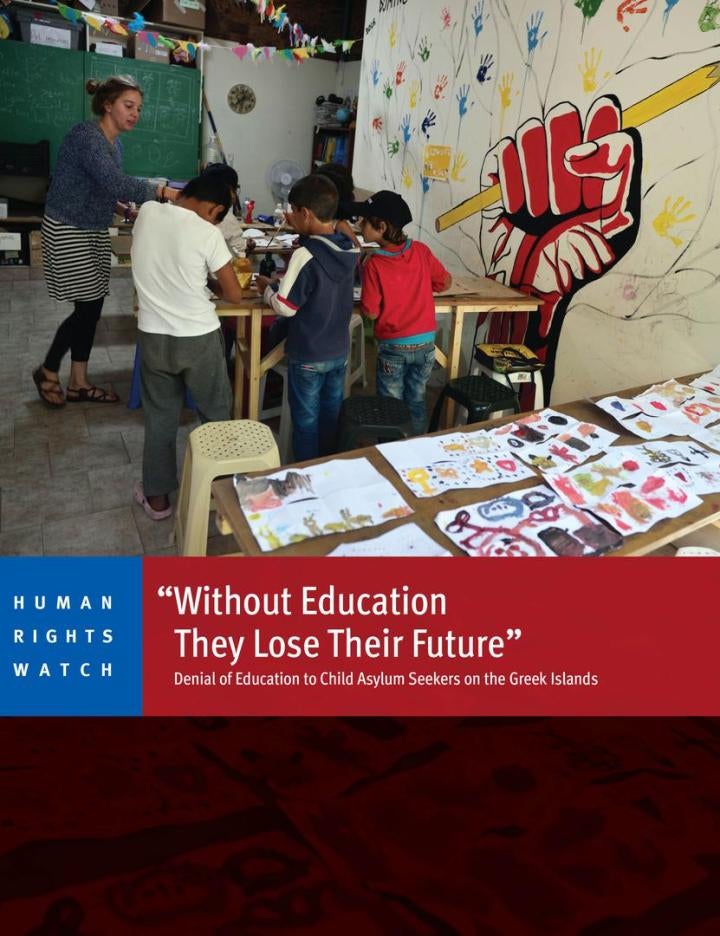
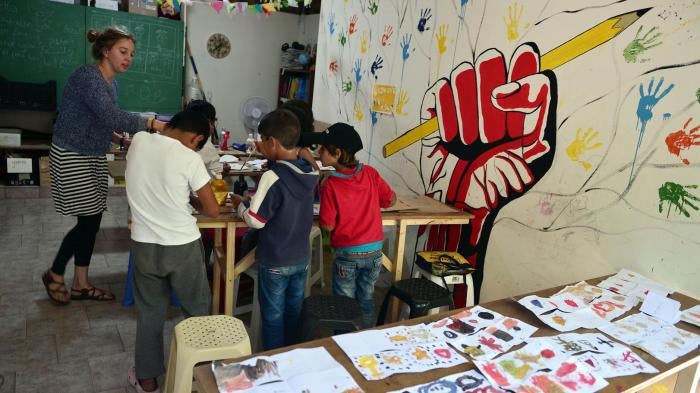
Denial of Education to Child Asylum Seekers on the Greek Islands
This report found that fewer than 15 percent of more than 3,000 school-age asylum-seeking children on the islands were enrolled in public school at the end of the 2017-2018 school year, and that in government-run camps on the islands, only about 100 children, all preschoolers, had access to formal education. The asylum-seeking children on the islands are denied the educational opportunities they would have on the mainland. Most of those who were able to go to school had been allowed to leave the government-run camps for housing run by local authorities and volunteers.
Lack of Transparency in Donor Funding for Syrian Refugee Education
This report tracks pledges made at a conference in London in February 2016. Human Rights Watch followed the money trail from the largest donors to education in Lebanon, Turkey, and Jordan, the three countries with the largest number of Syrian refugees, but found large discrepancies between the funds that the various parties said were given and the reported amounts that reached their intended targets in 2016. The lack of timely, transparent funding contributed to the fact that more than 530,000 Syrian schoolchildren in those three countries were still out of school at the end of the 2016-2017 school year.
Barriers to Education for Syrian Refugee Children in Jordan
This report describes Jordan’s generous efforts to enroll Syrian children in its public school system, which was struggling with capacity and quality issues even before refugees began to arrive from Syria. But Human Rights Watch also documented barriers to education, including asylum-seeker registration requirements that many Syrians cannot meet; punishments for refugees working without permits that contribute to poverty, child labor, and school drop-outs; and a bar on enrollment for children who have been out of school for three or more years. Jordan has eased some restrictions, but authorities should expand efforts to realize the fundamental right to education for all Syrian children, Human Rights Watch said.
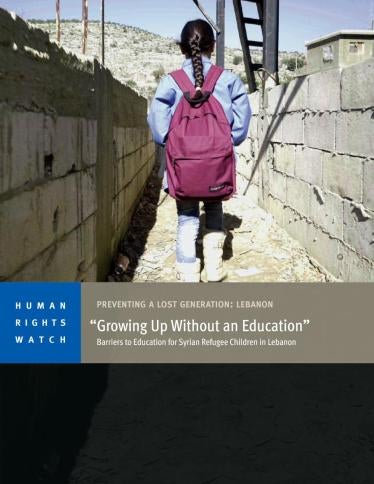
Barriers to Education for Syrian Refugee Children in Lebanon
This report documents the important steps Lebanon has taken to allow Syrian children to access public schools. But Human Rights Watch found that some schools have not complied with enrollment policies, and that more donor support is needed for Syrian families and for Lebanon’s over-stretched public school system. Lebanon is also undermining its positive education policy by imposing harsh residency requirements that restrict refugees’ freedom of movement and exacerbate poverty, limiting parents’ ability to send their children to school and contributing to child labor. Secondary school-age children and children with disabilities face particularly difficult obstacles.
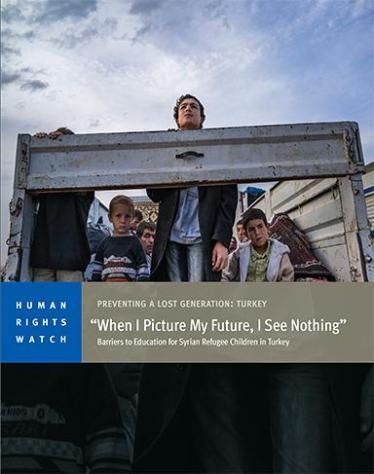
Barriers to Education for Syrian Refugee Children in Turkey
This 62-page report documents the major obstacles that prevent Syrian refugee children from getting formal education in Turkey, which is hosting more than 2 million refugees from the Syrian conflict that began in 2011. The government adopted an important policy in September 2014 that formally grants Syrian children access to public schools, but key obstacles including a language barrier, social integration issues, economic hardship, and lack of information about the policy, remain one year later, Human Rights Watch found.
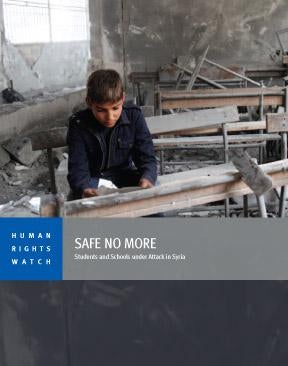
This 33-page report is based on more than 70 interviews, including with 16 students and 11 teachers who fled Syria, primarily from Daraa, Homs, and greater Damascus. The report documents the use of schools for military purposes by both sides.