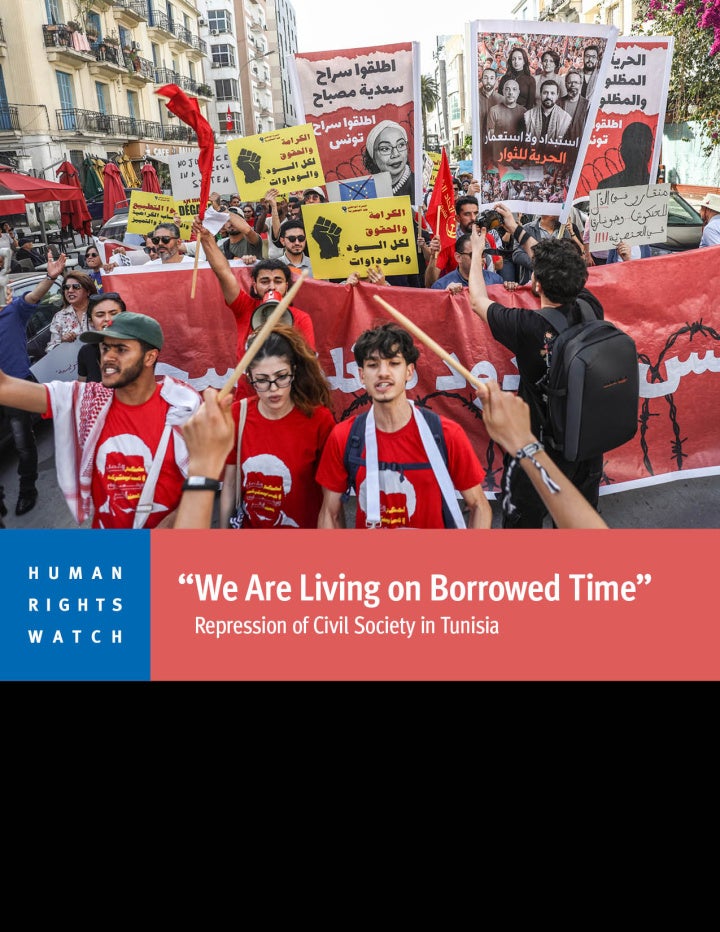
The 49-page report, “‘We Are Living on Borrowed Time’: Repression of Civil Society in Tunisia” documents the Tunisian authorities’ escalating repression of local and international civil society groups, workers, members, and affiliates through the weaponization of abusive prosecutions, arbitrary arrests, detention, financial and criminal investigations, mass suspensions, and threats of dissolution.
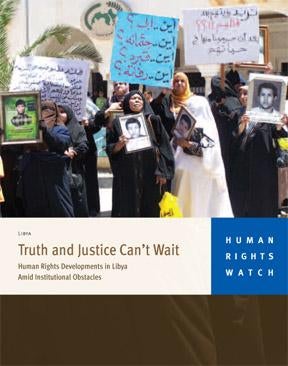
Human Rights Developments in Libya Amid Institutional Obstacles
This 78-page report is based on research conducted by Human Rights Watch during a 10-day visit to Libya in April, 2009. The report is also based on ongoing monitoring from outside the country.
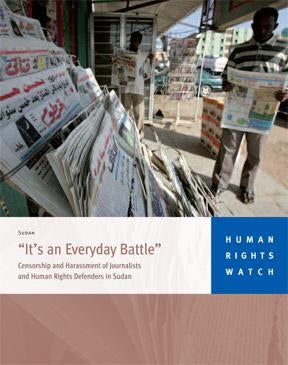
Censorship and Harassment of Journalists and Human Rights Defenders in Sudan
This 21-page report documents the government's efforts to repress those who seek to report on issues it considers sensitive, including human rights, the conflict in Darfur, and the ICC's investigation.
This 42-page report documents how Iranian authorities use security laws, press laws, and other legislation to arrest and prosecute Iranian Kurds solely for trying to exercise their right to freedom of expression and association. The use of these laws to suppress basic rights, while not new, has greatly intensified since President Mahmoud Ahmadinejad came to power in August 2005.
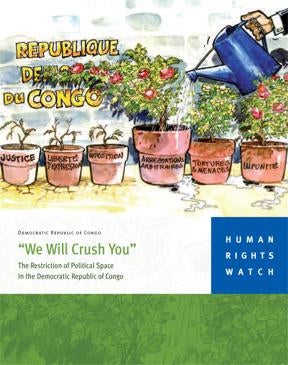
The Restriction of Political Space in the Democratic Republic of Congo
This 96-page report documents the Kabila government's use of violence and intimidation to eliminate political opponents. Human Rights Watch found that Kabila himself set the tone and direction by giving orders to "crush" or "neutralize" the "enemies of democracy," implying it was acceptable to use unlawful force against them.
Political Intolerance and Lost Opportunities for Advancing Human Rights in Venezuela
This 230-page report examines the impact of the Chávez presidency on institutions that are essential for ensuring respect for human rights and the rule of law: the courts, the media, organized labor, and civil society.
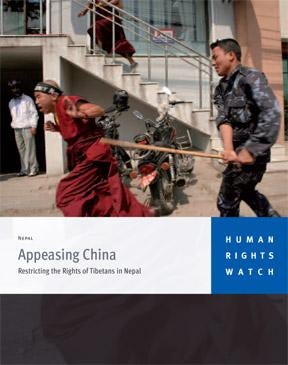
This 60-page report documents numerous violations of human rights by the Nepali authorities, particularly the police, against Tibetans involved in peaceful demonstrations in Kathmandu, including: unnecessary and excessive use of force; arbitrary arrest; sexual assault of women during arrest; arbitrary and preventive detention; beatings in detention; unlawful threats to deport Tibetans to China; restrictions on freedom of movement in the Kathmandu Valley; harassment of Tibetan and foreign journalists; and harassment of Nepali, Tibetan, and foreign human rights defenders.
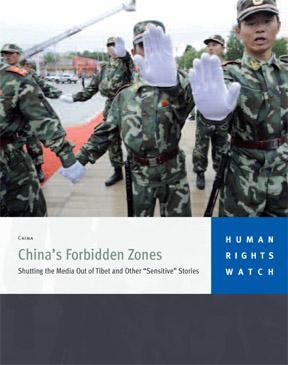
Shutting the Media out of Tibet and Other “Sensitive” Stories
This 71-page report draws on more than 60 interviews with correspondents in China between December 2007 and June 2008. It documents how foreign correspondents and their sources continue to face intimidation and obstruction by government officials or their proxies when they pursue stories that can embarrass the authorities, expose official wrongdoing, or document social unrest.
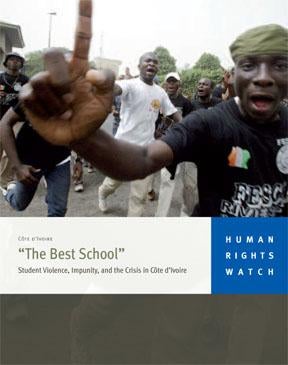
Student Violence, Impunity, and the Crisis in Côte d’Ivoire
This 98-page report documents how, in the last several years, members of FESCI have been implicated in attacks on opposition ministers, magistrates, journalists, and human rights organizations, among others.
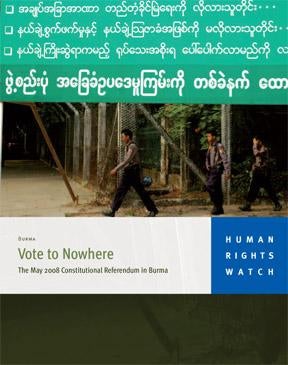
This 61-page report shows that the May 10 referendum in Burma is being carried out in an environment of severe restrictions on access to information, repressive media restrictions, an almost total ban on freedom of expression, assembly, and association, and the continuing widespread detention of political activists. It highlights recent government arrests, harassment and attacks on activists opposed to the draft constitution.
A series of prosecutions of independent weeklies, the most outspoken and critical sector of the Moroccan news media, show the continuing limits on press freedom in that country.
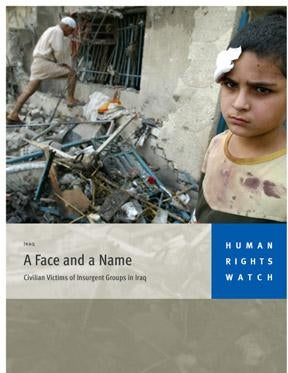
This report is the most detailed study to date of abuses by insurgent groups. It systematically presents and debunks the arguments that some insurgent groups and their supporters use to justify unlawful attacks on civilians.
On October 6 the European Commission will publish its 2004 Regular Report on Turkey’s progress toward European Union membership. This document provides a background, highlights key issues to look for in the report, and ends with an assessment of the progress of reforms.
Two years after the April 4, 2002, ceasefire agreement between the Angolan government and the opposition National Union for the Total Independence of Angola (UNITA), Angola is in transition. Although no date has been set for the first national elections since 1992, these are widely expected to be held no later than 2006.
This 40-page report documents killings, arrest, detention, ill-treatment, torture and other forms of harassment and intimidation of real or perceived critics of the government over the past two years. Most of these abuses have been carried out by the Nigerian police or by members of the intelligence services known as the State Security Service (SSS).
On October 27, 2003, arms researcher Igor Sutiagin faces a troubling anniversary: four years will have passed since security service officers detained him at his home. Ever since, Sutiagin has been waiting in a jail cell for a court to decide his fate.