Bans on Gender-Affirming Care for Transgender Youth in the US
The 98-page report, “‘They’re Ruining People’s Lives’: Bans on Gender-Affirming Care for Transgender Youth in the US,” documents the devastating consequences of these bans for transgender youth, including increased anxiety, depression, and, in seven reported instances, suicide attempts. Human Rights Watch found that these laws contribute to an increasingly hostile, anti-trans climate, compelling youth to hide their identities and socially withdraw. The bans also destabilize health care systems and undermine civil society and create geographic and financial challenges in accessing care. The impact has intensified since early 2025, when the administration of President Donald Trump took a series of executive actions escalating federal attacks on transgender rights.
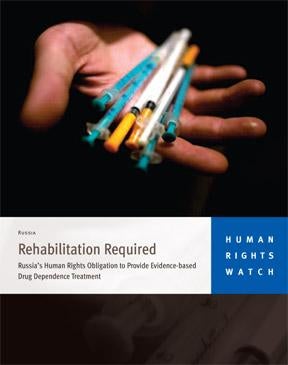
Russia’s Human Rights Obligation to Provide Evidence-based Drug Dependence Treatment
<table cellpadding="3" cellspacing="0"><tr><td><img src=" http://www.hrw.org/images/home/2007/100//russia17278.jpg" align="left" border="0" /></td> <td valign="top"> In this 110-page study, Human Rights Watch found that the treatment offered at state drug treatment clinics in Russia was so poor as to constitute a violation of the right to health.</td></tr></table>
Denial of Access to Emergency Obstetric Care and Therapeutic Abortion in Nicaragua
This 18-page report documents how this ban on abortion has made women afraid to seek even legal health services. Fearing prosecution under the new law, doctors are unwilling to provide necessary care. The report is based on interviews with officials, doctors from the public and private health systems, women in need of health services, and family members of women who died as a result of the ban.
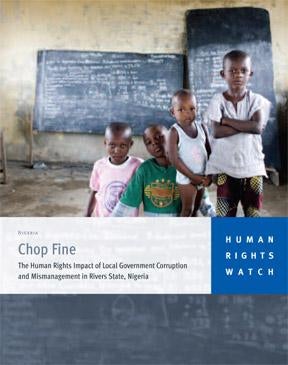
The Human Rights Impact of Local Government Corruption and Mismanagement in Rivers State, Nigeria
This 107-page report details the misuse of public funds by local officials in the geographic heart of Nigeria’s booming oil industry, and the harmful effects on primary education and basic health care. The report is based on scores of interviews in Rivers state with government and donor agency officials, civil servants, health care workers, teachers, civil society groups and local residents.
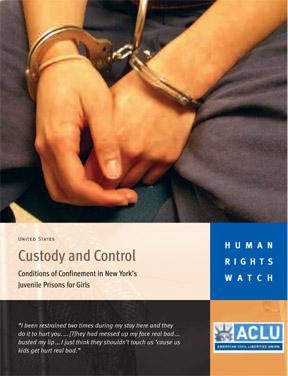
Conditions of Confinement in New York’s Juvenile Prisons for Girls
This 136-page report provides an in-depth look at the abuses and neglect suffered by girls confined in two remote New York State juvenile facilities known as Tryon and Lansing. The facilities are operated by the New York Office of Children and Family Services (OCFS) and are the only two higher-security facilities in New York State holding girls.
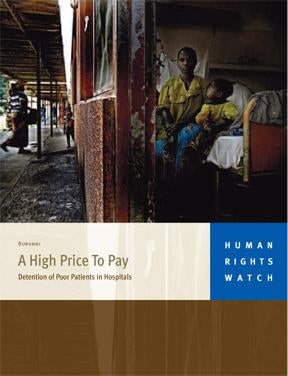
This 75-page report documents how Burundian hospitals in 2005 detained hundreds of indigent patients, sometimes in inhumane conditions. Many of those detained were women giving birth who unexpectedly needed caesarian deliveries.
The 2006 U.N. High Level Meeting on HIV/AIDS and Its Failure to Address the Human Rights Abuses Fueling the Pandemic
In this report, Human Rights Watch examines how the declaration from the United Nations High Level Meeting on HIV/AIDS addresses such critical issues as women’s and children’s rights, abuses faced by socially marginalized populations, and access to treatment.
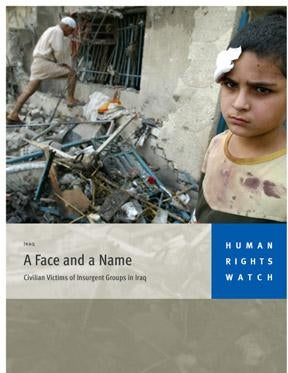
This report is the most detailed study to date of abuses by insurgent groups. It systematically presents and debunks the arguments that some insurgent groups and their supporters use to justify unlawful attacks on civilians.
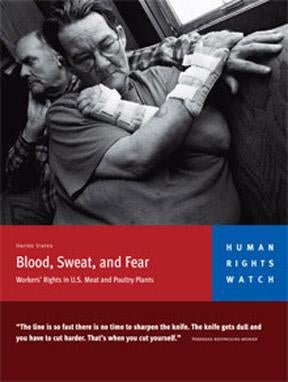
Workers in the U.S. meat and poultry industry endure unnecessarily hazardous work conditions, and the companies employing them often use illegal tactics to crush union organizing efforts. In meat and poultry plants across the United States, Human Rights Watch found that many workers face a real danger of losing a limb, or even their lives, in unsafe work conditions.
The 70-page report documents that youths in Rio de Janeiro’s detention centers are often beaten and verbally abused by guards. Most complaints of ill-treatment are never investigated by the state’s Department of Socio-Economic Action (Departamento Geral de Ações Sócio-Educativas, or DEGASE), the authority responsible for juvenile detention facilities.
Human Rights Watch has issued numerous reports showing that human rights abuses against persons living with and at high risk of HIV/AIDS contribute significantly to new HIV infections worldwide. This is true in Thailand, the host of this year’s AIDS conference, as well as in numerous other countries worldwide.
Inadequate Nutrition and Health Care in the Russian Armed Forces
This 40-page report details how conscripts are deprived of adequate food. The diet of conscripts often lacks meat and green vegetables, and falls short of the Russian military’s own nutritional standard for soldiers. The food they do receive is often of poor quality, rotten, or bug-infested.
HIV/AIDS, Human Rights And Federally Funded Abstinence-Only Programs In The United States
Programs teaching teenagers to "just say no" to sex before marriage are threatening adolescent health by censoring basic information about how to prevent HIV/AIDS, Human Rights Watch charged in a new report released today.