Recruitment and Use of Children by Colombian Armed Groups
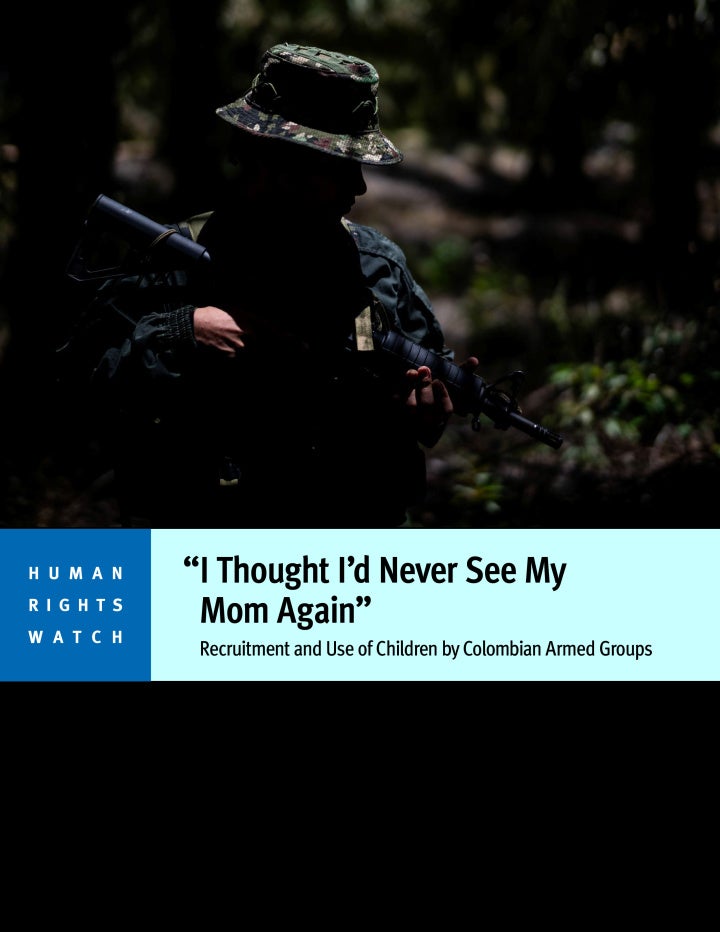
The 102-page report, “‘I Thought I’d Never See My Mom Again’: Recruitment and Use of Children by Colombian Armed Groups,” examines the dynamics of child recruitment, the factors that place children at risk, and the strategies and tools used by armed groups, including through social media platforms, to recruit them. Researchers also analyzed the government’s response and its shortcomings in preventing child recruitment, protecting and rescuing children, assisting the reintegration of those who have been released, and prosecuting the individuals responsible.
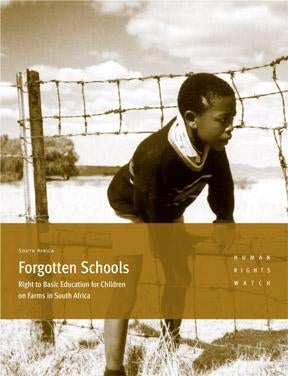
Right to Basic Education for Children on Farms in South Africa
This 59-page report found that the government’s failure to negotiate contracts with farm owners impedes children’s right to basic education. In the worst cases, farm owners have deliberately obstructed children's access to the schools.
This 43-page report documents how more than 15,000 child soldiers fought on all sides of the Liberian civil war, and that many units were composed primarily of children. The report argues that establishing a firm peace in the West African nation will depend on the successful reintegration of child soldiers into civil society.
A Briefing for the 4th UN Security Council Open Debate on Children and Armed Conflict
Throughout 2003 thousands of children were deployed as combatants, to commit abuses against civilians, as sex slaves, forced labourers, messengers, informants and servants in continuing and newly erupting conflicts. Children were usually used to perform multiple roles, and girls in particular often acted as combatants as well as being sexually exploited.
Tens of thousands of girls in El Salvador work as domestics, a form of labor that makes them particularly vulnerable to physical abuse and sexual harassment. This 35-page report calls on the Salvadoran government to include domestic workers, who are almost exclusively girls and young women, in its program to address hazardous child labor.
A Call for Action on HIV/AIDS-Related Human Rights Abuses Against Women and Girls in Africa
Violence and discrimination against women and girls is fueling Africa's AIDS crisis. African governments must make gender equality a central part of national AIDS programs if they are to succeed in fighting the epidemic.
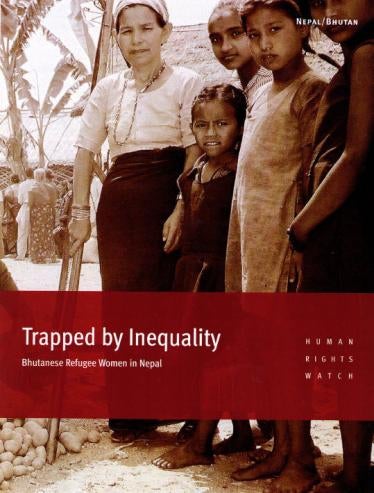
Bhutanese refugee women in Nepal encounter gender-based violence and systematic discrimination in access to aid.This 77-page report examines the uneven response of UNHCR and the government of Nepal to rape, domestic violence, sexual and physical assault, and trafficking of girls and women from refugee camps.
More than 11,000 children fight in Colombia's armed conflict, one of the highest totals in the world. Both guerrilla and paramilitary forces rely on child combatants, who have committed atrocities and are even made to execute other children who try to desert.
Afghan warlords and political strongmen supported by the United States and other nations are engendering a climate of fear in Afghanistan that is threatening efforts to adopt a new constitution and could derail national elections scheduled for mid-2004.
Sexual Violence and Abduction of Women and Girls in Baghdad
The insecurity plaguing Baghdad and other Iraqi cities has a distinct and debilitating impact on the daily lives of women and girls, preventing them from participating in public life at a crucial time in their country's history. Human Rights Watch interviewed rape and abduction victims and witnesses, Iraqi police and health professionals, and U.S.
Abductions, torture, recruitment of child soldiers, and other abuses have sharply increased in the past year in northern Uganda due to renewed fighting between Ugandan government forces and rebels, a coalition of national and international organizations. This 73-page report details how a slew of human rights abuses have resulted in a humanitarian crisis.
With major military operations continuing in al-Falluja, U.S. authorities should investigate the apparent use of excessive force against Iraqi protesters there on April 28 and 30, Human Rights Watch urged in a new report released today. This challenges the U.S. military's assertion that its troops came under direct fire from individuals in the crowd of protesters on April 28.
Child soldiers who fought in the Angolan civil war have been excluded from demobilization programs, Human Rights Watch said in a new report released today. April marks the one-year anniversary of the agreement that brought peace to mainland Angola in 2002.
Abuses Against Detained Children in Northern Brazil
Children in northern Brazil are routinely beaten by police and detained in abusive conditions, Human Rights Watch charged in a new report released today.
Consequences of Genocide and War for Rwanda's Children
Rwandan children still suffer the devastating consequences of the 1994 genocide and the war that preceded and followed it, Human Rights Watch said in a report released today. In the 80-page report, “Lasting Wounds: Consequences of Genocide and War for Rwanda’s Children,” Human Rights Watch documents the widespread abuse and exploitation of children in 1994 and since.
West African governments are failing to address a rampant traffic in child labor that could worsen with the region’s growing AIDS crisis, Human Rights Watch charged in a new report released today. The 79-page report, “Borderline Slavery: Child Trafficking in Togo,” highlights Togo as a case study of trafficking in the region.