School Fees and other Barriers to Education in Liberia
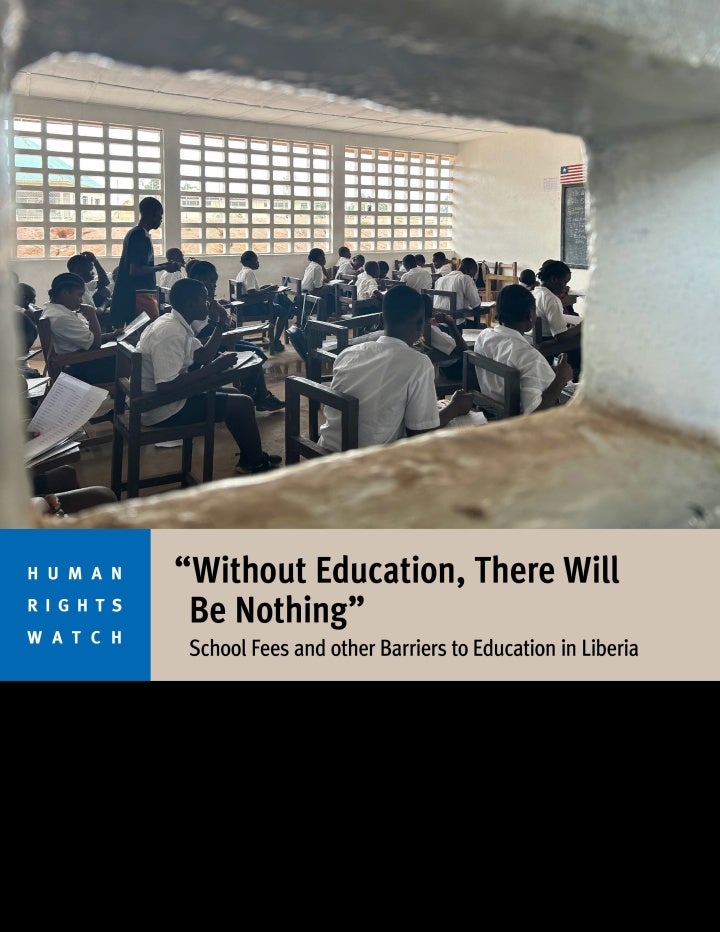
The 75-page report, “‘Without Education, There Will Be Nothing’: School Fees and Other Barriers to Education in Liberia,” documents that mandatory fees—despite a legal guarantee of free and compulsory education for grades 1 to 9—place a heavy financial burden on families and violate children’s right to education. Children in Liberia often enroll in school years late and are sent home when their parents are unable to pay their fees, or work to help pay them. Many drop out entirely or never attend school.
Neglecting the Rights of LGBT Youth in South Korean Schools
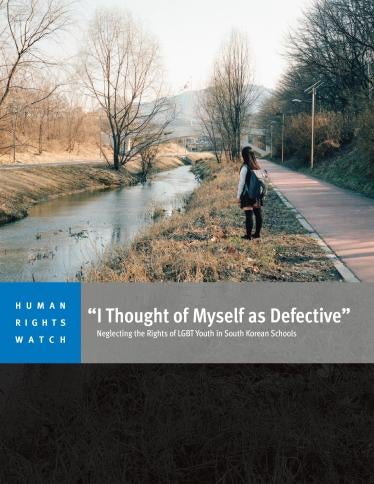
The 76-page report, “‘I Thought of Myself as Defective’: Neglecting the Rights of LGBT Youth in South Korean Schools,” finds that bullying and harassment, a lack of confidential mental health support, exclusion from school curricula, and gender identity discrimination are particularly pressing concerns for LGBT students. The South Korean government should implement antidiscrimination protections and ensure that LGBT youth have supportive resources to safeguard their health and education
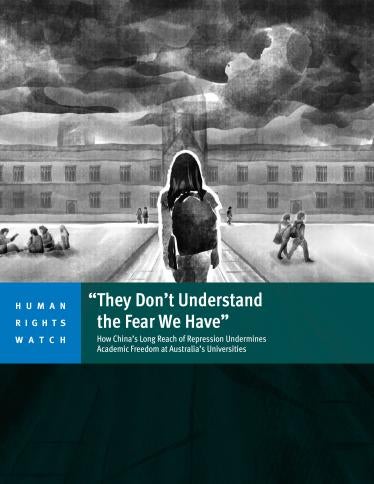
How China’s Long Reach of Repression Undermines Academic Freedom at Australia’s Universities
The 102-page report, “‘They Don’t Understand the Fear We Have’: How China’s Long Reach of Repression Undermines Academic Freedom at Australia’s Universities,” describes Chinese government surveillance of pro-democracy students from the mainland and Hong Kong in Australian universities. Students are broadly aware that such surveillance takes place, leaving them fearful. Many alter their behavior and self-censor to avoid threats and harassment from classmates, and being “reported on” to authorities back home.
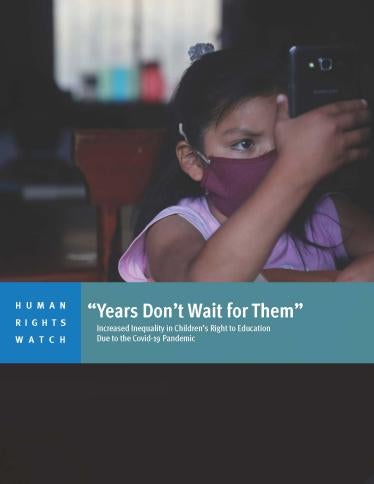
Increased Inequalities in Children’s Right to Education Due to the Covid-19 Pandemic
The 125-page report, “‘Years Don’t Wait for Them’: Increased Inequalities in Children’s Right to Education Due to the Covid-19 Pandemic,” documents how Covid-related school closures affected children unequally, as not all children had the opportunities, tools, or access needed to keep on learning during the pandemic. The heavy reliance on online learning exacerbated the existing unequal distribution of support for education, Human Rights Watch found. Many governments did not have the policies, resources, or infrastructure to roll out online learning in a way that ensured that all children could participate on an equal basis.
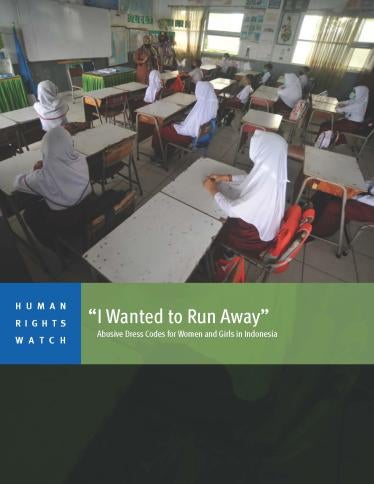
Abusive Dress Codes for Women and Girls in Indonesia
The 98-page report, “‘I Wanted to Run Away’: Abusive Dress Codes for Women and Girls in Indonesia,” documents government regulations that require girls and women to wear the jilbab, Muslim apparel that covers the head, neck, and chest. Human Rights Watch describes the historical imposition of discriminatory regulations on clothing, and the widespread bullying to wear a jilbab that causes women and girls psychological distress. Girls who don’t comply have been forced to leave school or have withdrawn under pressure, while female civil servants have lost their jobs or resigned to escape constant demands to conform.
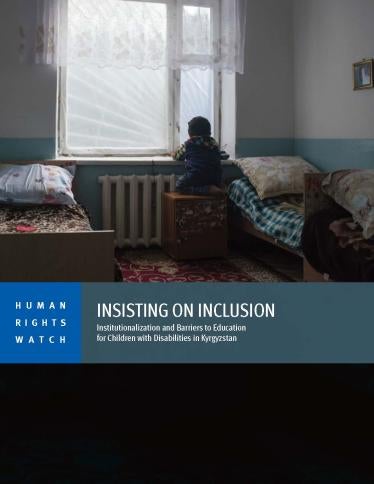
Institutionalization and Barriers to Education for Children with Disabilities in Kyrgyzstan
The 74-page report, “Insisting on Inclusion: Institutionalization and Barriers to Education for Children with Disabilities in Kyrgyzstan,” documents how children are frequently denied quality, inclusive education, in which children with and without disabilities study together in mainstream schools. Children with disabilities are subject to discriminatory government evaluations that often lead to segregation in special schools or at home, Human Rights Watch found. Kyrgyzstan ratified the United Nations Convention on the Rights of Persons with Disabilities (CRPD) in 2019.
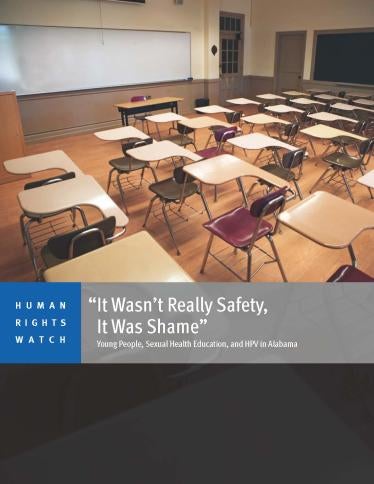
Young People, Sexual Health Education, and HPV in Alabama
The 65-page report, “‘It Wasn’t Really Safety, It Was Shame’: Young People, Sexual Health Education, and HPV in Alabama,” documents the Alabama state government’s failure to provide young people with comprehensive, inclusive, and accurate information on sexual and reproductive health. Human Rights Watch also found that the state is not addressing barriers to the human papillomavirus (HPV) vaccine – an effective tool to prevent several types of cancer – and that vaccination rates throughout Alabama remain low.
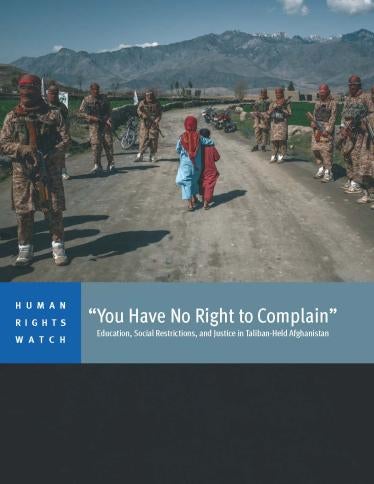
Education, Social Restrictions, and Justice in Taliban-Held Afghanistan
The 69-page report, “‘You Have No Right to Complain’: Education, Social Restrictions, and Justice in Taliban-Held Afghanistan” focuses on the everyday experiences of people living in Taliban-held districts and Taliban restrictions on education, access to information and media, and freedom of movement. The Taliban’s widespread rights abuses in areas it controls raise concerns about their willingness and ability to keep commitments on rights in any future peace agreement
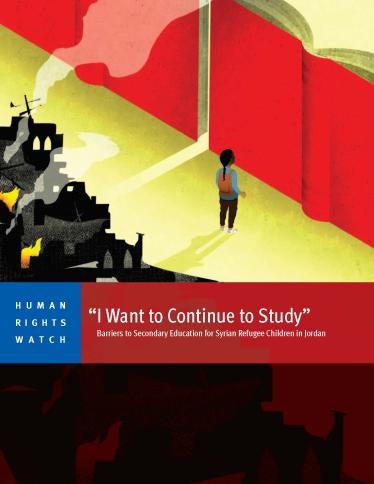
Barriers to Secondary Education for Syrian Refugee Children in Jordan
The 61-page report, “‘I Want to Continue to Study’: Barriers to Secondary Education for Syrian Refugee Children in Jordan,” documents increasingly difficult obstacles to education the further Syrian refugee children progress in school, with enrollment rates collapsing from nearly 90 percent in primary classes to just 25 to 30 percent in secondary school, according to governmental and United Nations data. With UN support, Jordan has created humanitarian education plans for Syrian refugees that aim to increase enrollment overall, but without specific secondary-school enrollment goals. Few foreign donors support secondary education. Informal education programs hosted by nongovernmental groups only reach a tiny fraction of children, Human Rights Watch found.
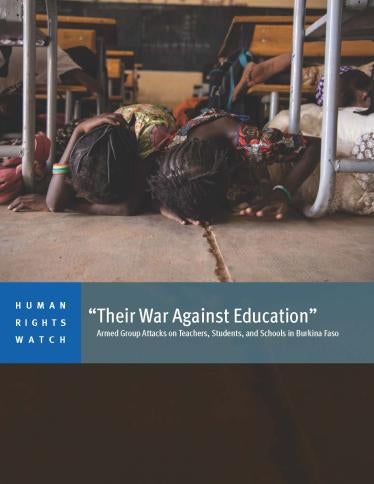
Armed Group Attacks on Teachers, Students, and Schools in Burkina Faso
The 102-page report, “‘Their War Against Education’: Armed Group Attacks on Teachers, Students, and Schools in Burkina Faso,” documents scores of education-related attacks by armed Islamist groups in 6 of the country’s 13 regions between 2017 and 2020. The groups have killed, beaten, abducted, and threatened education professionals; intimidated students; terrorized parents into keeping children out of school; and damaged, destroyed, and looted schools.
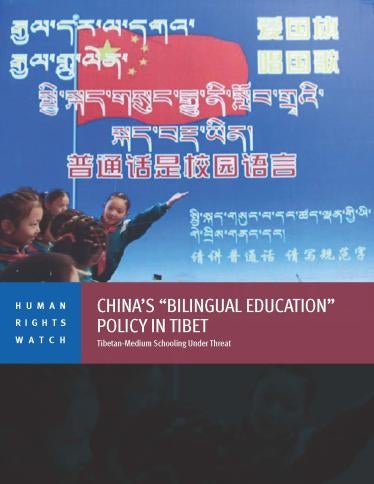
The 91-page report, “China’s ‘Bilingual Education’ Policy in Tibet: Tibetan-Medium Schooling Under Threat,” examines the Chinese government’s rollback of minority education rights in Tibet under the guise of improving access to education. It highlights compulsory “bilingual” kindergartens that immerse Tibetan children in Chinese language and state propaganda from age 3, in the name of “strengthening the unity of nationalities.” These developments reflect an assimilationist policy for minorities that has gained momentum under President Xi Jinping’s leadership.
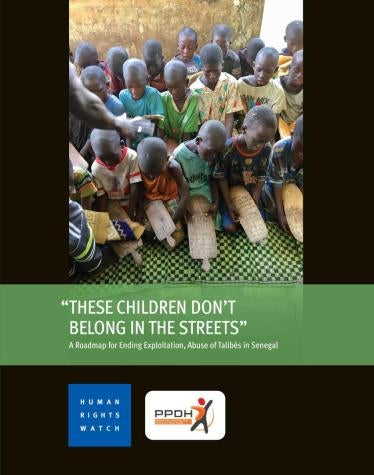
A Roadmap for Ending Exploitation, Abuse of Talibés in Senegal
This report analyzes the Senegalese government’s policy, programming, and judicial efforts from 2017 to 2019 to address abuses against talibé children living in traditional Quranic boarding schools. It sets out a roadmap to end forced begging and abusive conditions in the Quranic schools, known as daaras.
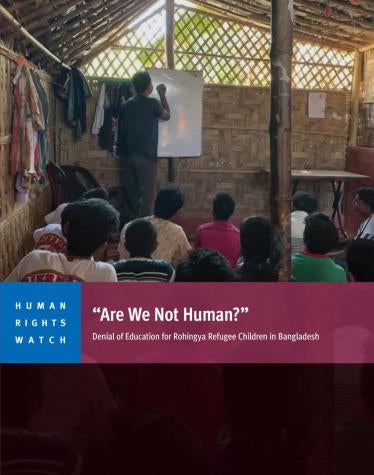
Denial of Education for Rohingya Refugee Children in Bangladesh
This report documents how Bangladesh prohibits aid groups in the refugee camps in the Cox’s Bazar district from providing Rohingya children with accredited or formal education. There is no secondary-level education, and groups are barred from teaching the Bengali language and using the Bangladesh curriculum. Rohingya children have no opportunity to enroll in or continue their education at private or public schools outside the refugee camps.
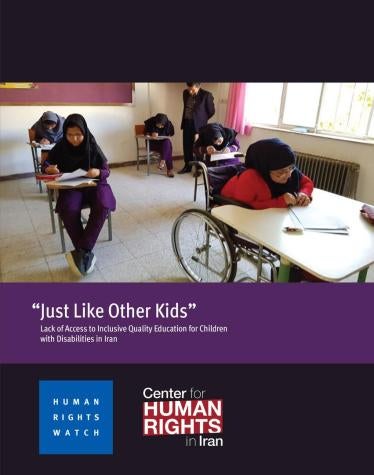
Lack of Access to Inclusive Quality Education for Children with Disabilities in Iran
This report documents discrimination and barriers to education in the country’s public school system for most children with disabilities. A major obstacle is a mandatory government medical test that can exclude them from education altogether, the groups found. Additional barriers include inaccessible school buildings, discriminatory attitudes of school staff, and lack of adequate training for teachers and school administrators in inclusive education methods.
Serious Abuses Against Talibé Children in Senegal, 2017-2018
Nearly 10 years after Human Rights Watch’s first report documenting abuses against talibé children in Senegal, the scale of ongoing abuse remains staggering. Over 100,000 talibé children living in traditional Quranic schools are forced to beg daily by their teachers. This report documents scores of serious abuses committed against talibé children in 2017 and 2018 by Quranic teachers or their assistants, including forced begging, beatings, sexual abuse, chaining, imprisonment, and the deaths of 16 talibé children due to abuse, neglect or endangerment. The report also documents human trafficking and dangers linked to talibé migration.
This report contains examples of law and practice from 50 countries, from Afghanistan to Yemen, that provide some level of protection for schools or universities from military use. Many of the examples come from countries currently or recently involved in armed conflict.