Hanoi’s Continuing Assault on Workers’ Right to Organize
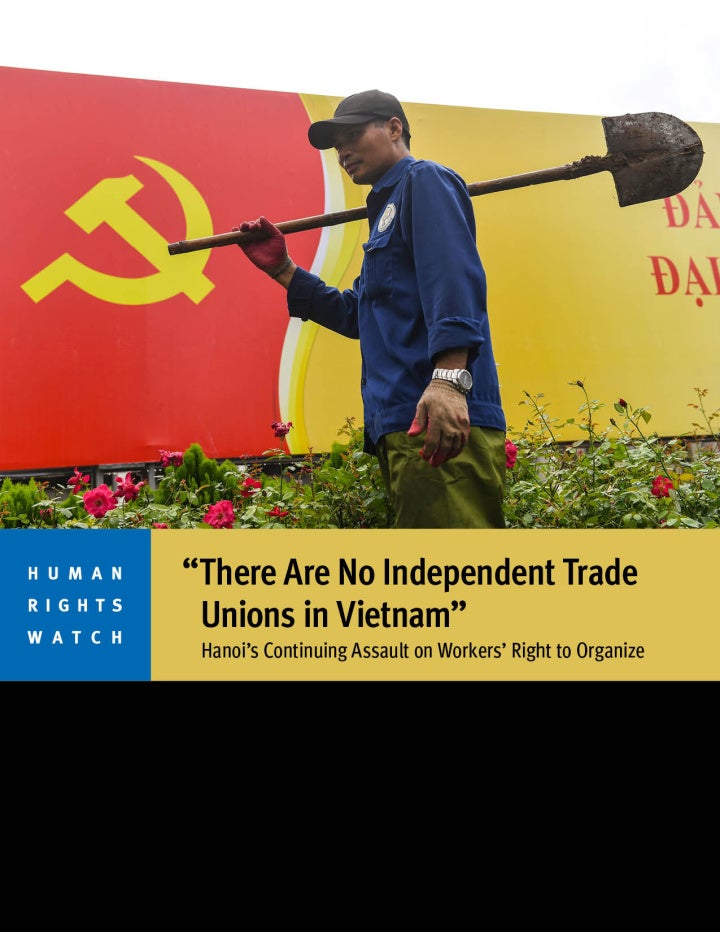
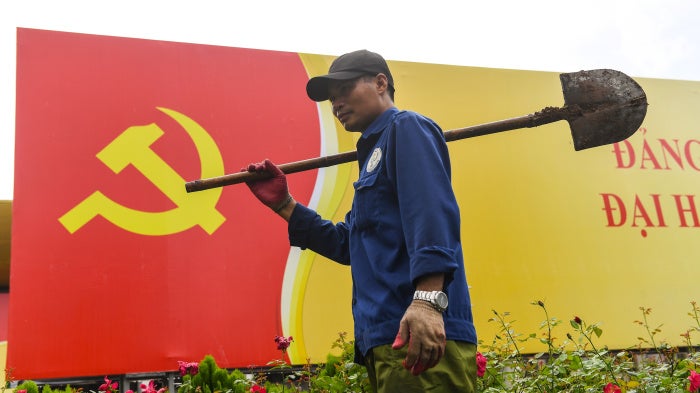
The 49-page report, “There Are No Independent Trade Unions in Vietnam: Hanoi’s Continuing Assault on Workers’ Right to Organize,” documents the Vietnamese governments’ continuing useof vague, overbroad criminal laws to suppress the activities of human rights and labor rights defenders, while maintaining an atmosphere of repression to thwart independent labor organizing. The government has issued decrees and articles in state-run media that reaffirm that all labor organizations in Vietnam are under the government’s authority, and portray independent trade unions as dangerous, anti-state entities.
The August 31, 1996 Khasavyurt agreements, which brought a fragile peace to Russia’s breakaway republic of Chechnya, have put at least a temporary end to the most hideous violations of human rights and humanitarian law committed in Russia since the break-up of the Soviet Union.
The Military-Paramilitary Partnership and the United States
The junior and mid-level officers who tolerated, planned, directed, and even took part in paramilitary violence in Colombia in the 1980s now occupy senior positions in the Colombian military. To be sure, a few, linked to well-publicized cases, have been forced into retirement or dismissed, but many more have been awarded medals for distinguished service and lead Colombia’s troops.
At least eighteen million children live or work on the streets of India, laboring as porters in railway stations or bus terminals, as rag pickers, and as vendors of food, tea, or handmade articles.
With its decision to bring Chinese dissident Wang Dan to trial on October 30 on the charge of “conspiracy to subvert the government,” the most serious charge in the Chinese criminal code, the Chinese government has signaled its determination to deny freedom of speech and association to any citizen daring publicly to raise fundamental criticisms of government policy.
Kurds are the largest non-Arab ethnic minority in Syria, comprising about 8.5 to 10 percent of the population of 13.8 million. This report documents the situation of stateless Syrian-born Kurds — 142,465 by the government's count, and well over 200,000 according to Kurdish sources — who have been arbitrarily denied the right to Syrian nationality in violation of international law.
Sexual Violence during the Rwandan Genocide and its Aftermath
During the 1994 genocide, Rwandan women were subjected to sexual violence on a massive scale, perpetrated by members ofthe infamous Hutu militia groups known as the Interahamwe, by other civilians, and by soldiers of the Rwandan Armed Forces(Forces Armées Rwandaises, FAR), including the Presidential Guard.
Haiti’s turmoil over the last decade demonstrates the insidious effect of impunity for violent human rights abuse. Despite repeated official promises of justice and untold opportunities to fulfill those vows, prosecutions for human rights crimes have been rare.
With credible estimates ranging from 60 to 115 million, India has the largest number of working children in the world. Whether they are sweating in the heat of stone quarries, working in the fields sixteen hours a day, picking rags in city streets, or hidden away as domestic servants, these children endure miserable and difficult lives. They earn little and are abused much.
Despite its stated commitment to return Nigeria to elected civilian rule by October 1, 1998, the military government continues to violate the rights of Nigerians to free political activity, including freedom of expression, assembly and association, freedom of movement, and freedom from arbitrary detention and trial.
Mexico, the United States, and Canada broke new ground in January 1994 when they brought into force a labor rights side agreement to accompany the North American Free Trade Agreement (NAFTA).
The title of this report is taken from a United Nations High Commissioner for Refugees (UNHCR) report of June 1995 on the repatriation of over 200,000 Burmese refugees, most of them members of the Rohingya Muslim minority, from Bangladesh to their home state of Arakan in northern Burma. The repatriation is being held up as a success story by the UNHCR.
Human Rights Violations and the Faceless Courts in Peru
The incarceration of hundreds of innocent prisoners charged or convicted of terrorist crimes they did not commit is now an open secret in Peru. While there may be disagreement about the numbers unjustly prosecuted by Peru's "faceless courts," no one in Peru, including the architect of the court system, President Alberto Fujimori, denies that the problem exists.