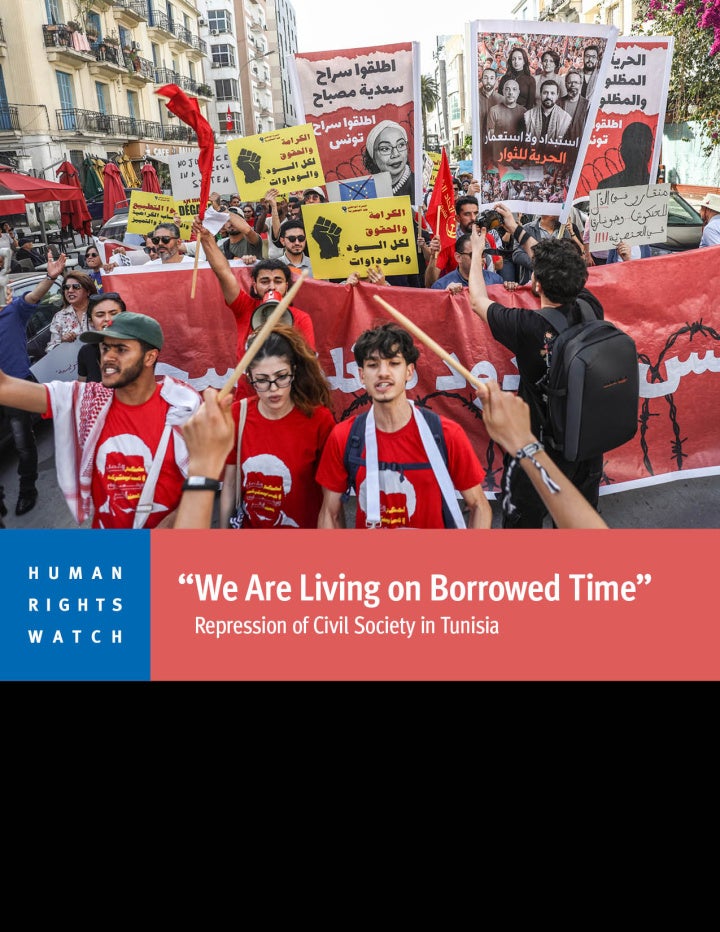
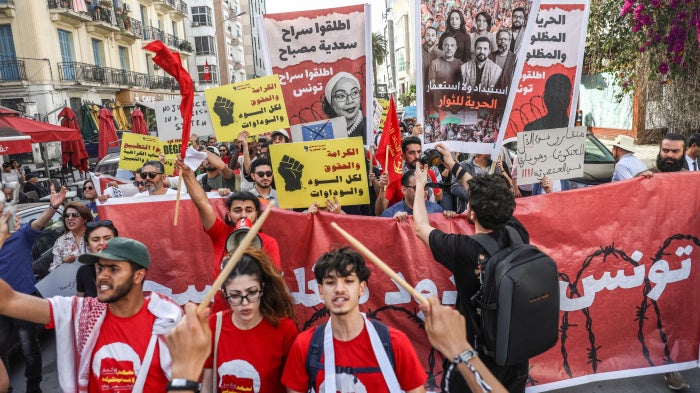
The 49-page report, “‘We Are Living on Borrowed Time’: Repression of Civil Society in Tunisia” documents the Tunisian authorities’ escalating repression of local and international civil society groups, workers, members, and affiliates through the weaponization of abusive prosecutions, arbitrary arrests, detention, financial and criminal investigations, mass suspensions, and threats of dissolution.
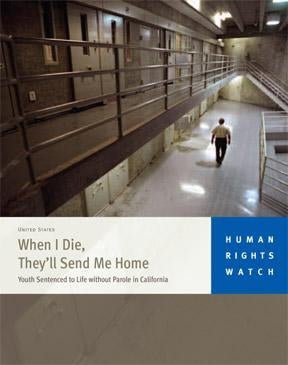
Youth Sentenced to Life without Parole in California
In this 100-page report, Human Rights Watch found that in many cases where juveniles were prosecuted with an adult, the youth received heavier sentences than their adult codefendants.
Iran’s Broadening Clampdown on Independent Activism
This 51-page report documents the expansion in scope and number of the individuals and activities persecuted by the Iranian government over the last two years.
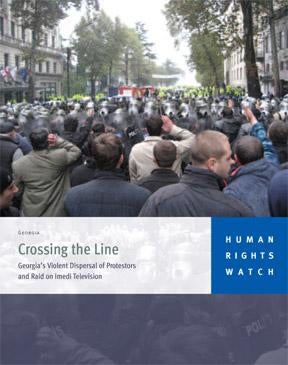
Georgia’s Violent Dispersal of Protestors and Raid on Imedi Television
This 102-page report is the most comprehensive account to date of the Georgian government’s attacks on protestors and the raid on Imedi. Witnesses described in detail how police and other law enforcement agents violently dispersed protestors in four separate incidents on November 7.
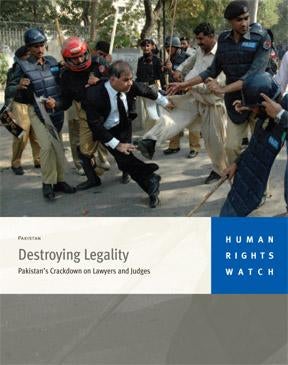
This 84-page report presents eyewitness accounts of police violence, arbitrary arrests, and mistreatment of detained lawyers across Pakistan since November 3, 2007. The report details police beatings of lawyers peacefully protesting government policies from within the grounds of Pakistan’s high courts. It is the most detailed account to date of the November crackdown, showing how Musharraf used the emergency as an excuse to disempower the judiciary, the legal profession and civil society in the name of fighting terrorism and Islamic extremists.
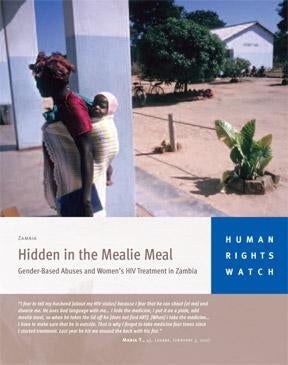
Gender-Based Abuses and Women’s HIV Treatment in Zambia
While acknowledging the significant overall progress made by the Zambian government in scaling up HIV treatment generally, this report documents how the government has fallen short of its international legal obligations to combat violence and discrimination against women.
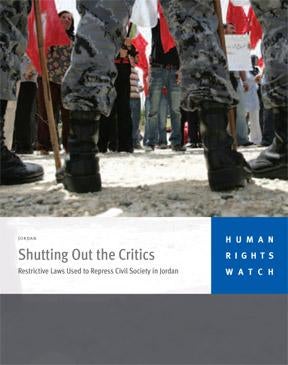
Restrictive Laws Used to Repress Civil Society in Jordan
In the 42-page report Human Rights Watch also called on the United States and the European Union to condition some funding to Jordan on changes in these laws.
This 74-page report examines the case of the so-called Victorious Sect, a group of 22 young Egyptians charged with plotting to carry out violent attacks on tourists and other civilian targets in Cairo.
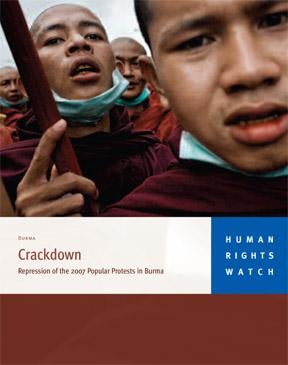
Many more people were killed and detained in the violent government crackdown on monks and other peaceful protestors in September 2007 than the Burmese government has admitted.
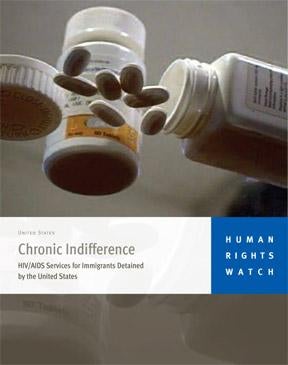
HIV/AIDS Services for Immigrants Detained by the United States
This 71-page report documents the experiences of HIV-positive detainees in immigration custody whose HIV treatment was denied, delayed, or interrupted, resulting in serious risk and often damage to their health.
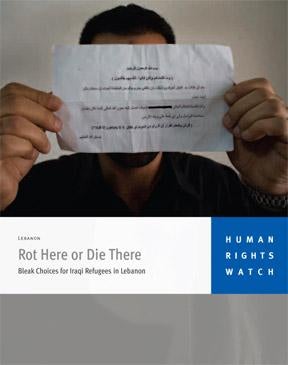
This 66-page report documents the Lebanese government’s failure to provide a legal status for Iraqi refugees in Lebanon and details the impact of this policy on the refugees’ lives.
The Habré case provides a golden opportunity to strike a blow against the scourge of impunity. Habré is accused of massive crimes, which are well documented in the files of his own political police. Chad supports the prosecution. The UN Committee Against Torture has enjoined Senegal to prosecute or extradite Habré. The African Union has mandated Senegal “to prosecute and ensure that Hissène Habré is tried, on behalf of Africa, by a competent Senegalese court with guarantees for a fair trial.”
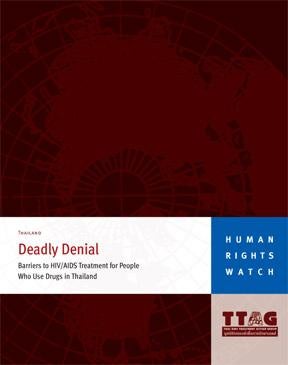
Barriers to HIV/AIDS Treatment for People Who Use Drugs in Thailand
This 57-page report found that routine police harassment and arrest – as well as the lasting effects of former Prime Minister Thaksin Shinawatra’s 2003 drug war – keeps drug users from receiving lifesaving HIV information and services that Thailand has pledged to provide.
The sixth session of the Assembly of States Parties (ASP) comes at a significant time. Over the past year, the International Criminal Court (ICC) has continued to take important steps forward.
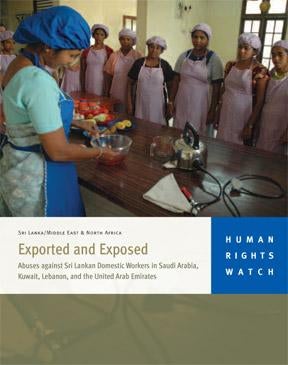
Abuses against Sri Lankan Domestic Workers in Saudi Arabia, Kuwait, Lebanon, and the United Arab Emirates
<table cellpadding="3" cellspacing="0"><tr><td><img src=" http://www.hrw.org/images/home/2007/100//slanka17328.jpg" align="left" border="0" /></td> <td valign="top">The 131-page report documents the serious abuses that domestic workers face at every step of the migration process. It also shows how the Sri Lankan government and governments in the Middle East fail to protect these women.</td></tr></table>
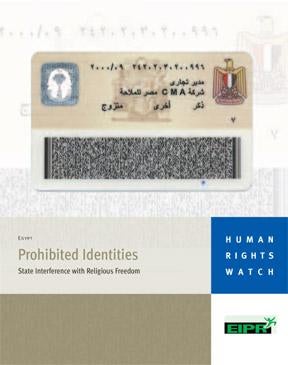
In this 98-page report, Human Rights Watch and the EIPR document how Ministry of Interior officials systematically prevent Baha’is and converts from Islam from registering their actual religious belief in national identity documents,