After the Storm
A new web feature looks at climate change, planned relocation, and people with disabilities in Siargao, Philippines.
Under President Ahmadinejad's administration, Iran's human rights record has deteriorated markedly. While the international community's attention has focused on nuclear concerns, Iran has not been held accountable for its violations of international human rights law.
This 230-page report examines the impact of the Chávez presidency on institutions that are essential for ensuring respect for human rights and the rule of law: the courts, the media, organized labor, and civil society.
The resumption of major military operations between the government of Sri Lanka and the Liberation Tigers of Tamil Eelam (LTTE) in mid-2006 has brought the return of a haunting phenomenon from the country's past-the widespread abduction and "disappearance" of young men by the parties to the conflict. With the de facto breakdown of the 2002 Norway-brokered ceasefire between the parties, and its formal dissolution in January 2008, it is likely armed conflict will intensify in the coming year. Unless the Sri Lankan government takes far more decisive action to end the practice, uncover the fate of persons unaccounted for, and prosecute those responsible, then 2008 could see another surge in "disappearances."
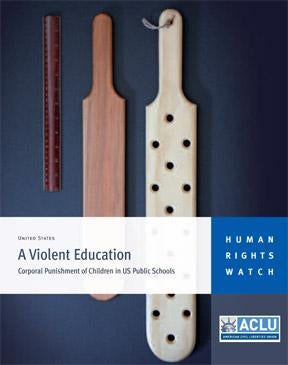
In this 125-page report, the ACLU and Human Rights Watch found that in Texas and Mississippi children ranging in age from 3 to 19 years old are routinely physically punished for minor infractions such as chewing gum, talking back to a teacher, or violating the dress code, as well as for more serious transgressions such as fighting. Corporal punishment, legal in 21 states, typically takes the form of “paddling,” during which an administrator or teacher hits a child repeatedly on the buttocks with a long wooden board. The report shows that, as a result of paddling, many children are left injured, degraded, and disengaged from school.
This 19-page report describes ongoing abuses, including killings, beatings and arbitrary arrests, by ZANU-PF and its allies against MDC members of parliament, activists and supporters before and after the June 27 presidential runoff election. Hundreds of MDC activists who fled the violence in the weeks before the vote remain in hiding, while armed ZANU-PF supporters and government-backed “war veterans” and “youth militia” continue to terrorize villagers in the rural areas, the report found. The government has made little effort to dismantle the torture camps and bases established by ZANU-PF and its allies since the first round of elections on March 29.
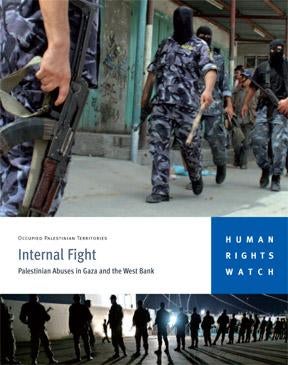
In this 113-page report Human Rights Watch documents a pattern of serious abuses by Hamas against Fatah in Gaza, and by Fatah against Hamas in the West Bank, since June 2007, when Hamas took control in Gaza. The latest spike in the internal Palestinian conflict comes after a year of politically motivated arrests, torture and ill-treatment in detention by both sides.
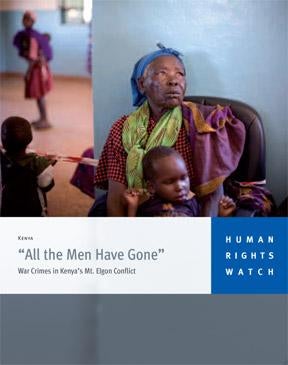
This 52-page report documents war crimes committed by a militia group, the Sabaot Land Defence Force (SLDF) and by Kenyan security forces responding to the crisis in Mt. Elgon, western Kenya. The investigation found that since 2006 the SLDF has terrorized thousands, killing and torturing hundreds of people. The government deployed forces in March 2008 to quell the SLDF, and Kenyan police, paramilitary and military tortured hundreds of men detained in mass round-ups. At least 37 people remain “disappeared” after being taken into custody by the security forces.
This 60-page report documents numerous violations of human rights by the Nepali authorities, particularly the police, against Tibetans involved in peaceful demonstrations in Kathmandu, including: unnecessary and excessive use of force; arbitrary arrest; sexual assault of women during arrest; arbitrary and preventive detention; beatings in detention; unlawful threats to deport Tibetans to China; restrictions on freedom of movement in the Kathmandu Valley; harassment of Tibetan and foreign journalists; and harassment of Nepali, Tibetan, and foreign human rights defenders.