The Persecution of Environmentalists and Indigenous Leaders in Indonesia
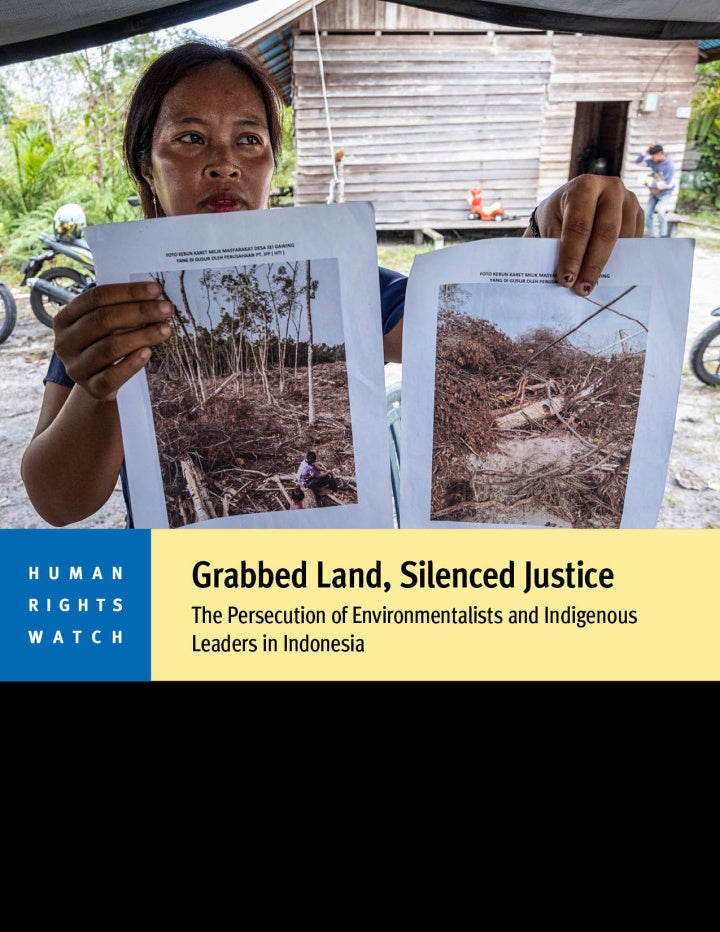
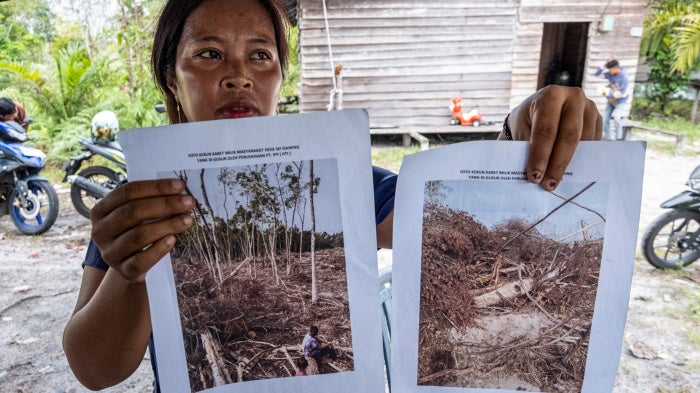
The 70-page report, “Grabbed Land, Silenced Justice: The Persecution of Environmentalists and Indigenous Leaders in Indonesia,” documents how Indonesian police have responded to complaints filed by company officials or politicians by silencing Indigenous villagers who demand their customary land rights and the activists who defend them. The authorities have targeted environmental and Indigenous community defenders using the criminal code and other laws to bring charges ranging from defamation to “spreading communism” to silence protest over environmental harm.
Inhuman and Degrading Treatment of New Recruits in the Russian Armed Forces
This 86-page report documents the serious human rights abuses involved in dedovshchina, or “rule of the grandfathers,” which results in the deaths of dozens of conscripts every year, and serious—and often permanent—damage to the physical and mental health of thousands others. Hundreds of conscripts commit or attempt suicide each year, and thousands run away from their units.
This 135-page report focuses on the southern Gaza town of Rafah, where more than 10 percent of the population has lost their homes. As well as research and interviews conducted in Gaza, Israel and Egypt, the report uses satellite imagery, maps, graphs and photographs to document a pattern of illegal demolitions by the IDF.
The events associated with a demonstration in the Ivorian commercial capital of Abidjan by opposition groups planned for March 25, 2004, were accompanied by a deadly crackdown by government backed forces, including the security forces, pro-government militias, and FPI party militants
War Crimes Trials in Croatia, Bosnia and Herzegovina, and Serbia and Montenegro
This 31-page report examines domestic war crimes trials that have taken place since 2000 for crimes committed during the armed conflicts of the 1990s in the former Yugoslavia. Human Rights Watch has also monitored various of these trials.
In the aftermath of the September 11, 2001 attacks on the United States, the Bush administration has violated the most basic legal norms in its treatment of security detainees. Many have been held in offshore prisons, the most well known of which is at Guantánamo Bay, Cuba.
In Côte d’Ivoire, both government and rebel forces have been responsible for massacres, sexual violence and recruiting child soldiers, and those most responsible must be held accountable for their crimes.
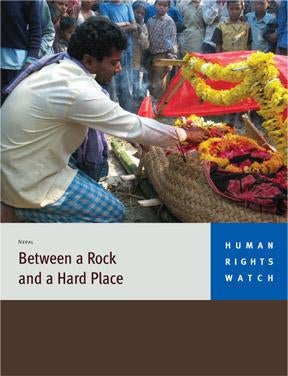
Civilians Struggle to Survive in Nepal’s Civil War
This 102-page report details how civilians in contested areas are often faced with untenable choices. Refusal to provide shelter to the rebels puts villagers at risk from Maoists who are ruthless in their punishments, while providing such support leaves them vulnerable to reprisal attacks from state security forces.
Intimidation and Attacks against Women in Public Life in Afghanistan
When a U.S.-led coalition invaded Afghanistan in October 2001, one of the justifications for the war was that it would liberate women from the misogynistic rule of the Taliban. Three years later, on the eve of the country’s first-ever national presidential elections on October 9, 2004, there have been notable improvements for women and girls.
On October 6 the European Commission will publish its 2004 Regular Report on Turkey’s progress toward European Union membership. This document provides a background, highlights key issues to look for in the report, and ends with an assessment of the progress of reforms.
Turkish state forces violently and illegally displaced upwards of 380,000 Kurdish villagers in the 1990s during a conflict with the Kurdish Workers Party (PKK) in southeast Turkey. Turkey should stop fending off the legitimate involvement of international agencies and make a formal declaration to integrate them in its return plans.
Human Rights Watch provides background on the Oct. 4, 2004, House of Lord's Judicial Committee meeting that will consider the lawfulness of detaining foreign terrorism suspects without trial.
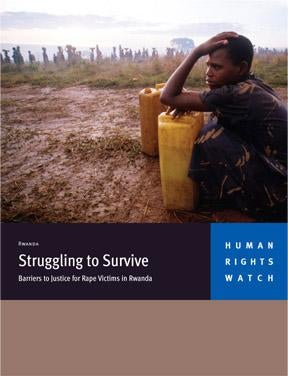
This 58-page report investigates the persistent weaknesses in the Rwandan legal system that hamper the investigation and prosecution of sexual violence. The report also documents the desperate health and economic situation of rape survivors. Many of the women who were raped became infected with HIV.
Human Rights Abuses and Political Repression in the Run-up to Afghanistan’s Presidential Election
The election could be prove to be a historic event for a country that has, over the last twenty-five years, suffered Soviet occupation, civil war, failed governance, severe repression of women, and the vicious rule of the Taliban. The prospect of a future dictated by ballots, and not bullets and bombs, is a cause for great hope.
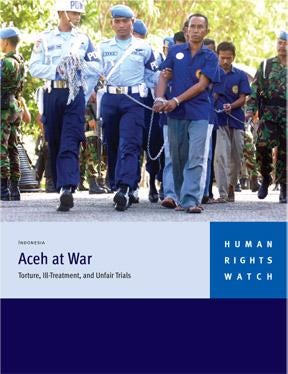
The Indonesian government has been fighting an on-again, off-again war with the armed separatist “Free Aceh Movement” (Gerakan Aceh Merdeka, or GAM) for more than two decades. After a brief ceasefire and sporadic peace negotiations in late 2002 and early 2003, on May 19, 2003, President Megawati Sukarnoputri imposed martial law and a state of military emergency in Aceh.
Turkey has made significant progress in reducing torture and other ill-treatment by the security services through successive legislative reforms since 1997. There are continuing problems implementing these laws, however, as the Turkish government itself concedes.