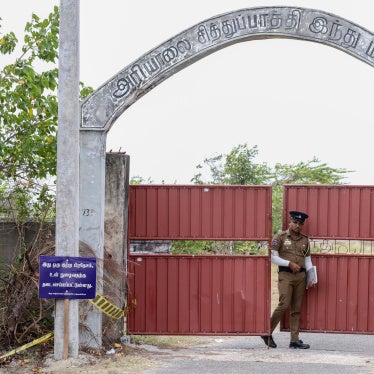
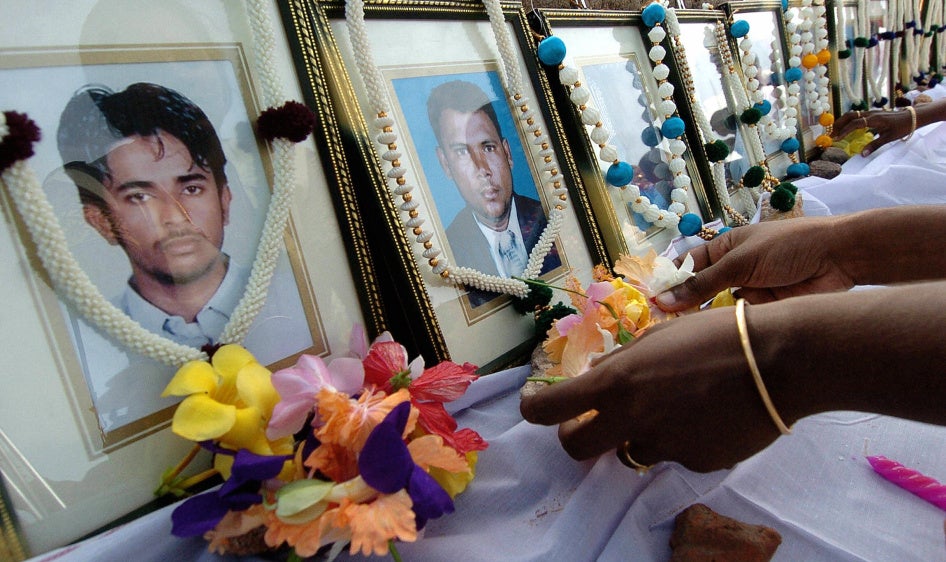
On August 4, 2006, 17 Sri Lankan staff members of the Paris-based humanitarian organization Action Contre la Faim (Action Against Hunger) were summarily executed at their office in Muttur, Sri Lanka. Over 20 years later, this unresolved case is emblematic of attacks on humanitarian workers during the country’s brutal civil war that ended in 2009.
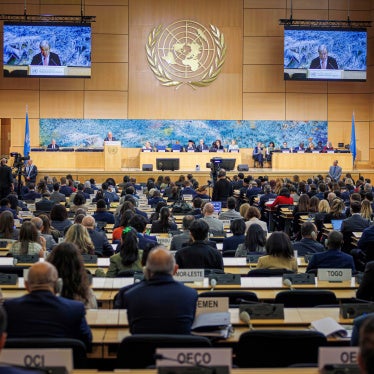
A new report by the United Nations High Commissioner for Human Rights, “I Died Many Times”; Attacks on Humanitarian Assistance in Sri Lanka, documents the numerous threats aid workers faced during the final years of Sri Lanka’s civil war with the separatist Liberation Tigers of Tamil Eelam.
The report finds that the government purposefully shut down humanitarian space “as a slow, deliberate strangulation” that effectively cordoned civilians into government-held areas, preventing independent observers from witnessing war crimes by the warring parties. The report, which is the latest from the UN’s Sri Lanka Accountability Project to gather evidence of international crimes in Sri Lanka, also finds “that impunity has resulted not from isolated failures, but from mutually reinforcing practices that have repeatedly frustrated accountability.”
The UN identifies four causes of impunity. First, it notes the state’s denial of responsibility. Second, the persistent failure of domestic investigations and prosecutions to deliver accountability. Third, it documents threats to victims, witnesses, and experts and the lack of effective witness protection in Sri Lanka. Lastly, it notes the appointment of presidential commissions of inquiry by successive governments instead of pursuing effective prosecutions.
Sri Lanka’s 26-year civil war was marked by serious human rights abuses and war crimes by both sides. Despite numerous domestic, international, and UN investigations, there has been no justice.
While President Anura Kumara Dissanayake took office in September 2024 promising justice for past rights abuses, most victims remain without answers or accountability because of the government’s failure to bring legal and structural reforms, including the promised independent public prosecutor’s office. The government has also refused to accept the Sri Lanka Accountability Project, which was established by the UN Human Rights Council in 2021 to collect evidence of serious rights abuses for use in possible future trials. This report shows why the UN’s evidence collection in Sri Lanka is as important as ever.