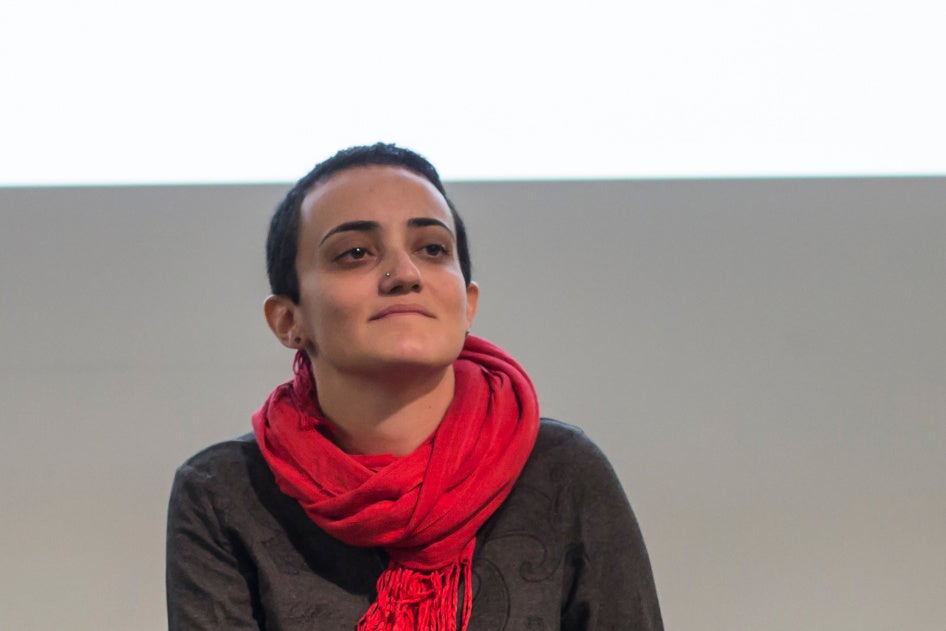
(Beirut) – Egyptian authorities should drop their case against Lina Attalah, editor-in-chief of the independent media outlet Mada Masr, ahead of her October 27, 2026 hearing, Human Rights Watch said today.
The Supreme State Security Prosecution (SSSP) referred Attalah for trial on October 22 in Case No. 9072/2026 on charges of establishing and managing a website without a license. The referral came the day after prosecutors questioned her over the outlet’s reporting. She faces a fine of up to 3 million Egyptian pounds (about US$53,400) as well as the closure of Mada Masr and confiscation of its equipment.
“The hasty prosecution of Lina Attalah marks another escalation in Egyptian authorities’ outrageous attack on independent media in the country,” said Bassam Khawaja, deputy Middle East and North Africa director at Human Rights Watch. “No journalist should face criminal prosecution for doing their job.”
On October 19, prosecutors summoned Attalah for questioning. On October 21, they questioned Attalah over allegations of publishing “false news” and operating a website without a license, then released her on bail of 100,000 Egyptian pounds (about $1,780). The following day, prosecutors referred her for trial on charges of operating the website without a license. According to Mada Masr, this is the sixth case brought against the outlet or its journalists in the past six years.
Egypt’s 2018 Press and Media Regulation Law requires websites operating in Egypt to obtain a license from the Supreme Council for Media Regulation. The law allows the council to suspend or block websites operating without a valid license. Mada Masr reported that it applied for a license in 2018 and again in 2020. It said that the authorities rejected its application without notifying it and that the platform had challenged that rejection in court. In 2023, Mada Masr submitted a new application with additional documents, and the authorities have not yet responded.
Attalah’s prosecution raises concerns about the use of licensing requirements to restrict independent media, Human Rights Watch said. Arbitrary licensing rejections or weaponizing licensing requirements by failing to respond promptly to good faith efforts to comply and forcing entities into legal limbo violates international human rights law.
Egyptian authorities have repeatedly targeted Attalah and Mada Masr. In September 2022, prosecutors questioned Attalah and three Mada Masr journalists over allegations of publishing false news, disturbing public peace, and harming public interest. In November 2023, prosecutors summoned Attalah for questioning following an investigation by the Supreme Council for Media Regulation. In August 2025, prosecutors again questioned Attalah over allegations of publishing “false news” and operating a website without a license, following Mada Masr’s reporting on alleged abuses at Badr 3 prison.
More than a hundred civil society organizations, including Human Rights Watch, have called on Egyptian authorities to end the prosecution of Attalah and grant Mada Masr a license to operate.
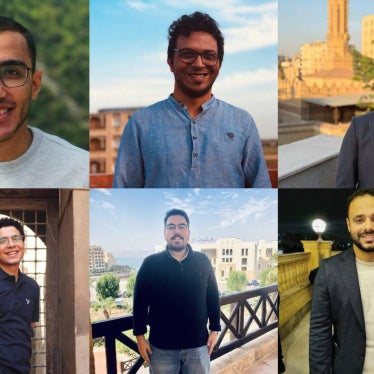
Attalah’s prosecution comes amid a broader crackdown on independent media in Egypt and less than a month after security forces arrested six journalists working for the independent investigative journalism platform Matsda2sh on September 28 and 29, 2026. The journalists, who constituted the platform’s entire editorial newsroom, remain in pretrial detention facing charges of “joining and financing a terrorist group,” “spreading false news,” and using social media to disseminate it. Some of them have since alleged that the authorities tortured them in detention and attempted to extract coerced confessions, according to their lawyers.
The authorities should drop all charges stemming from exercising the right to freedom of expression and end their repeated harassment of independent media, Human Rights Watch said.
Egypt remains one of the world’s leading jailers of journalists, with 25 journalists behind bars as of early October, according to the Committee to Protect Journalists. Egyptian authorities have blocked access to Mada Masr’s website in Egypt since May 2017.
Egypt is obligated under the International Covenant on Civil and Political Rights and the African Charter on Human and Peoples’ Rights to respect freedom of expression, including press freedom. The United Nations Human Rights Committee, which authoritatively interprets the covenant, has found that governments may not prohibit a site or an information dissemination system from publishing material solely on the basis that it may be critical of the government.
“Setting registration requirements and then repeatedly ignoring Mada Masr’s good faith attempts to fulfill them is a transparent attempt by authorities to undermine the platform and violates international human rights law,” Khawaja said. “The Egyptian authorities should drop the charges and end the ongoing crackdown on independent journalism.”