Thank you.
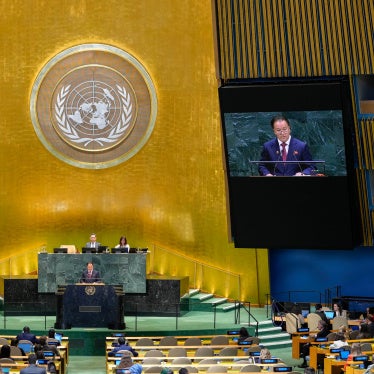
I read this statement on behalf of 82 civil society organizations and 5 global humanitarian disarmament campaigns.
Three decades ago this month, states convened for the opening meeting of the Ottawa Process, which launched negotiations of the Mine Ban Treaty and established humanitarian disarmament as an effective way to address the human suffering and environmental harm inflicted by arms.
Humanitarian disarmament is now facing challenges including a shifting geopolitical climate, an increased number of armed conflicts, and repeated breaches of and growing disregard for international law. Despite these challenges, the movement has demonstrated resilience in the past, and its preventive and remedial measures remain valuable tools for promoting civilian protection.
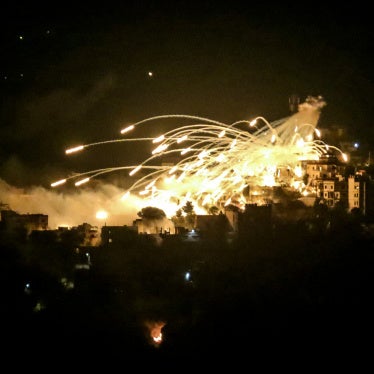
Over the past year, the widespread and unlawful use of explosive weapons in populated areas, antipersonnel landmines, and cluster munitions, along with an expanding arms trade fueled by record levels of defense spending by governments, have caused significant harm to civilians.
Some states have abused consensus decision-making processes to weaken draft elements of an instrument on autonomous weapons systems and impede efforts to address the problems of incendiary weapons at Convention on Conventional Weapons meetings. They have also blocked the adoption of outcome documents at the Review Conference of the Nuclear Non-Proliferation Treaty.
At the same time, large cuts in funding to humanitarian actors have had major impacts on the research, monitoring, advocacy, clearance operations to remove explosive hazards, and victim assistance measures that are all essential to humanitarian disarmament.
Nevertheless, the movement has also demonstrated its ongoing impact in 2026. For example, support for humanitarian disarmament instruments is growing. Lebanon acceded to the Mine Ban Treaty during an armed conflict, which served as a reminder of the treaty’s importance for protecting civilians. More than 100 states are now either parties or signatories to the Treaty on the Prohibition of Nuclear Weapons, and over 90 states have endorsed the Political Declaration on Explosive Weapons in Populated Areas.
States parties have held the line on core principles in key forums, such as the Third Review Conference of the Convention on Cluster Munitions. The final conference report condemned “any use of cluster munitions by any actor and under any circumstances” and called for an investigation into the use of cluster munitions on a state party’s territory.
In November, high contracting parties to the Convention on Conventional Weapons have the opportunity to strengthen the humanitarian disarmament agenda by choosing to initiate negotiations of a legally binding instrument on autonomous weapons systems.
To bolster humanitarian disarmament’s ongoing effectiveness in challenging times, states and other proponents should:
- Maintain a humanitarian focus in the process of disarmament;
- Defend the norms of humanitarian disarmament, including during times of heightened insecurity;
- Demonstrate the political will and creativity to pursue the bold moves that have long made humanitarian disarmament effective;
- Highlight humanitarian disarmament’s wide-ranging achievements to demonstrate the effectiveness of international law;
- Invest financial, human, and other resources in this work; and
- Pursue humanitarian disarmament efforts in partnerships, joining forces with like-minded states, international organizations, and civil society and ensuring that affected communities are included at every stage of the decision-making process.
Thank you.
Supporting Global Campaigns
- Control Arms
- International Campaign to Abolish Nuclear Weapons
- International Campaign to Ban Landmines–Cluster Munition Coalition
- International Network on Explosive Weapons
- Stop Killer Robots
Supporting Organizations
- Acronym Institute for Disarmament Diplomacy (AIDD)
- Action on Armed Violence (AOAV)
- ACTORS RWANDA (ARO)
- Arab Human Security Network
- Alianza por el Desarme Nuclear
- Aotearoa New Zealand Campaign on Military Spending
- Aotearoa New Zealand Joint Working Group on Landmines and Cluster Munitions
- Aotearoa New Zealand Network on Explosive Weapons
- Associazione Italiana Medicina per la Prevenzione della Guerra Nucleare (IPPNW Italy)
- Associazione nazionale vittime civili di guerra
- Azerbaijan Campaign to Ban Landmines
- Ban Landmines Campaign Nepal (NCBL)
- Campaña Colombiana Contra Minas (CCCM)
- Centre for Development and Assistance in Conflict (CEDAC)
- Center for Civilians in Conflict (CIVIC)
- Centro de Estudios Ecuménicos
- CODEPINK
- Deutsche Friedensgesellschaft – Vereinigte KriegsdienstgegnerInnen e.V. (DFG-VK)
- Development and Ability Organization (DAO)
- Dhesarme–Brazilian Action for Humanitarian Disarmament
- ECPAT/SEHLAC
- Frauennetzwerk für Frieden e. V / Women's Network for Peace, Germany
- Human Rights Now
- Human Rights Watch
- Humanity & Inclusion
- ICAN Aotearoa New Zealand
- ICAN France
- InterAgency Institute
- International Human Rights Clinic at Harvard Law School
- Kurdish Organizations Network Coalition for the International Criminal Court (KONCICC)
- Kurdistan Organizations Network to Abolish Nuclear and Mass Destruction Weapons (KONW)
- Kurdistan without Genocide
- Legacies of War
- Maat for Peace, Development and Human Rights
- Massachusetts Peace Action
- Medical Association for Prevention of War
- Middle East Treaty Organization
- Mines Action Canada
- NH Peace Action
- Nonviolence International
- Norfolk Catholic Worker
- Nuclear Age Peace Foundation
- NVMP-Artsen voor vrede
- Oak Ridge Environmental Peace Alliance
- Organization Against Weapons of Mass Destruction in Kurdistan
- Organization of the Justice Campaign (OJC)
- Pacific Network on Globalisation (PANG)
- PAX
- Pax Christi USA
- Peace Action Maine
- Peace Boat
- Peace Movement Aotearoa
- Permanent Peace Movement
- PROTECTION
- Qazaq Nuclear Frontline Coalition
- Regional Centre for International Development Cooperation (RCIDC)
- Réseau d'Action Sur les Armes Légères en Afrique de l'Ouest (RASALAO)
- Réseau d'Action Sur les Armes Légères en Afrique de l'Ouest, section Côte d'Ivoire (RASALAO-CI)
- Rete Italiana Pace Disarmo
- Saferworld
- SANE Policy Institute
- Scottish Campaign for Nuclear Disarmament
- Security Research and Information Centre (SRIC)
- Seguridad Humana para América Latina y el Caribe (SEHLAC)
- Serviço de Paz (SERPAZ)
- SMEX
- Soka Gakkai International
- Somali Human Rights Association (SOHRA)
- Somerville (MA) Human Rights Commission
- Stop Killer Robots Aotearoa New Zealand Campaign
- Sustainable Peace and Development Organization (SPADO)
- Swedish Peace and Arbitration Society
- Swedish Physicians against Nuclear Weapons
- Swansea Campaign for Nuclear Disarmament
- Syrian Network for Human Rights (SNHR)
- Vision GRAM-International
- West Virginia Campaign to Ban Landmines and Cluster Munitions
- Women for Peace and Democracy Nepal
- Women, Peace and Security Network Aotearoa New Zealand
- Women's International League for Peace and Freedom (WILPF)
- World without Chemical and Biological Weapons (WWW)
- Youths Awaken Foundation (YAF)