- Senegal’s intensifying crackdown on LGBT people is violating their rights and causing increasing fear and stigma.
- Fear of arrest and stigma are causing people to go into hiding, to avoid HIV testing and treatment, and deterring lawyers from representing them.
- The crackdown on LGBT people calls into question Senegal’s compliance with its own laws and international law, as well as the Olympic charter, given it will host the Youth Olympics Games at the end of the month.
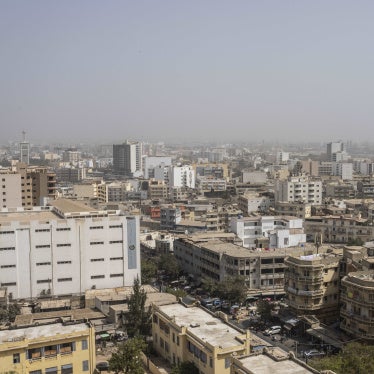
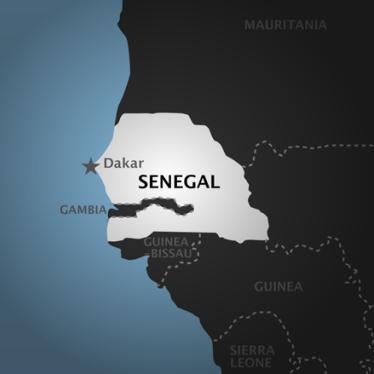
(Dakar) Senegal’s growing crackdown on Lesbian, Gay, Bisexual, and Transgender (LGBT) people is violating their rights, causing increasing fear and stigma, and should be ended immediately, Human Rights Watch said today. Mass arrests forced HIV testing and barriers to legal representation appear to be part of an increase in punitive government action against LGBT people in West Africa.
On March 11, 2026, Senegal’s parliament amended article 319 of the penal code, doubling to 10 years the maximum prison term for consensual same-sex conduct and criminalizing “promotion” of or support to LGBT people and organizations. The amendment followed the detention by security forces of at least five men in Thiès region in December 2025 and 12 men in the capital, Dakar, in February 2026 on charges including “acts against nature” and “intentional transmission of HIV.” Police and gendarmerie then escalated arrests of suspected LGBT people in various other cities including Thiès, Rosso, Saint Louis, Yeumbeul, and Ziguinchor.
“LGBT people are being forced to curb their normal activities and to keep from exercising their rights for fear of arrest and increased stigma,” said Larissa Kojoué, LGBT rights researcher at Human Rights Watch. “Senegal’s government should call a halt to this crackdown, which threatens everyone’s rights.”
Human Rights Watch interviewed 39 people in May in Senegal: 5 people who had been detained in late 2025 and early 2026, 2 journalists, 9 civil society representatives and human rights defenders, 2 national officials, 2 lawyers, 4 health professionals, and 15 members of the Senegalese queer community. Human Rights Watch also reviewed official statements, and media and nongovernmental group reports.
On September 29, Human Rights Watch wrote to the Senegalese authorities, including the justice minister, the high commander of the National Gendarmerie and director of military justice, and the director general of the National Police detailing its findings and asking specific questions, but has received no response.
Same-sex sexual conduct has been criminalized in Senegal since 1965, but hostility toward LGBT people has significantly intensified in recent years. During the 2024 presidential campaign, President Diomaye Faye and former Prime Minister Ousmane Sonko pledged to strengthen laws criminalizing same-sex relations, framing the issue as a national priority and mobilizing broad political and public support. The March amendments have triggered new attacks against LGBT people, interviewees said.
Mouhamadou Seck, secretary-general of the prominent Senegalese organization African Forum for the Defense of Human Rights (Rencontre Africaine pour la Défense des Droits de l’Homme, or RADDHO), said in May that “detentions, violence, and abuse against LGBT individuals have sharply increased across the country.”
Human Rights Watch was not able to independently verify the total number of arrests linked to article 319. However, between February and July, at least 212 people have been arrested, according to data collected by RADDHO. HIV Justice Network reported that the number of arrests exceeded more than 300 during the same period. Of those arrested, 82 were also charged with “voluntary HIV transmission,” although a court dismissed these charges in August. These figures illustrate the scale of arrests and indicate a pattern in enforcement of article 319.
Security force officials have stated that they have arrested people suspected of engaging in same-sex conduct based on information extracted from previously seized phones, third-party allegations, or raids on private premises.
The March amendment to the penal code introduces broadly defined offenses criminalizing activities such as “promotion” and “glorification” of homosexuality, as well as financing and supporting LGBT individuals and organizations. Human rights defenders and lawyers said that the introduction of these offenses has led to fear and anxiety among legal professionals and contributed to an environment in which detainees struggle to secure legal representation.
“In Senegal, lawyers are associated with the cause they represent,” a lawyer in Dakar told Human Rights Watch, adding that his colleagues and family members had urged him not to represent individuals arrested on charges of “acts against nature.” He said: “Everyone has the right to a fair trial. What matters to me is: were their rights respected or not?” Principle 18 of the United Nations Basic Principles on the Role of Lawyers provides that “Lawyers shall not be identified with their clients or their clients’ causes as a result of discharging their functions.”
People interviewed said that since February, the authorities have subjected detainees to HIV testing without informed consent and used detainees’ HIV status to justify additional criminal charges or prolonged detention. Health professionals expressed concern that the forced HIV testing and subsequent charges undermine medical confidentiality by allowing confidential test results to be used in criminal proceedings. They also discourage people from seeking HIV testing and treatment and jeopardize HIV-related public health efforts.
“We have noticed that […] some people have fled while others are hiding,” a doctor in Dakar said. “One-third no longer come in for appointments to seek HIV treatment.”
Security forces also appear to have violated the confidentiality of ongoing criminal investigations involving suspected LGBT people. News reporting on two cases involving public figures includes personal details that closely track details set forth in investigative records, suggesting authorities leaked confidential information to journalists. Local media also extensively reported personal and confidential data on the case of the 12 men arrested in February. This has exposed individuals to social stigma, family rejection, threats, and violence.
The Senegalese Constitution and international human rights law applicable in Senegal guarantee fundamental rights, including equal protection before the law and non-discrimination; the right to effective legal representation and the presumption of innocence; the rights to privacy and to informed consent to medical treatment; freedom from torture and other ill-treatment, and the right to a fair trial within a reasonable time.
Senegal’s Law No. 2010-03 of April 9, 2010, on HIV/AIDS establishes a legal framework to ensure access to treatment and support and protect the rights of people living with or affected by HIV. The law guarantees the rights to informed consent in medical testing and to privacy and confidentiality of health information, as well as protection against discrimination based on HIV status and protection of detainees from mandatory HIV testing.
The African Charter on Human and Peoples’ Rights, ratified by Senegal in 1982, guarantees, among other rights, the right to a fair trial, to equal protection before the law, and to nondiscrimination. The African Commission on Human and Peoples’ Rights, which will meet in Dakar from October 12–21, explicitly called on member states, including Senegal, to protect sexual minorities in accordance with the African charter, and has urged governments to protect people from violence based on their sexual orientation and gender identity. The International Covenant on Civil and Political Rights (ICCPR), to which Senegal is a party, requires Senegal to ensure the protection of numerous rights including fair trial, equal protection, nondiscrimination, and the right to privacy. The UN Human Rights Committee, which oversees compliance with the ICCPR, has repeatedly held that the criminalization of consensual same-sex conduct between adults violates the covenant.
From October 31 to November 13, Senegal will host the Dakar 2026 Youth Olympic Games, the first Olympic event on the African continent. The Olympic Charter prohibits discrimination on any grounds and commits host countries to respect human rights and human dignity.
“The ongoing government crackdown on LGBT people raises serious concerns about Senegal’s compliance with international law, the Olympic charter, and Senegal’s own laws,” Kojoué said. “The government should call a halt to this crackdown.”
Expanded Criminalization of Same-Sex Conduct
On March 11, Senegal’s Parliament adopted amendments to article 319 of the penal code by a vote of 135 to 0, with three abstentions. The new law doubles, to 10 years, the maximum prison term for same-sex conduct and increases fines from 2 million to 10 million CFA francs (roughly US$3,000 to US$17,000).
The law introduces penalties of up to seven years in prison and a fine of 500,000 to 5 million CFA ($850 to $8,500) for those accused of promoting homosexuality or supporting or financing LGBT persons and organizations.
It also instructs judges not to suspend sentences or reduce prison terms below the minimum penalty recommended.
Arbitrary Arrest, Detention
According to data from July by the HIV Justice Network, since early February, authorities “have arrested over 300 individuals on allegations of acts against nature” in cities across Senegal. Data collected by RADDHO shows 212 people were arrested between February and July. RADDHO told Human Rights Watch that their data indicates that gendarmes from the Keur Massar unit carried out the majority of the arrests. Keur Massar is about 25 kilometers east of downtown Dakar.
On June 25, Keur Massar district gendarmerie arrested the 101st suspect in connection with the arrest wave that began in February, according to media reports. Officers said the arrests followed their review of a mobile phone seized from one of the 12 men arrested in February.
In July 30, international media reported that Keur Massar gendarmes arrested eight women who have been placed in pretrial detention. The gendarmes used phone data from two who were allegedly in a relationship to identify and arrest the six others. Beside “acts against nature,” investigators also cited allegations of pimping, corruption of minors, and drug-related offenses.
Police in the Thiès region, about 70 km east of Dakar, arrested five men in December 2025 for smoking shisha, a tobacco product banned under local law, and held them for two days before presenting them to a judicial authority. The prosecutor ordered them held on charges of “acts against nature” but dropped the charges and released them a month later for lack of evidence. They said that they believe neighbors denounced them to the authorities because of their sexual orientation.
One of the five, a 23-year-old man, said:
We were arrested while preparing for a fashion show at my place. Around 9 p.m., three police officers arrived, took us to the station and confiscated our phones.… We were held for two days, then taken to the Thiès prosecutor’s office and charged with acts against nature, despite not being caught in the act.… I think our neighbors told the police we are gay because they were jealous of our successful fashion business.
He said that, “we were beaten, whipped, and slapped, and called homosexuals.... I was injured on my thigh, causing lasting pain.”
A social worker operating in Rebeuss, Senegal’s largest detention facility, located in Dakar, said he witnessed prison staff and detainees discriminate against those held on suspicion of homosexuality: “[LGBT detainees] are being excluded from communal activities, denied participation in collective prayer sessions, and required to access services, including the barber, separately from other prisoners. In some cases, they are even compelled to perform domestic labor.”
Prolonged Pretrial Detention
Since February, only one person arrested for “acts against nature” has been convicted according to local media. On April 10, the Pikine-Guédiawaye District Court, in a suburb of Dakar, sentenced a 24-year-old man, who had been arrested a week earlier, to six years in prison and imposed a fine of 2 million CFA franc (approximately $3,300) after convicting him of “acts against nature” and “public indecency.” He was not represented by legal counsel as it is often the case for people accused of “acts against nature” who may be denied access to legal representation or face difficulty finding lawyers willing to represent them.
A lawyer in Dakar told Human Rights Watch that many of those arrested on homosexuality-related charges remain in pretrial detention because prosecutors have added supplementary charges, including criminal association, endangering the life of others, deliberate HIV transmission, and drug trafficking. The lawyer said that these additional charges often require longer investigations and are used to justify extending pretrial detention.
Senegalese law generally limits pretrial detention to six months for minor offenses, with no limit for certain serious crimes such as murder, offenses against state security, and embezzlement of public funds. International human rights law requires that pretrial detention should be an exception, not the rule, and be justified on an individual basis in every case. Anyone held in pretrial detention is entitled to a trial within a reasonable time or release. Lengthy pretrial detention remains a significant concern in Senegal, as several civil society organizations and government officials interviewed said.
On August 7, the Pikine-Guediawaye District Court officially closed the preliminary investigation into the case involving the 12 men arrested on February 9 and another 87 people arrested in connection with the same crackdown. The court dismissed cases for 28 and freed them, but 71 remain referred to trial on charges of criminal association and acts against nature. The district court also dismissed charges of “endangering other people’s lives” and “voluntary HIV transmission.” This decision raises questions regarding continued detention of the 12 accused as the investigative needs that are commonly invoked to justify prolonged pretrial detention may no longer apply.
Barriers to Legal Representation
Human Rights Watch found that that the newly introduced offense of “promotion of homosexuality” has had a chilling effect on access to legal representation. Lawyers and human rights defenders said they were concerned that representing people charged under article 319 could expose them to professional, social, or even legal repercussions. “How can we represent people arrested without being accused of promotion,” one lawyer said. “That’s why there is such strong reluctance.”
The lawyer described serious obstacles to accessing legal representation, saying that detainees, including his own client, were pressured to waive their right to legal representation. He also said that authorities frequently questioned detainees and obtained statements in the absence of legal counsel.
On February 9, the lawyer filed two complaints before the Dakar Court of Appeals, one on his own behalf and one on behalf of his client against a gendarmerie commander who pressured his client to waive his right to legal representation. He said in September that no progress had been made in either case.
Another lawyer raised concern about gendarmes’ respect for due process. He suspected that authorities had obtained his clients “confessions” without their fully understanding of the proceedings and the implications of their statements.
Forced HIV Testing; Disclosure of Medical Information
RADDHO and HIV Justice Network told Human Rights Watch that the authorities have forced most detainees to undergo HIV testing and, when the results were positive, charged them with “deliberate HIV transmission” and “endangering the lives of others” in addition to offenses under article 319 of the amended penal code. Under article 36 of Senegal’s 2010 law on HIV/AIDS, anyone who is knowingly living with HIV and has unprotected sex may face 5 to 10 years in prison and a fine.
The Keur Massar gendarmerie has officially stated that they required arrested people to undergo HIV tests. The national police also have conducted such tests and used the HIV status in criminal proceedings, as they mentioned in their June 13 statement.
“We are aware about nonconsensual HIV testing by gendarmerie and disclosure of people’s HIV status,” a doctor told Human Rights Watch.
The consequences of these practices have extended beyond individual detainees. Health professionals said that the use of HIV-related services has sharply declined and attribute it to fear of arrest, forced disclosure, and social stigma. “If, because of the law, people decide to stop coming to health clinics, it becomes a public health problem,” a doctor said.
The Public Health Ministry and the National Council for the Fight Against AIDS (Conseil National de Lutte Contre le Sida, or CNLS), a government body leading and coordinating the HIV response in Senegal, released joint statements on Facebook on February 11 and February 23 stressing national efforts to treat and prevent HIV/AIDS and support people living with HIV/AIDS, as well as the need to keep medical and judicial records separate, and the difficulty of establishing intentional transmission.
In a March 18 news statement, the Joint UN Program on HIV/AIDS (UNAIDS), which advocates for global action against the HIV/AIDS pandemic, expressed concerns over the impact of the amended law, and called on Senegal to protect the confidentiality of medical information and the patient-provider relationship as non-negotiable foundations of a functioning health system.
Breaches of Privacy and Confidentiality
Numerous local media reports on the recent cases include highly detailed personal information about individuals arrested by the security forces. In at least four cases, the information closely tracks information in case records, nearly verbatim, suggesting that confidential information was being directly shared with journalists.
“Our photos and items found [by Police] at my home, like lubricants and antiretroviral tablets, were published in newspapers and on social media,” the 23-year-old man said.
In one prominent case, a rare instance in which the detainee had legal representation after his arrest, Keur Massar gendarmes detained a popular artist on charges of “acts against nature,” and his name, HIV status, and other confidential information appeared soon afterward in the media.
As a Senegalese journalist put it: “Publishing ‘scandalous’ information, on such a taboo matter like homosexuality in Senegal, has increasingly become a means of driving audience engagement. This practice turns people’s suffering into spectacle, with little regard for the serious consequences for those whose privacy and dignity are violated.”
Mental Health Consequences of the Crackdown
The government crackdown has had serious social and psychological effects on LGBT people across the country. LGBT individuals interviewed said they experienced fear, anxiety, depression, and suicidal thoughts, and many have gone into hiding, restricted their movements, withdrawn from social and online life, relocated, or abandoned mobile phones to avoid detection by the security forces.
A 22-year-old university student said he was forced to move after facing verbal threats and harassment:
In the neighborhood where I was, people started insulting me. They would say things like ‘next time it is your turn,’ when I passed [by them]. Kids would even follow me singing ‘goor-jigeen’ [a Wolof word describing a man who appears and behaves like a woman] and adults would say nothing. I couldn’t even defend myself. I knew if I said something, they would all come after me. To come back home I had to wait until it is dark so no one would notice me.
A 27-year-old community worker in Dakar, said constant fear has turned daily life “into a state resembling COVID confinement”:
We have suspended all our activities, including online. Now nobody trusts anyone. There is a total lack of security. I know I have one foot in prison. I can be arrested anytime because I am a community leader. Even if I am not in prison right now, I live like I am in prison. Life has totally changed.
Another 21-year-old man among those arrested in December 2025 said that, following his release in January 2026, he has been living in hiding in central Senegal, unable to return home out of fear his relatives would assault him:
I received a call from my mother telling me not to come back home. Apparently, my [half] brothers and some of my cousins were waiting for me and [were] ready to teach me a lesson. I have been hiding since. I couldn’t even go back home to pick up some stuff. I have withdrawn from several online groups and deactivated my social media. Many of my friends left for Gambia, Mauritania, or Morrocco. I am staying because I am my mother’s only child.
A 35-year-old man in Ziguinchor said his partner left with no prior notice for a neighboring country causing him psychological distress:
My partner left the country at night on a motorbike when he heard that his close friends were arrested and the police raided his place. He threw away his phone. He lives in poor conditions on the other side of the border. He does not have his medication. I am scared for him.
A psychologist at Cheikh Anta Diop University in Dakar said that her consultations on campus “have tripled” since March. “Many patients are young men experiencing severe anxiety, hypervigilance, withdrawal from social life, and obsessive behaviors driven by fear of being perceived and attacked as LGBT.”
Recommendations
To Senegal’s President
- Order the immediate release of everyone arbitrarily detained since February 2026 under article 319 of the penal code.
- Refer the amended law to the Constitutional Council for constitutional review of its compatibility with constitutional guarantees of the right to privacy, equality before the law, non-discrimination, and fair trial rights.
- Publicly commit, ahead of the Youth Olympic Games, to ensure that all participants, visitors, and residents alike, will be protected from discrimination and arbitrary arrests.
To the National Assembly
- Repeal article 319 in its entirety, including the provisions of the amended penal code that criminalize the “promotion” or “glorification” of homosexuality, as well as the financing or support of LGBT individuals and organizations.
- Initiate a legislative review to remove HIV status as a criminal aggravating factor.
To Senegal’s Government
- Open an investigation of abuses documented against LGBT people and hold those responsible accountable.
- Instruct judicial authorities to uphold national and international laws to guarantee access to legal representation for all detainees and ensure lawyers can represent clients without intimidation, harassment, or risk of prosecution.
- Ensure that pretrial detention is an exceptional measure, not a standard procedure, and that anyone in such detention is guaranteed a trial within a reasonable time or release.
- Prohibit forced HIV testing, ensure informed consent for all medical testing, prevent the use of confidential health information in criminal proceedings, and protect medical confidentiality, including by prohibiting the disclosure of detainees’ health information to the media.
- Open an independent investigation into the case concerning a gendarmerie commander who pressured a detainee to waive his right to legal representation before leaking the detainee’s HIV status to journalists.
- Respect and protect the rights to freedom of expression, association, and peaceful assembly, including for individuals and organizations advocating for the rights of LGBT people.
To the National Medical Council
- Reaffirm that forced HIV testing violates medical ethics.