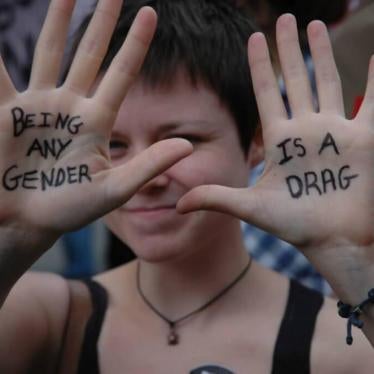
Across the Americas and beyond, opposition to so-called “gender ideology” has evolved into sophisticated political projects with consequences extending far beyond LGBT people. It has become a powerful tool through which populist and authoritarian-minded leaders consolidate power, manufacture political enemies, and reshape public debate around identity, nationalism, and democratic values.
The global rise of these “anti-gender” politics demonstrates that like other global movements, they operate transnationally, borrowing language, narratives, and strategies across borders. In the Americas, they have found especially fertile ground because they intersect with deep social anxieties: economic and public insecurity, mistrust of state institutions, concerns around changing demographics, and growing political polarization.
Sometimes, these movements are simply advancing a sincere, if dangerous, ideological project. But often they are opportunistic — LGBT people, especially transgender people, as well as women’s rights advocates, have increasingly become symbolic targets used in a cynical and partisan manner.
This approach, often employed by political newcomers seeking to mobilize socially conservative constituencies, is dangerous and often effective because it rarely uses an explicit language of exclusion. Rather, proponents frame themselves as defenders of children, of parents, of religion, of national values, of science, or of freedom itself. This strategic repositioning shifts the debate away from discrimination and toward competing claims of protection, where women’s rights defenders and LGBT people and their allies are cast as the threat.
The strategy has produced political dividends, even as its targets vary from country to country. In Brazil, opposition to “gender ideology” became central to broader right-wing mobilization against educational policies that encompass information about gender, sexuality, or diversity. In Argentina, President Javier Milei has repeatedly used this framing to lambast the supposed excesses of previous governments and dismantle institutions associated with gender equality and inclusion.
In El Salvador, President Nayib Bukele has criticized “[gender] ideologies in schools and colleges” and censored educational materials on diversity. In Ecuador, the Constitutional Court’s positive rulings on gender identity have triggered calls for congress to “audit” the court, dovetailing with the government’s strategy to undermine the institution’s independence.
These attacks rarely engage seriously with underlying societal issues of discrimination or inequality, failing to offer credible solutions of their own. Brazil continues to struggle with high levels of gender-based violence. Argentina maintains persistent high levels of femicides with high-profile cases continuing to shake society. LGBT Salvadorans continue to face violence and discrimination from public security forces and in medical facilities. Ecuador faces persistently high levels of sexual violence in educational settings. These pressing realities are increasingly displaced by moral panics about the amorphous “gender ideology” threat.
Nor do the consequences stop with women’s rights advocates or LGBT communities. Anti-gender campaigns are often bound up with efforts to erode democracy. Restrictions targeting discussions of sexuality or gender in schools can fuel broader threats to academic freedom and access to information. Attacks on LGBT organizations can merge with broader pressures on civil society. Claims about protecting children or preserving morality can justify expanding state authority over speech and public life. What begins as a campaign against one group can evolve into a broader mechanism for controlling institutions and narrowing democratic space.
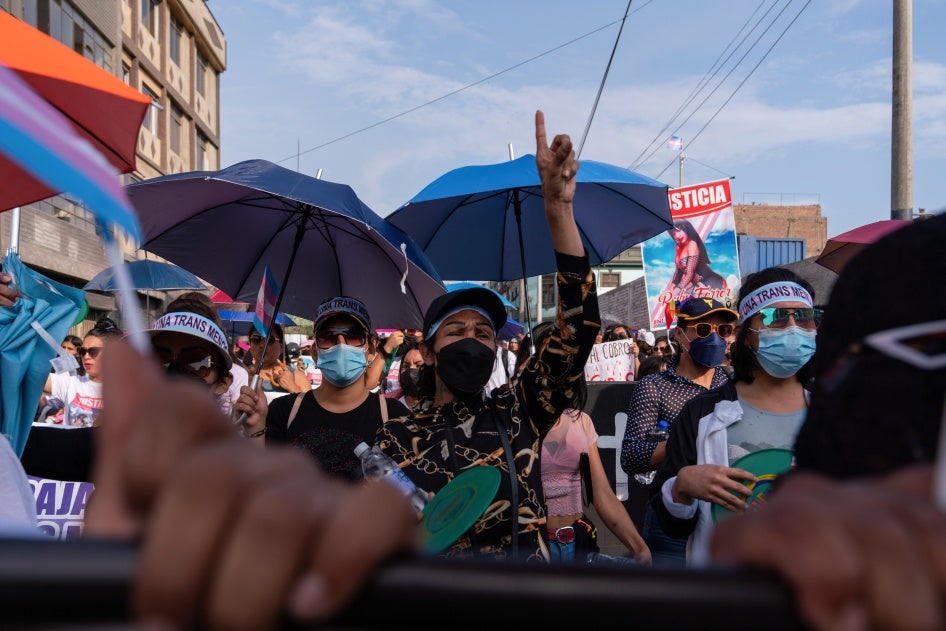
Yet anti-gender movements have generated resistance as well. Across the Americas, LGBT activists, women’s rights movements, parents, health professionals, and human rights organizations have built new alliances precisely because they increasingly recognize that their struggles are interconnected. Pushing back against anti-gender movements is about resisting broader efforts to narrow democratic space and weaken institutions that protect everyone.
If anti-gender politics is understood merely as a disagreement over values or culture, responses will likely remain fragmented and defensive. A more effective response begins by re-centering a simple principle: democratic societies depend on pluralism, and every person deserves dignity, safety, and equal treatment under the law. It also requires stronger connections across borders.
The narratives, tactics, and disinformation campaigns employed by anti-gender movements travel internationally; so too should the lessons for countering them. Most important, groups like LGBT people should not be portrayed as a small and separate constituency. They are family members, friends, neighbors, classmates, coworkers, and citizens. When their rights are restricted, the consequences extend far beyond those directly targeted.
The challenge, then, is to resist a politics that substitutes scapegoats for solutions. The Americas face real political, economic, and social problems. Instead of being sidetracked to debate “gender ideology,” decision makers across the Americas should direct their political energy toward addressing those challenges.