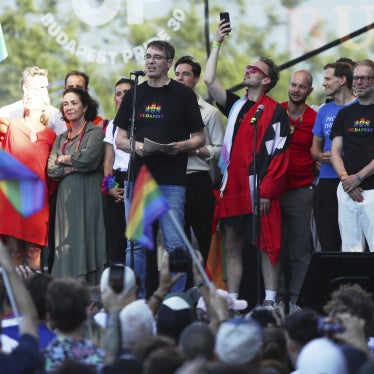
Hungarian prosecutors are charging Géza Buzás-Hábel, the organizer of the 2025 Pécs Pride, for doing what democracies are supposed to protect: organizing a peaceful march. He faces up to one year in prison. His charges follow those of Budapest mayor Gergely Karácsony, who was charged in January for organizing the June 2025 Budapest Pride.
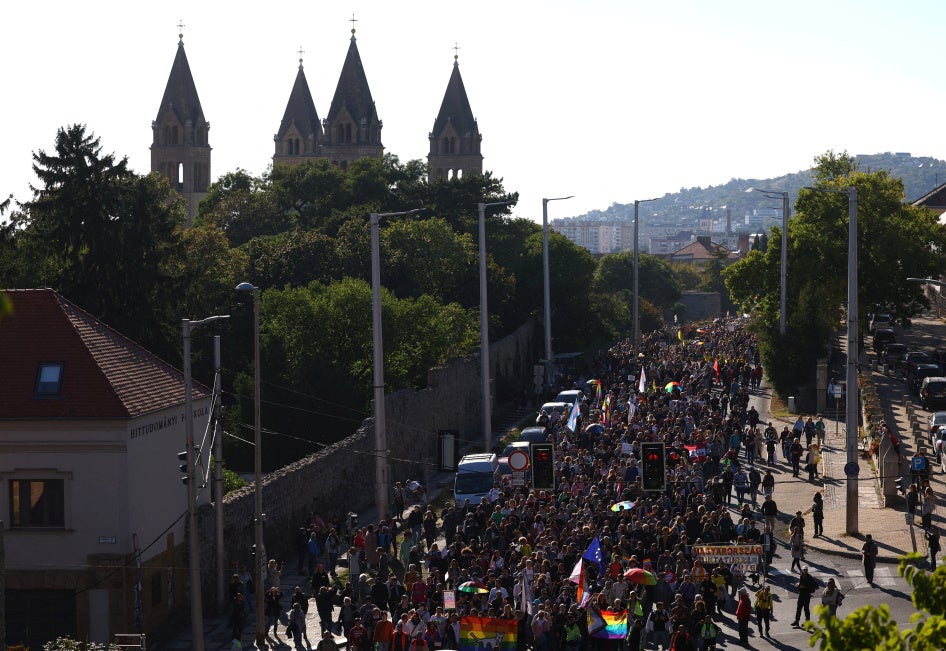
The 2025 Pécs Pride event was banned by police, later upheld by the Supreme Court, under Hungary’s amended assembly law, which empowers authorities to ban assemblies they deem harmful to children. Despite the ban, the march went ahead peacefully and with record attendance, organized under the slogan “We will not bow to fear.”
When a government rewrites the constitution to elevate vaguely defined “child protection” above fundamental rights, and amends assembly laws to effectively outlaw LGBT events, it cannot be argued it is about regulating protest: it is about criminalizing dissent.
Buzás-Hábel is a teacher, a human rights activist, and a respected member of Pécs’ civic community. He is also gay and Roma. For years, he helped organize Hungary’s only rural Pride march without incident. His prosecution sends a clear message: peaceful assembly is tolerated only when it does not challenge government policy.
The implications of his arrest extend well beyond Pride events. Once the state normalizes prosecuting peaceful assembly on political grounds, the same tactics can be used against any protest it deems undesirable, whether focused on corruption, social policy, or the rule of law.
Hungary is bound by its domestic law, the European Convention on Human Rights, and the EU Charter of Fundamental Rights to protect freedom of assembly. Prosecuting a Pride organizer for leading a peaceful march flies in the face of these obligations and further undermines judicial independence and democratic accountability.
The authorities should immediately drop charges against Buzás-Hábel and Karácsony.
European Union institutions should treat the charges for what they are: violations of the freedom of assembly and the principle of equality; the European Commission should use all available legal tools to react urgently, including infringement proceedings, in view of the criminal changes; and EU member states should move forward with concrete steps to address Hungary’s ongoing rule of law violations.
Criminalizing peaceful protest is not the act of a confident democracy: it is the reflex of a government increasingly intolerant of scrutiny and dissent.