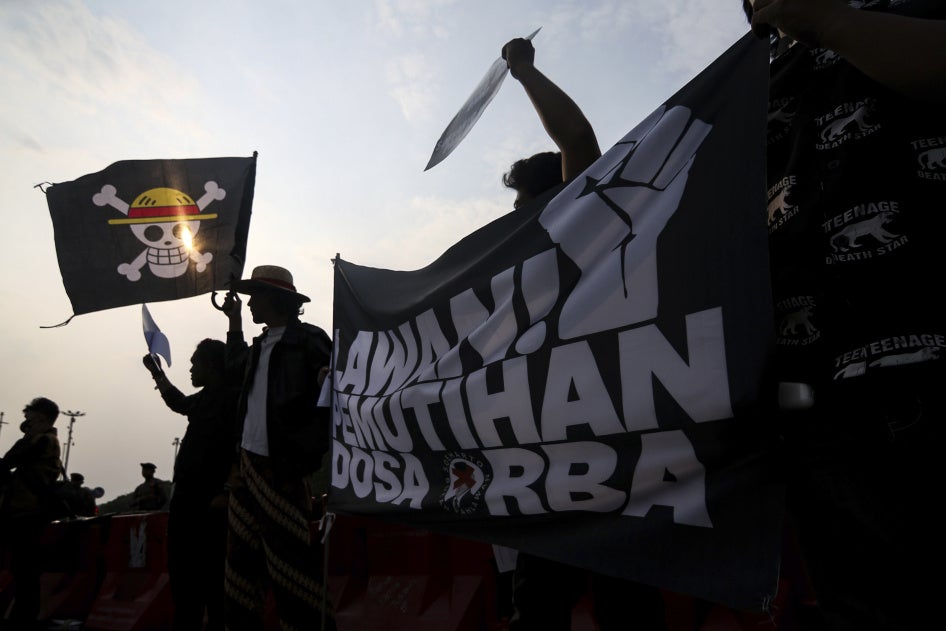
(Bangkok) – Indonesian President Prabowo Subianto adopted policies in 2025 that benefitted military officers and lawmakers, generating widespread opposition and public protests, Human Rights Watch said in its World Report 2026. Security forces responded by detaining thousands demonstrating nationwide against rising economic inequality, while the military, combatting a separatist insurgency, cracked down on Indigenous Papuans and secured plantations and mining operations in the six Papua provinces.
“The Prabowo administration has increasingly deployed military officers in civilian affairs and offered benefits to lawmakers when many Indonesians are suffering economically,” said Meenakshi Ganguly, deputy Asia director at Human Rights Watch. “Instead of addressing the concerns raised by critics and protesters, the Indonesian authorities have brought baseless criminal charges, cracked down on demonstrations, and targeted Indigenous people, religious minorities, and journalists.”
In the 529-page World Report 2026, its 36th edition, Human Rights Watch reviews human rights practices in more than 100 countries. In his introductory essay, Executive Director Philippe Bolopion writes that breaking the authoritarian wave sweeping the world is the challenge of a generation. With the human rights system under unprecedented threat from the Trump administration and other global powers, Bolopion calls on rights-respecting democracies and civil society to build a strategic alliance to defend fundamental freedoms.
The following were other key developments in Indonesia during 2025:
- In August, hundreds of thousands of people in 107 cities nationwide protested low wages and unemployment after Prabowo announced new perks for lawmakers. Protesters issued 17+8 demands, 17 short-term and 8 long-term reforms directed at the president, legislature, military, and others.
- Indigenous community leaders and environmental activists faced threats and arbitrary arrests. Especially at risk were those opposing mining companies and oil palm plantations, both of which produce products, such as electric vehicle batteries and palm oil, that are in global demand.
- Fighting between government forces and separatist insurgents increased in five Papuan provinces during the year, resulting in civilian deaths and mass displacement. The government’s deployment of troops to protect its food estate project in Merauke, South Papua, forcibly displaced Indigenous communities, permitted deforestation, and threatened biodiversity.
- Extremist Islamist groups attacked minority religious communities in Padang, West Sumatra, and Sukabumi, West Java.
- The Alliance of Independent Journalists recorded 60 cases of violence against journalists and media between January 1 and August 31, including intimidation, beatings, and cyber-attacks. Most alleged perpetrators were military and police officers.
As a former general, President Prabowo should be able to restrain the military, instead of giving them free rein to improperly interfere in civilian democratic rule. In particular this means ensuring that security force personnel implicated in serious abuses in the past or more recently face justice.