(São Paulo) – Brazilian authorities should adopt new public security strategies that dismantle criminal organizations and their alleged links with state agents, enhance independent criminal investigations, and spur reforms to make police more effective at upholding the law, Human Rights Watch said today in its World Report 2026.
In the 529-page World Report 2026, its 36th edition, Human Rights Watch reviews human rights practices in more than 100 countries. In his introductory essay, Executive Director Philippe Bolopion writes that breaking the authoritarian wave sweeping the world is the challenge of a generation. With the human rights system under unprecedented threat from the Trump administration and other global powers, Bolopion calls on rights-respecting democracies and civil society to build a strategic alliance to defend fundamental freedoms.
Brazilians cited violence as their main concern in recent polls, and security is expected to be a major issue in the electoral campaign for president, governors, and legislators, who will be elected in October.
“Public security strategies based on unchecked use of lethal force by police have failed again and again to make Brazilian neighborhoods safer, and instead have resulted in more violence and insecurity,” said César Muñoz, Brazil director at Human Rights Watch. “Candidates in the upcoming elections should put forward proposals to effectively protect people’s rights, which are threatened by organized crime but also by police in many low-income, predominantly Black communities.”
- Between January and November 2025, police killed 5,920 people. Black Brazilians are three-and-a-half times more likely to become a victim than white people. While some police killings are in self-defense, many others are extrajudicial executions. Abuses committed by police, as well as corruption within the force, make communities distrust law enforcement and less likely to report crimes and collaborate with investigations.
- Public security strategies that lead to shootouts also put officers at risk. Official data show that between January and November 2025, 171 police officers were killed and another 119 died by suicide, a rate much higher than the rest of the population that reflects exposure to violence and inadequate mental health support, among other factors.
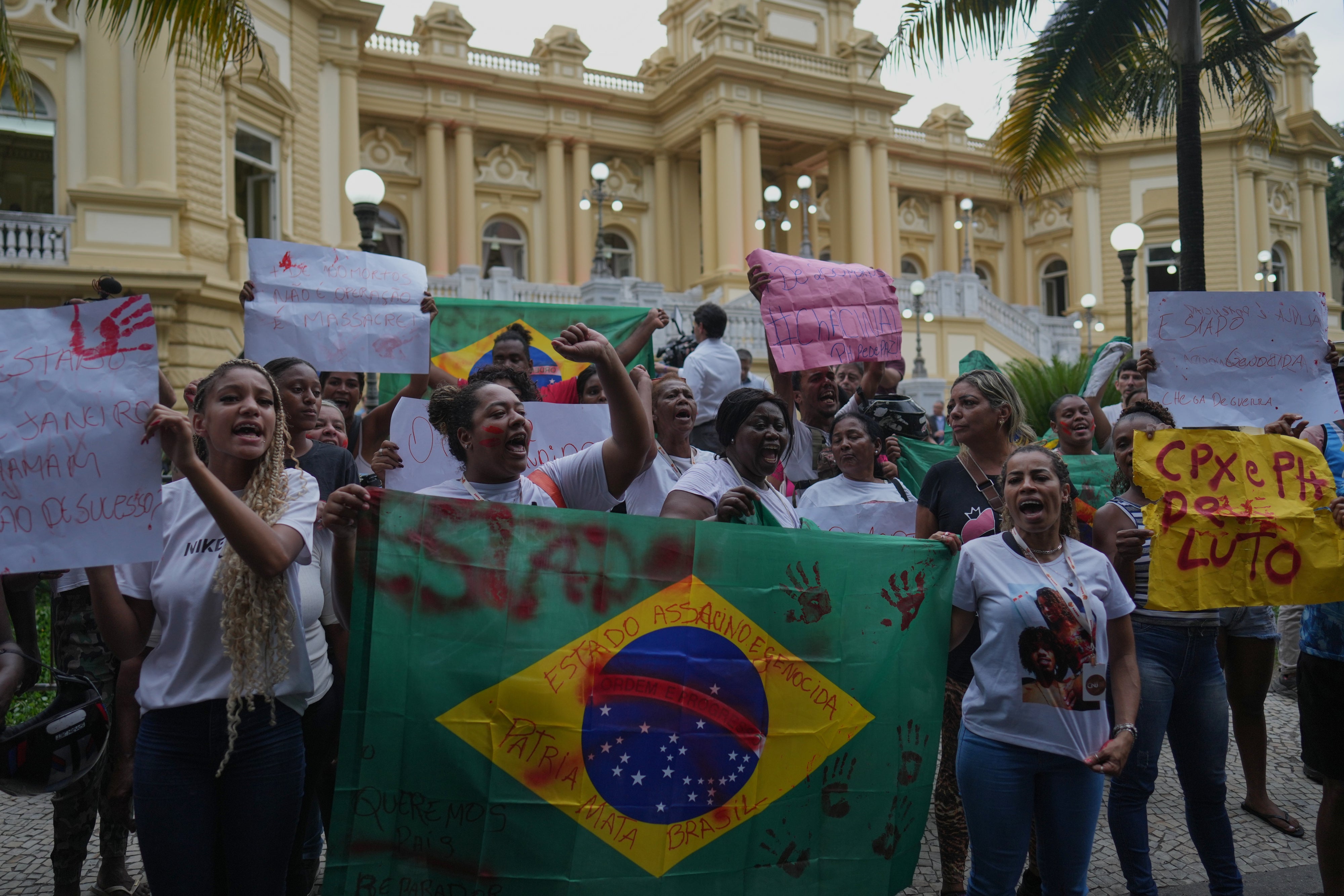
- Investigations into police killings are often deficient. For instance, police failed to take crucial investigative steps to determine the circumstances of the killing of at least 122 people, including 5 police officers, during the deadliest raid in Rio de Janeiro’s history, on October 28, 2025.
- Rio de Janeiro is one of the seven states, together with the federal district, that still have official forensic units fully subordinate to civil police, a set up that does not accord them the independence necessary to do effective work, particularly in cases of alleged police abuse.
- The Supreme Federal Court has ruled that prosecutors should lead investigations into suspected unlawful killings by police. A resolution adopted by the National Council of Public Prosecutors instructed prosecutors to ensure those investigations comply with international standards, including adequate forensic analysis.
Candidates should put forward security and justice proposals grounded on human rights and scientific evidence that improve coordination between federal and state agencies, and target arms trafficking, money laundering, and criminal organizations’ income streams, Human Rights Watch said.