Human Rights Watch (HRW) welcomes the opportunity to provide information to the Special Rapporteur to inform her upcoming report to the United Nations Human Rights Council in its sixty-first session.
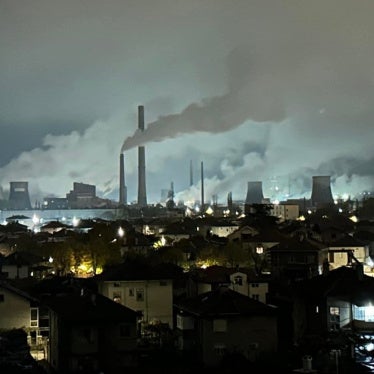
This submission focuses on the health impacts of air pollution caused by fossil fuels, drawing on HRW’s recent research and advocacy on environmental issues. In particular, it draws out findings and lessons from our work on fossil fuel production (e.g. refining) and use (e.g. coal-fired power plants) across a variety of locations in countries: the United States, Türkiye, Bosnia and Herzegovina, and the United Arab Emirates (UAE).
The findings summarized in this brief illustrate a consistent human rights impact: fossil fuel production, combustion and processing are a major source of deadly air pollution that seriously harms health—causing respiratory illnesses, cardiovascular diseases and premature deaths, particularly among children, older people and people with pre‑existing health conditions.
Our research further shows that regulatory agencies frequently fail to monitor or enforce air quality standards, to the detriment of public health and in some cases, in violation of the right to health information. The people living in and around oil, gas, and coal extraction sites, refineries, power plants, and pipelines often have extremely limited means to protect their health from the devastating impacts of toxic air pollution.
After briefly summarizing our research findings, HRW respectfully offers recommendations for tackling these challenges and strengthening air quality protections in line with human rights obligations.
Weak or unenforced regulations
HRW research has identified that governments often fail to adopt and implement comprehensive pollutant limits consistent with the World Health Organization’s (WHO) 2021 Air Quality Guidelines. This includes standards for fine particulate matter (PM2.5), responsible for the most deaths worldwide from any air pollutant, according to the Health Effects Institute (HEI) and the Institute for Health Metrics and Evaluation (IHME).
In Bosnia and Herzegovina (2022), HRW documented that enforcement of air quality standards is poor. HRW found that although air quality standards were generally in line with EU standards (although less robust than WHO guidelines), local officials tasked with various aspects of air quality management said they weren’t enforced. Likewise, between 2018 and 2022 the state breached Energy Community Treaty standards on emissions (for PM2.5, NOx, and SO2) from prescribed coal-fired power plants. In 2020 the plants were emitting almost 10 times as much SO2 as permitted by the treaty. The country had one of the world’s highest mortality rates from air pollution, according to WHO data.
A 2023 HRW investigation into the toxic air pollution caused by expanding fossil fuel operations in the UAE found that PM2.5 concentrations have been consistently above WHO-recommended levels. HRW also analyzed the annual PM10 concentrations from 2018 to 2022 throughout the country, finding that the average of all the stations in 2022 was more than eight times the yearly WHO recommendation. Based on WHO estimates of the death rate attributable to outdoor air pollution, 1,872 people died from air pollution-related illnesses in the UAE in 2019. While the government recognizes the problem of air pollution, its current air-quality standards are much weaker than what the WHO recommends. For instance, the UAE lacks regulatory limits on PM 2.5 (daily and annual), PM10 (annual), NO2 (annual).
In Türkiye (2024), HRW found that air quality standards are less strict than those recommended by WHO and do not include a limit for PM2.5, leaving a major regulatory gap. By early 2024 Türkiye had become Europe’s largest coal-fired electricity producer , accounting for 73 percent of the Organization for Economic Cooperation and Development (OECD) and certain coal projects that are planned (and seeking approvals and financing) but not yet built. Based on the World Health Organization (WHO) estimates, more than 35,000 people died from air pollution-related illnesses in 2019 in Türkiye.
Flawed environmental impact assessments
Environmental impact assessments (EIAs) are a critical tool to determine a proposed activity or project’s possible impact on air quality and the health of fenceline communities. Inadequate EIAs allow polluting activities to be approved despite known risks to human health.
Successive Turkish governments have built and expanded two of the country’s biggest coal power plants, plants A and B, in Afşin-Elbistan. HRW found that air pollution levels near plant A – and the later-built plant B two kilometers away – are dangerously high and that residents are experiencing health conditions that academic studies have attributed to air pollution from the plants. Despite this, Turkish authorities were presented with an EIA that gave the go-ahead for the expansion of plant A, which is projected to lead to an estimated 1,900 premature deaths over its 30-year economic lifespan. HRW found the EIA failed to meet national and international standards.
Specifically, HRW found that the EIA: (i) lacked an adequate assessment of baseline air quality which fails to integrate the existing air pollution problem of the region, (ii) ignored the impact of air pollution on human health; (iii) failed to adequately evaluate the worst-case scenario as technological deficiencies of the Afşin Elbistan A Plant were not taken into account; (iv) lacked a cumulative impact assessment based on the planned projects and relevant existing industrial installations; and (v) failed to respect consultation and participation rights. In 2025, authorities approved the Afşin-Elbistan plant’s expansion.
Disproportionate health impacts on marginalized populations
HRW research on the health impacts of the fossil fuel industry has identified that, in many cases, polluting facilities are located within or near marginalized communities, compounding existing inequalities and exposing residents to greater health risks. A defining feature of the fossil fuel industry is its tendency to produce sacrifice zones - places where residents suffer devastating physical and mental health consequences that violate their human rights as a result of living in pollution hotspots and heavily contaminated areas.
In the UAE (2023), HRW found that migrant workers—comprising 88% of the population—face severe health impacts from toxic air pollution. Migrant workers, including low-wage workers engaged in outdoor work, described a myriad of health problems that they believe could be related to the toxic air they are breathing: respiratory ailments, skin problems, eye problems, dizziness, cardiovascular diseases, and allergies. In the UAE, people with certain health conditions such as asthma, pregnant women and other people, children, older people, people with disabilities, migrant workers especially those working outdoors, people living in poverty and other socially and economically marginalized populations are more likely to be exposed to or adversely impacted by harmful air pollution.
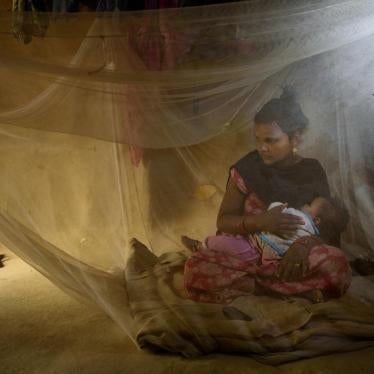
In the US state of Louisiana (2024), HRW found that residents of the predominantly Black and low-income region known as “Cancer Alley” suffer elevated rates of cancer, reproductive, and respiratory illnesses linked to emissions from fossil fuel and petrochemical operations. Many of the residents of Cancer Alley Human Rights Watch interviewed experienced maternal, reproductive, and newborn health harms. Virtually all could name immediate family members, friends or neighbors who had experienced such harms, including low-birth weight, preterm birth, miscarriage, stillbirths, high risk pregnancy and birth, and infertility. Yet expansion is underway with at least 19 new fossil fuel and petrochemical plants planned at Cancer Alley, including within many of the same predominantly Black and poor communities.
Poor air quality monitoring
Air monitoring is essential for assessing air quality and preventing harmful pollution. When monitoring is lacking or is incomplete, people’s health is put at considerable risk. HRW has identified significant gaps in pollutant monitoring at or nearby fossil fuel and petrochemical facilities.
In Bosnia and Herzegovina (2022), HRW showed that air pollution monitoring stations are often not working or unavailable. Local government officials, particularly outside of Sarajevo, reported having insufficient budgets and a shortage of adequately trained personnel to maintain monitoring stations and report data. The country’s 17 air pollution monitoring stations sometimes are out of service, particularly in Republika Srpska, and many do not adequately monitor PM2.5.
In the UAE (2023), HRW found major inconsistencies and data gaps in official air quality monitoring networks. Although some data from monitoring stations across the country is shared, key pollutants such as fine particulate matter (PM2.5) are sometimes missing from public datasets. The available data is also dispersed across multiple platforms and applications that display inconsistent totals for the number of monitoring stations. Moreover, while existing air quality websites provide measurements from ground level monitoring stations, some do not measure all relevant pollutants, and the standards displayed are less stringent than WHO recommendations.
In Louisiana, USA (2024), HRW found that petrochemical companies underestimated benzene emissions from their operations by up to 28 times. Since 2018, the US Environmental Protection Agency (EPA) has required oil refineries to install fenceline monitors to measure benzene levels at their perimeters, where emissions can reach nearby communities. However, out of thousands of petrochemical plants nationwide, only 13 have been required to install similar monitors under federal action. Of these, only four have provided enough data for analysis, revealing two plants, including one located in Cancer Alley, with benzene concentrations exceeding EPA regulatory limits.
In Türkiye (2024), HRW found that the number of monitoring stations remains insufficient. While the Turkish government’s air quality monitoring website provides measurements from ground level monitoring stations across the country, the historic data is at times incomplete and pollution hotspots like Afşin-Elbistan are not closely monitored. According to 2016-2019 data analysis, conditions in at least 21 of 81 provinces could not be adequately assessed because data was available for fewer than 75 percent of days. These shortcomings prevent the Turkish government from reliably monitoring the impact of coal-fired power plants on air quality.
Limited availability of air quality information
Access to information about environmental and health risks and impacts associated with a proposed activity or project is a key component of the right to a clean, healthy, and sustainable environment. HRW has documented numerous cases in which governments have failed to identify or disclose the air pollution risks posed by the fossil fuel and petrochemical industries, thereby threatening the human rights of nearby communities.
In Bosnia and Herzegovina (2022), HRW reported that while major polluters are legally required to submit air quality data to the government, this information is not made public. Warnings to avoid outdoor activities or to limit vehicular transport on days with poor air quality were largely limited to the capital, Sarajevo. In the absence of adequate government monitoring and communication, a series of citizen-run sensors fill the gap - young people said they regularly use apps or websites that report on air quality, some of them operated by civil society. Others receive air quality updates from television and radio, while others, particularly older people, say they assess air quality based on the smell or the appearance of the air, neither of which is appropriate to determine the extent of air pollution or assess health risks.
In the UAE (2023), HRW documented a dearth of public information about the impacts of air pollution, its sources, and how at-risk populations can protect themselves. The UAE government acknowledged that “[t]here is currently no system to warn the public about inevitable high-level pollution episodes (for example, dust storms) and to provide guidance on how to reduce personal exposure to pollution,” yet it has done little to address these gaps. Migrant workers told HRW that they had no information about the risks of air pollution, its sources, who is most impacted, and how they can protect themselves. Existing air quality websites did not provide practical advice on protection measures and lacked detailed information for at-risk groups. They only exist in Arabic and English and are not accessible to migrant workers who may not speak either of these languages; information is not available in accessible formats.
In Louisiana (2024), HRW found that residents’ complaints to the state’s Department of Environmental Quality (LDEQ) went unanswered. When residents have questions or concerns about industrial operations, they are instructed to contact the LDEQ. However, instead of serving as a trusted source of information, the agency has become a source of profound frustration for many. The lack of information and action has led many residents to stop contacting the agency altogether.
In Türkiye (2024), HRW noted that emissions from large combustion plants, including coal plants, are not publicly available. Even when courts have ordered the government to provide emissions data of coal plants publicly, the authorities have not revealed the data. Residents in Çoğulhan, Berçenek, and Altunelma, said they have not received any information about the extent of environmental problems in the region, possible health effects, or how to participate in decisions around the coal plant that would enable them to address or prevent health risks and seek remediation for health harms. The Environment Ministry provides some health advice via a website, such as suggesting that members of sensitive groups limit outdoor activities when air pollution levels are high, but it does not provide detailed practical advice for at-risk groups.
Recommendations
As a guiding principle, States should implement moratoria on new or expanded fossil fuel operations and begin phase-out of existing operations. In addition, we recommend the following:
Regulation and enforcement
- Order an immediate pause of all fossil fuel and petrochemical operations that pose an imminent and substantial endangerment to human health and the environment until they operate in accordance with relevant legal protections.
- Develop and enforce stringent regulations to limit air pollution related to fossil fuel and petrochemical operations, including through legally binding pollutant limits on particulate matter (PM 2.5 and PM 10), ozone (O3), nitrogen dioxide (NO2), sulfur dioxide (SO2), and carbon monoxide (CO) emissions in line with the WHO’s 2021 Air Quality Guidelines. Regulations should also seek a phase-out of venting and flaring of methane (CH4), a potent greenhouse gas and air pollutant.
- Mandate science-based buffer zones separating fossil fuel and petrochemical operations from residential, educational, and recreational areas. As a guiding principle, communities should not be relocated to allow for industry expansion or continued operation. On the contrary, states should prioritize decommissioning and or relocating life-threatening facilities away from where people live, work, learn and play.
Environmental impact assessments
- Deny permits for fossil fuel and petrochemical operations that would result in a disproportionate burden of harm in already overburdened communities.
- Require EIAs to include air quality and health impact assessments for all fossil fuel and petrochemical projects, including short and long-term health risks from exposure to PM 2.5, PM10, NOX, SO2, CH4 and other pollutants.
- Require comprehensive baseline and cumulative air quality assessments, considering existing and planned industrial installations.
- Ensure affected individuals and communities can meaningfully participate in the EIA process.
Air quality monitoring and access to information
- Monitor impacts of air pollution, including by collecting disaggregated data, across residential areas, in fenceline communities, and on at-risk groups. Fossil fuel companies should have fenceline air monitors, install leak detection systems, and track, report, and ultimately reduce the methane intensity of their operations.
- Ensure everyone has access to localized, real-time and historical air pollution data and information on how to protect themselves, including through air pollution warnings systems available in different languages and in formats accessible to at-risk populations.