The following remarks were delivered by Ida Sawyer, director of Human Rights Watch’s Crisis, Conflict and Arms Division, during a Side Event at the United Nations General Assembly on September 22, 2025.
I want to thank his Excellency President Tshisekedi, the distinguished First Lady, Ambassador Mukongo, and FONAREV for convening this important meeting today, and for the invitation to speak.
This event is coming at a critical time for the people of eastern Democratic Republic of Congo and when the need for meaningful justice is as urgent as ever.
Just in the past two months:
- The Ugandan-led, ISIS-linked Allied Democratic Forces (ADF) killed more than 40 people, including several children, with guns and machetes during a nighttime church gathering in eastern Congo’s Ituri province on July 26-27. Several other children were abducted and remain missing. ADF fighters later reportedly killed at least 40 people, most of them hacked to death, at a funeral ceremony in early September.
- In North Kivu, the Rwanda-backed M23 armed group summarily executed at least 140 civilians, largely ethnic Hutu, in villages and farming areas near Virunga National Park between July 10 and 30. Witnesses told us how the bodies of some of those killed, including of women and children, were thrown into the Rutshuru River.
- Over the past several weeks, Wazalendo militia fighters – who receive funding, weapons, and ammunition from the Congolese government - have harassed, threatened, abducted, and restricted access to services for members of the Banyamulenge community in Uvira, who are South Kivu-based Congolese Tutsis, accusing them of supporting the M23. Wazalendo fighters have also killed, beaten, and extorted civilians across North and South Kivu provinces.
- On September 8, Congolese military forces opened fire on protesters in Uvira, killing an 8-year-old boy and injuring at least nine civilians, including an 11-year-old girl.
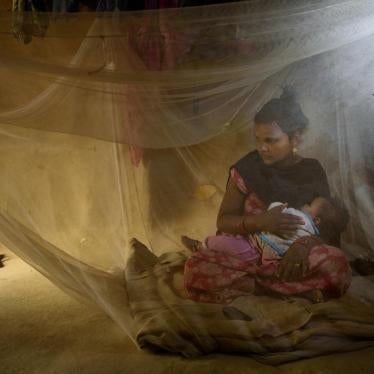
- All of these armed forces and groups have also been responsible for widespread sexual violence, including gang rapes.
This is just a small sample of what we at Human Rights Watch and others have recently documented. As has been the case for much of the past 30 years, the people of eastern Congo are bearing the brunt of the violence, caught between multiple armed forces and groups, often with little clarity on who is responsible for their safety.

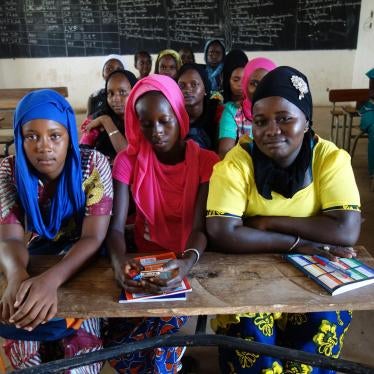
Over six million people have been forced to flee their homes and are currently displaced. Many children are out of school, while women and girls face a near constant risk of sexual violence and often do not have access to emergency medical care. Despite the abundantly fertile land, Congo has one of the world’s most severe food insecurity crises due to the conflict, with over three million people in eastern Congo in the emergency phase of hunger.
And while many local organizations are doing heroic work to try to protect and care for the most vulnerable, international funding cuts have had devastating impacts on people’s access to desperately needed humanitarian aid – with only 15 percent of the humanitarian response plan currently funded. The M23’s capture of the provincial capitals Goma and Bukavu at the beginning of the year and its control over large parts of North and South Kivu have significantly hampered the delivery of essential humanitarian aid.
A key factor that has allowed these cycles of violence and abuse to continue is an overwhelming climate of impunity. Despite extensive documentation efforts – including the 2010 mapping report detailing serious crimes committed across Congo between 1993 and 2003 – the involvement of the International Criminal Court, trials by Congolese military courts, and commitments by both President Tshisekedi and President Kabila before him to prioritize justice – these efforts have all fallen short.
The prosecutions by Congolese courts have largely failed to go after high-level officials or commanders – such as those most responsible for the murders of United Nations experts Michael Sharp and Zaida Catalan, or the assassination of the renowned Congolese human rights defender Floribert Chebeya.
All too often, instead of facing justice, those most responsible for serious crimes have instead been rewarded – with government posts, amnesties, integration into the Congolese army as generals or colonels, or like we’ve seen with the Wazalendo militia – some have been rewarded as officially sanctioned government allies, funded and armed by the Congolese government. And then when they face new grievances, they often take up arms once again against the government.
Many of those responsible for the massacres and other abuses that we at Human Rights Watch have documented over the past several months have long records of involvement in serious crimes. We’ve seen the same names coming up again and again, often as they move from one armed group to another, or as they integrate into and later defect from the Congolese army.
Gen. Baudouin Ngaruye, for example, who’s reported to have commanded the M23 fighters responsible for the large-scale killings in Rutshuru this past July, is someone whose crimes my colleagues and I have been documenting since at least 2008 – including the recruitment and training of hundreds of children when he was part of a previous Rwanda-backed rebellion, the CNDP; torture, executions, and maiming, especially of women, when he was an officer in the Congolese army; and other serious violations as part of the first iteration of the M23 rebellion in 2012.
Impunity for his past crimes has only fueled the abuses we’re seeing now.
As we’ve seen with Baudouin Ngaruye’s trajectory, another key factor driving the cycles of violence and abuse is the continued involvement of neighboring countries and foreign actors – especially Rwanda – which support abusive armed groups, often in order to gain control over eastern Congo’s lucrative mineral resources and agricultural and pasture lands and to maintain their spheres of influence – again with near total impunity. Today, Rwanda’s effective control over parts of eastern Congo through its own armed forces and the M23 appears to meet the international humanitarian law standards for a belligerent occupation.
We’ve also in recent years seen political interference and manipulation of the justice system to target political enemies; the stigmatization of people from eastern Congo including through arbitrary arrests and the mistreatment of military officers who speak Swahili or Kinyarwanda; restrictions on the media; the targeting of human rights activists, journalists, and political opponents; the increased use of illegal and arbitrary arrests by the intelligence services; corruption and large-scale misappropriation of government funds; and concerns about the lack of credibility in elections and proposals to change the constitution to remove term limits. All of these factors appear to have eroded faith in the rule of law and democratic system and encouraged some to take up arms.
So what needs to happen now?
In order to address these challenges and work to finally bring an end to these cycles of violence and abuse, I’d like to highlight several key recommendations:
First, for Rwanda to immediately stop its support to the M23. And for the Congolese government to stop all of its support to abusive armed groups, including the Wazalendo and the Democratic Forces for the Liberation of Rwanda (FDLR). International partners, including those supporting the various peace initiatives, should increase their pressure on both countries to do so.
The Congolese government should establish a vetting mechanism, with international support, to remove those officers in the security forces and services with records of involvement in serious human rights abuses. And they should put in place a credible and effective Disarmament, Demobilization, and Reintegration (DDR) program for members of armed groups who aren’t responsible for war crimes and other serious human rights abuses. Those responsible for serious abuses should face justice. New recruits for the army should also be carefully vetted and trained in basic international humanitarian law.
The Congolese government should ensure that its armed forces take the lead on protecting civilians and work to provide all civilians with access to basic goods and services. All actors should work to ensure that the Congolese people first and foremost benefit from the country’s natural resources and minerals; this should be a source for the development and prosperity of the country - not only for foreign and regional actors.
It is also essential for the government to end unlawful restrictions on the media; the targeting of human rights activists, journalists, and the political opposition; and discrimination based on ethnicity and other groups. A clear commitment should be made that efforts won’t be made to change the constitution to end term limits, and concrete steps should be taken to demonstrate that the next elections in 2028 will be credible, free and fair.
And now on specific steps to address the accountability gap:
The scale and complexity of crimes committed in Congo over the past 30+ years requires a multi-layered justice response – which should ideally include the continued work of the International Criminal Court, domestic prosecutions, and a new internationalized justice mechanism.
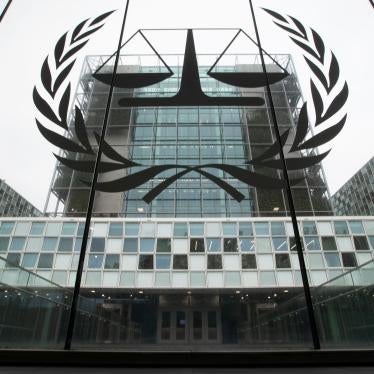
The International Criminal Court has been investigating serious crimes in Congo since 2004, when the government first asked the court to step in. That investigation led to cases being brought against six suspects, all former armed group leaders. Four individuals, including the infamous warlord and former Congolese army general, Bosco Ntaganda, were tried for crimes committed in Ituri in 2002-2003. Three were convicted and one was acquitted. The other two cases, for crimes committed in North Kivu in 2009, never reached trial.
Human Rights Watch has repeatedly urged the ICC prosecutor to address not only the responsibility of rebel commanders for grave abuses in eastern Congo over the years but also alleged crimes by senior government and military officials from Congo, Rwanda, and Uganda.
Following a 2023 request by the Congolese government, the ICC prosecutor announced last year the renewal of the ICC’s investigative activities in Congo with a focus on crimes committed in North Kivu since January 2022.
This was a welcome development and an important opportunity to advance justice, but there are serious limitations to what the court can achieve – including because it is severely underfunded and targeted by politicized efforts to undermine its mandate.
To address these threats, we’re urging all ICC members to speak out against the mounting assault by the US government against the ICC and those seeking justice before it, and to urge the government to revoke its sanction regime targeting the court’s essential global mandate. They should also take concrete steps, such as blocking legislation, which aim to minimize the effect of extraterritorial sanctions by prohibiting compliance with those sanctions, in order to ensure the court can continue its critical work for justice – including in Congo.
Next, on domestic prosecutions. Congolese courts – military courts in particular – have done important work over the last almost 20 years.
Thanks to the support of the UN, civil society organizations, as well as international donors, at least 130 judgments have been handed down for cases of international crimes in Congo to date, and Congolese military justice officials have acquired significant expertise. This work is important, and partner governments should continue to support these domestic justice efforts – this is particularly critical in light of the current UN financial crisis and devastating cuts to funding for civil society organizations.
At the same time, these domestic efforts continue to face challenges and serious shortcomings, including with regards to the quality of investigations, the respect of the rights of the accused to a fair and impartial trial, and political interference.
The result is a significant accountability gap which cannot be filled by either the ICC or domestic courts alone.
What we believe is needed to fill this gap is the establishment of an internationalized justice mechanism that can complement the work of the ICC and domestic courts. Such a mechanism – such as specialized mixed chambers or a special mixed court – could enhance the capacity of the national judicial system to investigate and prosecute war crimes, crimes against humanity and genocide fairly and effectively. The chambers or court would be within Congo’s national judicial system, but mixed with Congolese and international judges, prosecutors, and other personnel.
We’re glad to see support in this direction from both the Congolese government and the ICC. As these discussions move forward with different stakeholders, we believe it is important to keep in mind some guiding principles:
- Whatever mechanism is created, it should build on the experience and expertise acquired today and involve those in the military courts who have been doing this work for nearly 20 years;
- This mechanism should complement and add to the work of domestic courts, not replace it; and
- The mechanism should be created with sustainability considerations in mind, with a view to strengthening the Congolese justice system in the long term.
Lastly, it is essential for Congolese civil society actors and representatives of victims to be consulted regularly and to play a role in discussions as this new mechanism is established – including those who’ve been documenting crimes at enormous risk for many years and who know and understand the context better than anyone.
These actors should similarly be involved in plans to establish a comprehensive reparations program for victims of serious international crimes and their families to help them rebuild their lives.
Thank you.
-------------------