This publication was originally published in Reaching Critical Will's First Committee Briefing Book 2025.
Background
This year marks the 80th anniversary of the firebombings of Tokyo and Dresden, which vividly demonstrated the horrors of incendiary weapons. The conflagrations they produced killed an estimated 125,000 people and left these major cultural centers in ashes.
Thanks to public outrage and the development of international law, incendiary weapons are not currently used to the same degree. Nevertheless, incendiary weapons remain a feature of modern armed conflict. They cause excruciating burns that are difficult to treat, lifelong physical and psychological pain, socioeconomic exclusion, and destruction of homes, farms, and other civilian objects.
Protocol III of the 1980 Convention on Conventional Weapons (CCW), which has been ratified by 117 countries, regulates the use of incendiary weapons and prohibits the firebombing of cities like that which occurred in 1945. The protocol has failed to adequately protect civilians from the full range of incendiary weapons, however, and has two major loopholes:
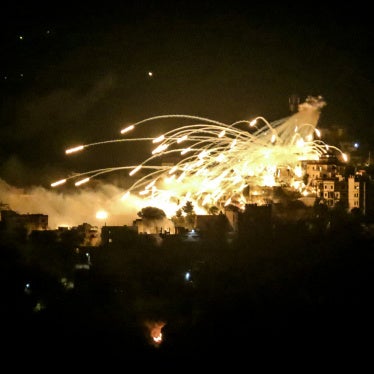
- Protocol III’s definition of incendiary weapons does not cover multipurpose munitions, such as white phosphorus, because the definition of incendiary weapons is based on the purpose for which they were “primarily designed,” rather than on their effects. Yet white phosphorus, even though generally designed as smokescreen, has severe incendiary effects and should not escape regulation.
- Protocol III prohibits the use of airdelivered incendiary weapons against “concentrations of civilians,” but has weaker regulations for ground-launched incendiary weapons although they produce the same cruel injuries.
Strengthening international law to better address the harm caused by incendiary weapons would help create more protective standards and increase stigma against the weapons. A complete ban on incendiary weapons would have the greatest humanitarian benefits.
Current Context
Incendiary weapons have been used in at least two armed conflicts since the 2024 meeting of the United Nations General Assembly’s First Committee on Disarmament and International Security.
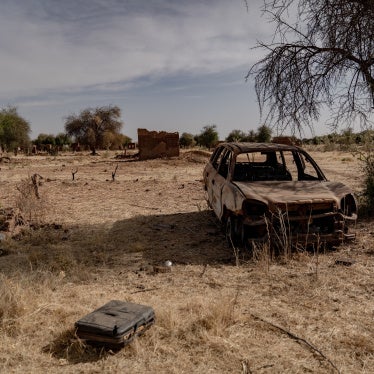
In March 2025, South Sudan’s air force used improvised incendiary weapons in at least four attacks in Upper Nile state. The weapons consisted of barrels with flammable substances dropped from aircraft. The attacks killed at least 58 people and severely burned others, including children. Witnesses told Human Rights Watch they saw scorched bodies, people with burned teeth or blistered skin, and villages in flames.
In Ukraine, Human Rights Watch documented Russia’s use of quadcopter drones—which are small, short-range, maneuverable, and relatively inexpensive—to deliver incendiary weapons. Human Rights Watch found that, in the city of Kherson in southern Ukraine near Russia-occupied territory, such drones delivered incendiary weapons as well as antipersonnel landmines and explosive weapons. In some cases, improvised incendiary weapons consisted of small plastic bottles filled with a flammable liquid functioning like a Molotov cocktail.
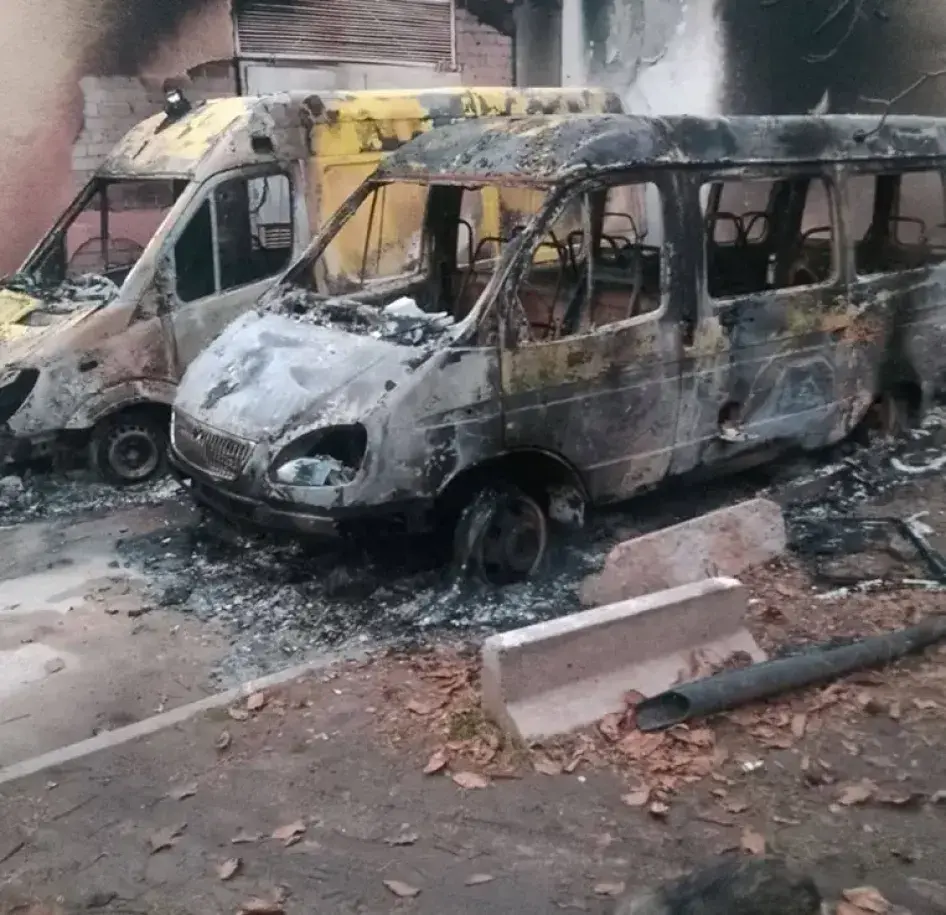
Human Rights Watch verified three videos recorded by Russian drones attacking vehicles at the Kherson Regional Oncology Center. In an 18 November 2024 video, uploaded to a Russian military-affiliated Telegram channel, a drone dropped two improvised incendiary weapons on two vehicles, which were then engulfed in flames. A photograph published by the Kherson Prosecutor’s Office the same day showed the burned shells of the vehicles, which proved to be ambulances.
Human Rights Watch also verified, through video analysis and witness testimony, the use of an incendiary weapon on a shop in Kherson. A 20 November 2024 drone video from a Russian military-affiliated Telegram channel shows a drone hovering above the store before dropping a small bottle-shaped munition through a hole in the roof causing a fire inside. While Human Rights Watch could not identify the specific munition, it appeared to be an improvised incendiary weapon comprised of a flammable liquid dispersed and ignited by a small explosive charge.
Human Rights Watch analysed an additional five videos from September 2024 to January 2025 that appear to show the use of incendiary weapons in Ukraine launched by either rocket artillery or “Dragon Drones.” The latter spread incendiary compounds over a wide area on the ground below.
South Sudan is not party to CCW Protocol III; Russia and Ukraine are both party. The use of incendiary weapons in these conflicts shows the need for better universalisation and compliance with the protocol. The humanitarian consequences of the attacks also highlight the suffering caused by incendiary weapons and the need for greater humanitarian protections.
As in past years, numerous states raised the issue of incendiary weapons during the Meeting of CCW High Contracting Parties in November 2024. Since 2010, most international consideration of incendiary weapons has taken place under the CCW’s auspices, because Protocol III is the only law devoted to the topic.
Numerous states expressed concerns and condemned the use of incendiary weapons against civilians in statements and working papers. Ireland, Palestine, the Arab Group, and the Organisation of Islamic Cooperation explicitly voiced concern or denounced Israel’s use of white phosphorus in Gaza and Lebanon in 2023–2024. A working paper jointly submitted by ten states—Austria, Belgium, Brazil, Costa Rica, Ireland, Mexico, New Zealand, Norway, the Philippines, and Switzerland— described incendiary weapons as “among the most inhumane in warfare,” elaborated on their extensive humanitarian impacts, and stressed the need to address weapons with incendiary effects (e.g. white phosphorus).
Many delegates also called for dedicated consultations to address incendiary weapons and Protocol III. Supporters for such discussions included the ten states that submitted the joint working paper as well as Canada, Japan, the United Kingdom, the European Union, the International Committee of the Red Cross, Article 36, and Human Rights Watch. However, as it has since 2021, Russia blocked the proposal as well as the inclusion of language on incendiary weapons in the final report of the meeting.
Given the challenges of overcoming consensus under the CCW, it is time for states to convene discussions about the humanitarian consequences of incendiary weapons and limits of existing international law in another forum.
Recommendations
During the First Committee, delegations should:
- Condemn the use of incendiary weapons due to the gravity of their humanitarian consequences;
- Raise awareness of the human cost of incendiary weapons and the need to improve international protections for civilians; and
- Call for informal discussions about the humanitarian concerns raised by these weapons and the adequacy of applicable international law, with the ultimate goal of creating stronger international standards.
Beyond the First Committee:
- At their next meeting in November 2025, CCW high contracting parties should condemn new use of incendiary weapons and ensure their concerns are reflected in the final report of the meeting; and
- States should agree to hold informal discussions under CCW auspices or elsewhere of the concerns raised by incendiary weapons and the adequacy of applicable international law, with the ultimate goal of creating stronger international standards.