
On August 4, Brazil’s Supreme Court justice issued a house arrest order for former president Jair Bolsonaro and prohibited him from using a mobile phone for allegedly violating pre-trial precautionary measures in a case concerning coercion against the Court and other crimes. This followed the sanctioning of Supreme Court judges and the imposition tariffs against Brazil by the Trump administration, under the mantle of free speech champion.
Brazil does need an open, civil, informed debate about freedom of expression and social media regulation. But Trump’s blatant double standard on free speech and his unacceptable measures to coerce Brazil’s Supreme Court to help Bolsonaro, his ally, further taints this critical discussion on the future of freedom of expression in Brazil.
Brazil has been plagued in recent years by misinformation and disinformation, including baseless claims of electoral fraud and attacks on democratic institutions, which spread online even after being debunked.
Amid inaction by social media platforms and Congress to stem the flow of online disinformation, Brazil’s Supreme Court stepped in. As part of its response, justice Alexandre de Moraes and the full Court made problematic decisions, including suspending social media accounts without adequate transparency, transforming Brazil’s liability regime in a manner that may incentivize platforms to censor legitimate speech, and what could be an overly broad ban on social media usage in some instances.
Yet Brazilians who value the role of the Supreme Court but disagree with some of those rulings have often been hesitant to express their opinions for fear that their concerns will be misappropriated by Bolsonaro supporters as fodder in their assault on judicial independence.
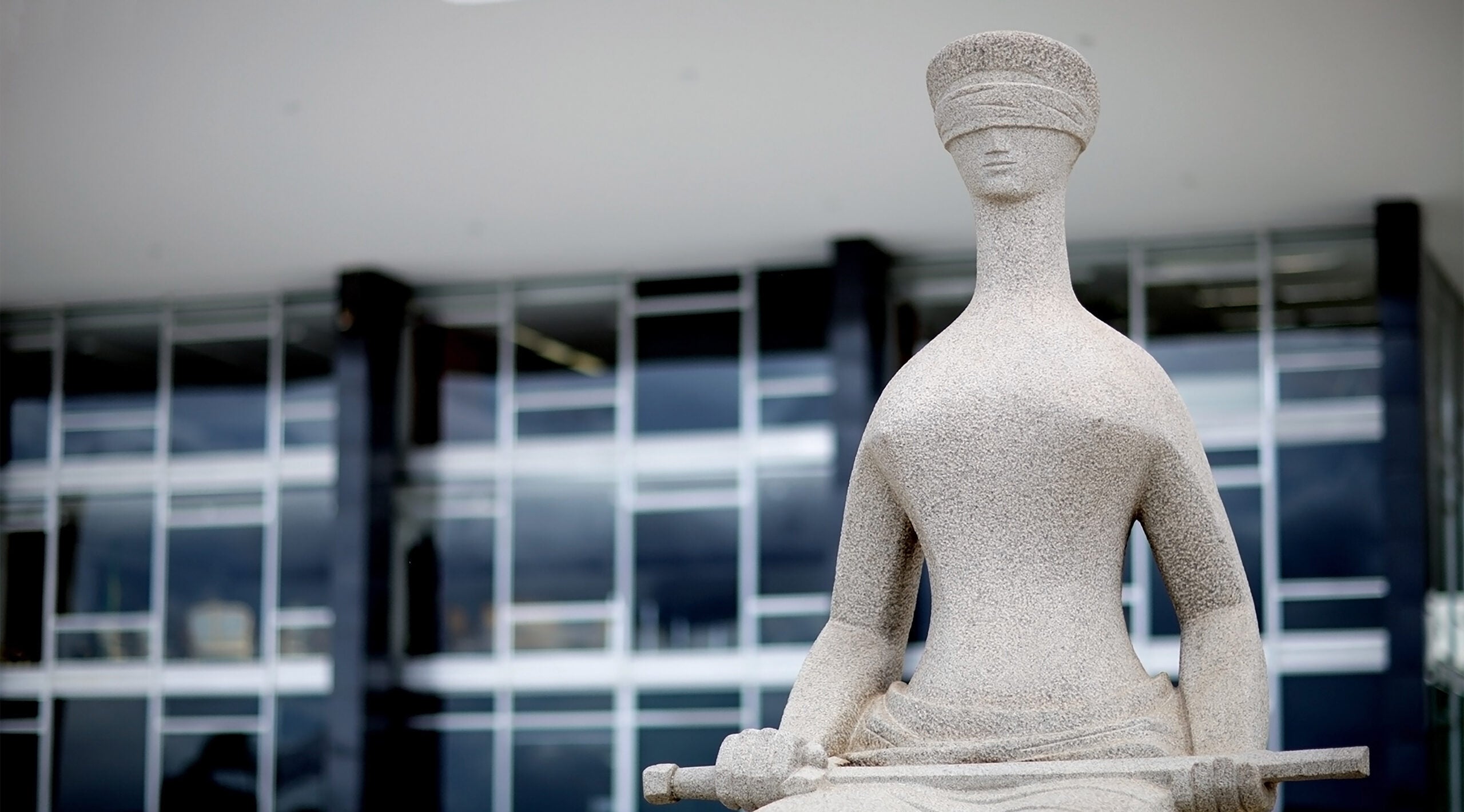
The Supreme Court became a key check on Bolsonaro’s authoritarian tendencies when he was president (2019-2022) by striking down anti-human rights policies. Some Bolsonaro supporters did not forgive that, and on January 8, 2023, after Bolsonaro was voted out of office, a mob ransacked the elegant building that houses the Court, as well as the seats of the two other branches of government, while calling for a military coup.
To this day, these Bolsonaro supporters seem intent on neutering the Court or replacing its justices with lackeys. Their lighting rod is De Moraes, the justice presiding over the trial against Bolsonaro and others for their role in an alleged conspiracy to prevent duly elected Luiz Inácio Lula da Silva from taking office in 2023. Prosecutors claim that the plot included a plan to assassinate Lula, De Moraes and Geraldo Alckmin – the Brazilian vice-president.
Eduardo Bolsonaro, the former president’s son and Congress member, moved to Washington earlier this year and had been lobbying the United States government to take measures to try to force Brazil’s Supreme Court to make decisions that will benefit his father.
Trump was a sympathetic ear.
On July 18, his administration revoked the US visa of De Moraes, “his allies on the court,” and their family members. Brazilian press reported that the US spared from sanctions two justices who were appointed by Bolsonaro and a third justice who has issued opinions favorable to the former president regarding the cases against him and the assault on democratic institutions in 2023. The message was clear: if a justice votes against Bolsonaro, he or she faces the risk of being sanctioned by Trump.
On July 30, the US government issued an executive order imposing 50 percent tariffs on Brazil that does not even have the pretense of economic motivation. The order argued that Brazil deserved to be punished for persecuting Bolsonaro and for free speech violations, including actions allegedly harming U.S. companies. The US government also made a mockery of the Magnitsky Act –created to sanction corrupt officials and those responsible for torture, murder and other egregious human rights abuses –by using it against De Moraes.
Trump’s allegations of a politically-motivated prosecution ignore reality: The trial is based on substantial evidence. Rather, it is Trump’s actions that are politically motivated and not in the interest of justice. He has cynically used the Magnitsky Act in an attempt to shield Bolsonaro rather than using it against officials who are actually responsible for very serious human rights violations. At the same time, Trump has wielded other authorities under US law to shield allies from prosecution rather than seek to hold perpetrators of serious human rights violations to account. This includes sanctioning officials of the International Criminal Court, which has issued arrest warrants for Israeli Prime Minister Benjamin Netanyahu and a former Israeli defense minister.
In addition, Trump’s claim to defend free speech rings hollow when his administration arbitrarily detains and seeks to deport noncitizens, and sanctions a UN human rights expert, all to retaliate against activism around Palestine. Moreover, Trump and his political allies, which includes the leaders of some major tech companies, have been labeling any attempt to moderate speech or hold tech companies accountable for their actions, censorship, and in some cases subject to visa restrictions.
No doubt, the Supreme Court’s decisions have impacted Brazilians’ freedom of expression. But a foreign country using sanctions to pressure justices to change their votes erodes Brazilians’ rights to an independent judiciary and to equality before the law. Rather, the Court’s rulings present an opportunity for Brazilians and Congress to debate rights-respecting content regulation.
Brazilians deserve the right to debate what the reasonable limits to free speech should be and how to ensure social media are spaces that are safe to all, including minorities. They should be able to agree or disagree with the Supreme Court’s decisions or with bills in Congress without fear that their opinions will be misused and exploited by those who want to dismantle democratic institutions.
Brazil’s democracy would be stronger for it.
*A version of this article was published in Portuguese in Correio Braziliense.