London

ABOUT US

Human Rights Watch is a leading international organisation dedicated to defending and promoting human rights around the world. Human Rights Watch researchers work to uncover human rights violations by investigating sites of abuse and speaking first-hand with witnesses and authorities. By exposing these abuses and shining a spotlight where they occur, Human Rights Watch's work gives a voice to victims, generates intense international pressure on governments for action and raises the cost to perpetrators of committing abuses. Human Rights Watch pursues perpetrators of abuses until they are brought to justice.

 
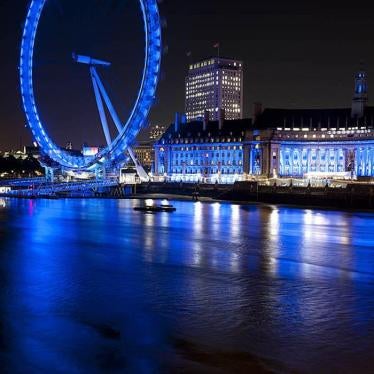
The London Eye lit blue for Human Rights Day 2018. ©
 
MEET THE LONDON TEAM

UK Advocacy and Media 
The UK advocacy and communications team are responsible for conducting targeted advocacy towards the UK government and parliamentarians. They are also in charge of the organisation’s outreach to the UK media. If you are a member of the press with a media query, please contact HRW Press at hrwpress@hrw.org.

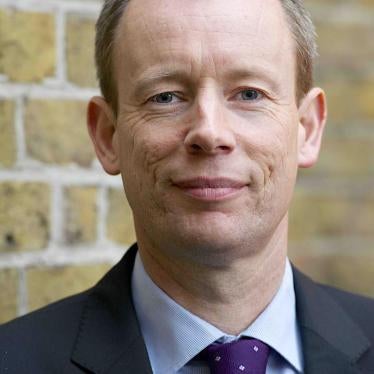
Yasmine Ahmed, UK Director
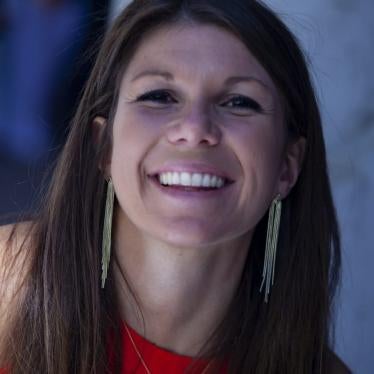
Anthony Gale, Senior Media Officer

Development & Outreach
The Development & Outreach team is the key contact for the London Committee. The team is responsible for organising fundraising and outreach events. They are the focal point for liaising with supporters, the London Committee and the Board of Directors.

James Bowers, UK Director
Jessica Jones, UK Senior Manager
Tamanna Abdi, UK Coordinator

Staff members based in London

Elaine Pearson, Asia Director
Sam Dubberley, Managing Director, Technology, Rights and Investigations
Benjamin Ward, Deputy Director, Europe and Central Asia Division
Bryony Lau, Deputy Director, Asia Division
Meenakshi Ganguly, Deputy Director, Asia Division
Clive Baldwin, Senior Legal Advisor
Anna Bacciarelli, Senior Artificial Intelligence Researcher, Technology, Rights and Investigations
Bridget Sleap, Senior Researcher, Rights of Older People
Fereshta Abbasi, Researcher, Asia Division
Yalkun Uluyol, China Researcher, Asia Division
Miriam Rodero, Grant Writer, Development and Outreach
Rhys McGhee, Acting Onboarding Manager, Human Resources
Nishita Anand, Training and Support Associate, Fundraising Systems and Data Analytics

OUR LONDON COMMITTEE

The London Committee is comprised of active, long term supporters of Human Rights Watch living in and around London. It forms part of the Human Rights Watch Council, an international network of Committees and Ambassadors who advance the efforts of Human Rights Watch by organising conferences, briefings and other events, engaging in targeted advocacy initiatives, and assisting in important development and outreach programs.

CONTACT US

E-mail londondev@hrw.org to sign up for London news and/or events (please put 'News' or 'Events' in the subject line) or for any queries about fundraising or donations. To volunteer at one of our events, please put 'Volunteering' in the subject line. Do note, we do not accept employment or internship requests. Vacancies can be found on the HRW Career Portal.

GET INVOLVED

News

  • January 4, 2019

    Last 13 March 2019, an inspiring evening took place at the Royal Institute of British Architects with the screening of THE CLEANERS by Hans Block and Moritz Riesewieck as part of the Human Rights Watch Film Benefit.

    The film was followed by a captivating panel and Q&A moderated by Jim Yardley, editor for The New York Times involving:

    • Hans Block and Moritz Riesewieck, THE CLEANERS 
    • Sarah St. Vincent, HRW Researcher/Advocate, US Program
    • Carl Miller, co-founder of the first The Centre for the Analysis of Social Media at Demos
    • Jennifer Robinson, Australian human rights lawyer and barrister

    Though the internet has in many ways been an asset to the human rights movement, much has changed since the heady days of the “Twitter and Facebook revolution” during the 2011 Arab uprising. Mistrust of Silicon Valley is widespread. We rely on companies like Facebook to keep our data private and safe, but a lack of strong regulation has led to it being exploited. We also view social media as a source of information and a place to voice ideas, much like a public square. However, differences in regulation on free speech mean that not everyone has access to the same information or the same freedom of expression.

    New technologies can threaten fundamental freedoms and economic rights. Mass surveillance enables abuses. Algorithm-based decisions in police stations, courthouses, and workplaces reproduce old forms of discrimination in new ways. Weapons could soon operate without human control. Meanwhile, digitised misinformation spreads from Washington, Beijing, and Moscow, stoking fear and demonising minorities.

    Human Rights Watch will confront new threats in the digital age. To support this important work, donate here

  • December 10, 2018

    As the world prepares to celebrate Human Rights Day — and the 70th anniversary of the Universal Declaration of Human Rights — this Monday 10 December, we are happy to share some fun ways to celebrate.

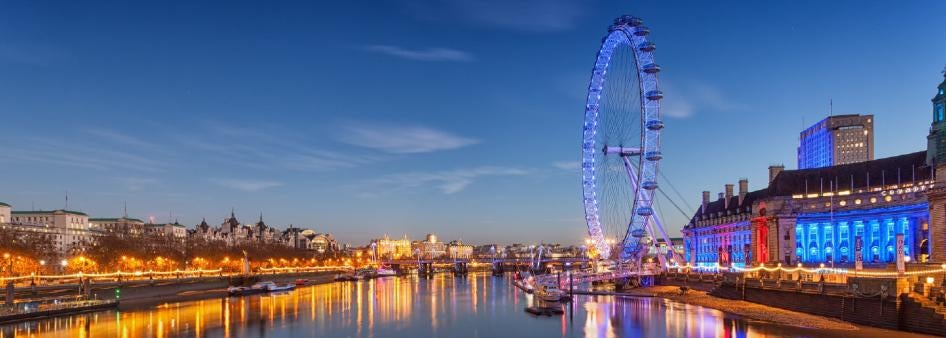
    We are excited to announce that 30 landmarks across the globe will shine blue in honor of Human Rights Day. The London Eye and Somerset House will go #Blue4HumanRights. We invite you to visit our HRW.org/HumanRightsDay webpage, which has been translated into French, Spanish, Arabic, German, and Japanese.

    In addition, here are ways you can help Human Rights Watch commemorate the day. Please share widely.

    Actions for today:

    • Wear blue on Monday and post selfies and group photos with staff, friends, and networks on social media, or in front of a building that is going blue. Tag your photo #Blue4HumanRights. Meet us at 7pm at Radio Rooftop Bar to join in!
    • Share our Human Rights Day landing page HRW.org/blue that provides ways for the general public to engage with us on Human Rights Day.  
    • Update your profile photo on Facebook for Human Rights Day. The frame is available in 8 languages.
    • Use the Human Rights Day social media toolkit to easily post your own messages all day.
    • Take a recording of yourself reading your favorite article of the Universal Declaration of Human Rights. You can post the recordings on your own social media feeds, and tag HRW (@humanrightswatch on Facebook and Instagram, @hrw on Twitter) and the following hashtags: #HumanRightsDay #StandUp4HumanRights

    A flag (picture) to represent human rights has been designed by Ai Wei Wei and the unveiling of the flag today will kickstart a year of celebration around human rights in the UK. In June 2019 schools, organisations and individuals from across the country will be invited to ‘fly the flag’ to show their support for human rights. Human Rights Watch is a founding member of a coalition of organisations, including theatres and other human rights organisations, leading this effort. David Mepham played a key role in shaping this campaign and Steph Hancock and Ben Ward are continuing his legacy by representing Human Rights Watch within the coalition. More details to follow!


    Thank you and Happy Human Rights Day from all at Human Rights Watch!

  • October 26, 2018

    His track record of applying sharp wits to pressure for change, along with his OBE for services to human rights, boiled down to a fact: Mepham was one who cared.

    “I do not believe that human rights are a magic bullet that can solve all the world’s problems.” These were some of the final words written by David Mepham before his death from cancer, aged 50, this week. They are perhaps unexpected from someone awarded an OBE for services to human rights. But they reflect an honesty and pragmatism for which Mepham was well known, and which became a hallmark of his work in the human rights movement.

    Mepham was no purist. He knew there is no such thing as a perfect world, and rather than preach lofty ideals, he challenged himself to work out how terrible crises could be made a little less awful. Coupled with his shrewd political savvy, it proved an incredibly effective tool for pressure – squeezing the UK government on everything from the plight of the Rohingya to arms sales to Saudi Arabia, and for change – such as persuading the Foreign Office to endorse a global treaty protecting schools from military use and attack.

    And Mepham was a man in a hurry for change. He did everything at lightning speed. Walking to meetings, colleagues would struggle to match his pace. In phone calls, he’d talk so fast people would struggle to keep up. He’d read entire books in a single day, and complex briefing papers in minutes. Computers were a constant frustration, because his mind always worked faster than he could type.

London News and Events newsletter

Contacts

Get in touch

Email: londondev@hrw.org