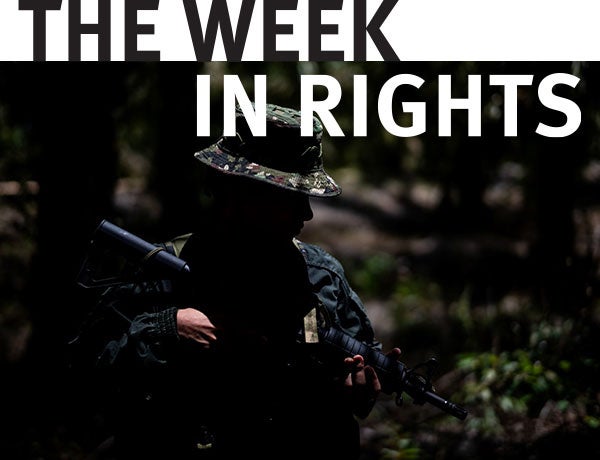
A 16-year-old girl was walking home from school alone one night in a rural area of Mitú, close to the Vaupés River, in southeastern Colombia when she was abducted by men belonging to a dissident armed group in the region. After a week with the combatants, the girl escaped during fighting and surrendered to the Colombian Army.
“I thought I’d never see my mom again,” she told us.
Her story is sadly not uncommon. Child recruitment by armed groups has risen sharply in Colombia in recent years as they exploit poverty, social exclusion, and lack of education to lure children with promises of money, power, and prestige.
A new 102-page Human Rights Watch report examines the dynamics of child recruitment, the factors that place children at risk, and the strategies and tools used by armed groups, including through social media platforms, to recruit them.
>> Read more about the report here
At least 1,500 children have been recruited since 2021, according to data reviewed by HRW researchers. Dissident armed groups that emerged from the demobilized Revolutionary Armed Forces of Colombia (FARC) guerrillas are behind the vast majority of reported cases.
Armed groups frequently transfer children to other regions to isolate them, break family and community ties, and make their escape more difficult. In some cases, they receive military training. In others, they are used to gather intelligence, serve as messengers, provide medical care, guard hostages, participate in drug trafficking, or serve as bodyguards for commanders. Girls are particularly exposed to sexual violence.
Yet as the problem grows, we found that government strategies to prevent child recruitment, protect and rescue children, and ensure their recovery and reintegration have serious shortcomings.