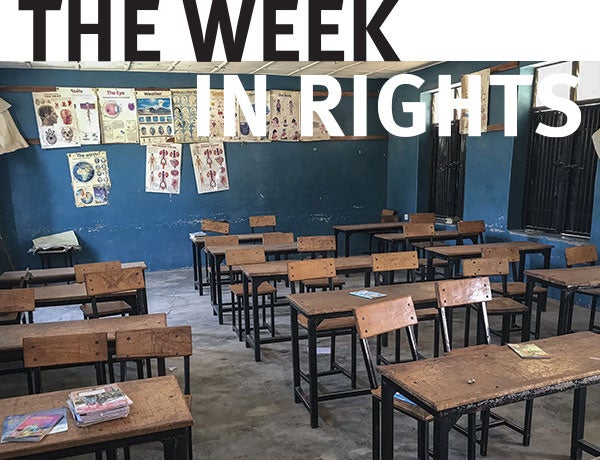
On November 18, unidentified armed men stormed the Government Girls Comprehensive Secondary School in Nigeria’s Kebbi state and kidnapped 25 schoolgirls. Just three days later, over 300 students and teachers were kidnapped from another school in Niger state.
While no group has claimed responsibility for these attacks, Nigeria has in recent years been plagued by violent attacks and kidnappings by criminal gangs colloquially called “bandits.”
These groups have carried out kidnappings for ransom, including of schoolchildren in Nigeria’s northwestern and central states.
The 2014 Chibok schoolgirls’ abduction by the armed Islamist group Boko Haram provoked global outrage. But since then, a series of school kidnappings across northern Nigeria has left families traumatized and entire communities living in fear that if their children went to school, they might never return home.
In the meantime, Nigerian authorities have continuously failed to apply lessons from previous attacks to create early warning systems and other measures that could prevent these atrocities
Isa Nazifi, whose 13-year-old daughter those abducted this month in Kebbi state, told HRW, “We are extremely worried. My wife is in tears. I will stay here at the school until my daughter returns. If I go home without her, what will I tell my family?”
“These kidnappings once again lay bare the deliberate targeting of students, teachers, and schools in Nigeria’s deteriorating security environment,” says Human Rights Watch’s Nigeria researcher Anietie Ewang. “The deepening crisis underscores the government’s failure to protect vulnerable communities.”
>> Read more