China’s Mass DNA Collection in Tibet: Daily Brief
-
Extreme Surveillance in Tibet;
-
Prioritizing Pakistan’s Pregnant;
-
Jackson Mississippi’s Water Crisis;
-
Take Note;
-
Reader Suggestions;
-
Quote of the Day: Israel/Palestine.
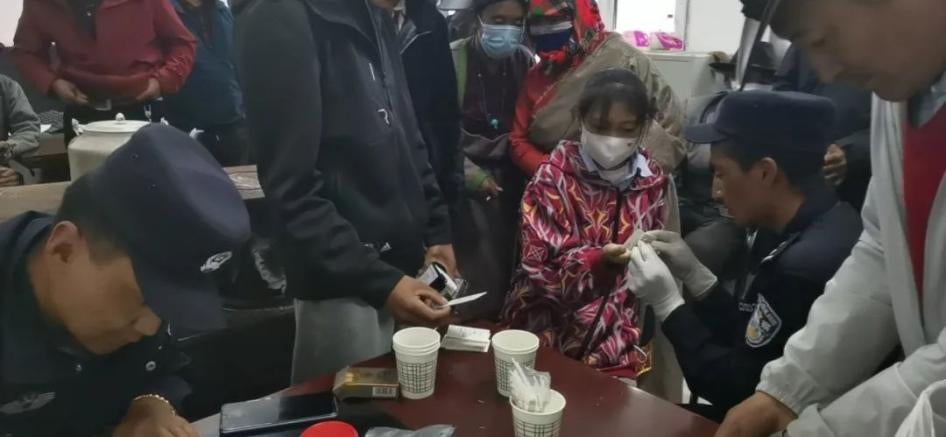
China’s Mass DNA Collection in Tibet
The Chinese authorities in Tibet, “are literally taking blood without consent to strengthen their surveillance capabilities.”
That’s how Sophie Richardson, HRW’s China director, describes the bio-dystopian nightmare of mass DNA collection that people are now undergoing in towns and villages throughout the Tibet Autonomous Region (TAR), which covers the western part of the Tibetan plateau.
While the practice of taking blood samples for DNA collection is selective in other parts of China, it is widespread throughout the TAR. It appears to be taking place in all seven of TAR’s prefectures or municipalities, not to mention in Xinjiang province, as well.
People cannot refuse, and the authorities don’t have to suspect any crime has been committed. This is a mass round up of personal data that in fact includes some of the most innocent.
Blood samples for DNA collection have been systematically taken from children at kindergartens, according to a report from Lhasa municipality. In a Tibetan township in Qinghai province, another report said DNA was being collected from all boys aged five and above.
The individual’s rights being violated here are clear enough: privacy, dignity, and bodily integrity. What’s more, forced DNA collection of an entire region or population on security grounds is a serious human rights violation: there’s no way it can be justified as necessary or proportionate.
Of course, such mass DNA collection is but a horrifically logical extension of deepening mass surveillance in Tibet in recent years and part of ongoing efforts by Chinese authorities to establish police presence at the grassroots level throughout the region. Notable in particular has been the village-level “Three Greats” drive, requiring police to visit every household and question residents about their views.
As my colleague Sophie says, “Three real 'greats' for Tibetans would involve an immediate end to these chilling violations, and investigations and prosecutions of those responsible.”
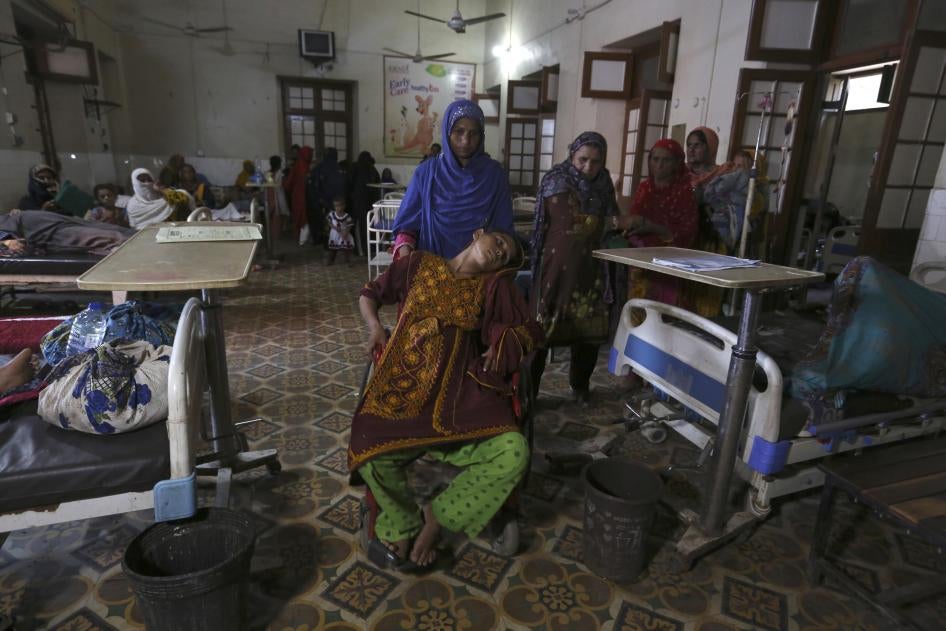
Prioritizing Pakistan’s Pregnant
The scale of flooding in Pakistan is difficult to comprehend – about one third of the country is under water – and humanitarian need is enormous.
Among those most immediately vulnerable are the at least 650,000 pregnant women and girls, in particular the 73,000 who are set to deliver their babies in the next month. According to the UN Population Fund, many of them lack access to the healthcare facilities and support they need to give birth safely.
Even before this year’s devastating floods, Pakistan’s women and girls faced multiple challenges in reproductive health and had one of the highest maternal mortality ratios in South Asia. Child marriage is one reason: millions of girls are forced into dangerous pregnancies at a young age.
But the floods have multiplied the difficulties exponentially, while reminding us that women and girls are disproportionately affected by climate change.
The first problem is simply: where are all these impending births going to take place? Most births in Pakistan happen at home, but nearly one million homes have been washed away. Flooding has also severely damaged the country’s crumbling healthcare infrastructure. Add to this the extensive damage to roads and communication networks that further hinders access to clinics and hospitals, and the stage is set for ongoing disaster.
Our take: It’s essential that the Pakistani authorities and international donors prioritize the needs of pregnant women and girls and make access to sexual and reproductive health a priority during the recovery effort.
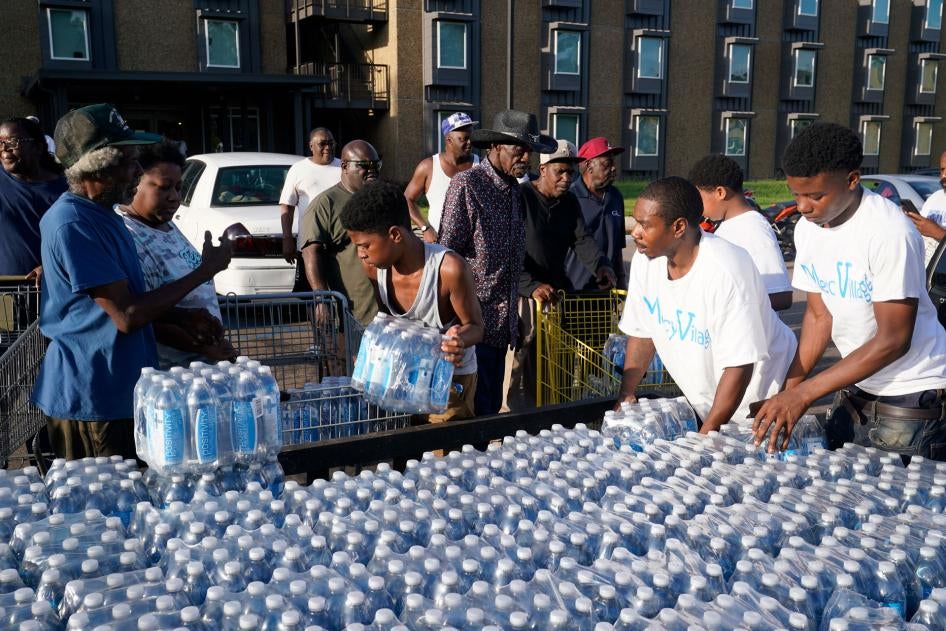
Jackson Mississippi’s Water Crisis
How can a seemingly “developed” country – indeed, one of the richest in the world – have a major city without safe running water?
Many people around the world looking at images emerging from Jackson, Mississippi, are asking this question today.
The water crisis in the capital city of the US state looks set to affect some 200,000 people indefinitely. Stores are running out of bottled water, restaurants have closed, and schools have had to switch to virtual learning. State officials and the National Guard are in the city distributing water, but the situation is dire.
The short answer to the question is: racism. Jackson’s plight is a failure caused by historical disinvestment driven by pervasive white supremacist attitudes toward the majority-Black city. And while the crisis may shock people around the world, it comes as no surprise to those living in Jackson, who have been seeing the impact of this racist policy for ages. There have already been four boil water advisories since June, and many more in recent years.
A supplementary longer answer might be that judging “development” at the country level is deceptive. The fact that a country is rich according to GDP figures does not mean that its wealth is evenly spread or that its people have equal access to public services.
It also doesn’t mean that basic rights are respected. Water is a human right, but the US has sadly long refused to recognize it.
___________________________________________________________________
Take Note
(curated today by Alice Autin)
- Chilean voters overwhelmingly reject progressive new constitution (BBC)
- Indian government intensifies repression in Jammu and Kashmir (Amnesty international)
- Iran regime’s facial recognition targets women (The Guardian)
- Venezuela’s refugee crisis is similar to Ukraine’s in scale, but not aid (Washington Post)
- Plan by Nobel laureates, civil society to address the information crisis (People vs. big tech)
- Hamas authorities in Gaza executed five Palestinians amidst due process violation (France24)
________________________________________________________________
Reader Suggestions
We had a wave of good ideas come in on Thursday and Friday that focused primarily on countries and issues you’d like to see covered more here in the Daily Brief. We also had some recommendations about the format of this newsletter, regarding how we use links, and a point about wanting to hear more about upcoming online events related to human rights.
I will plug HRW events here, of course, but also those from other organizations, so if you see interesting online events on the horizon elsewhere, please ping me.
Please keep the ideas coming: email me or contact me on Twitter with your suggestions.
___________________________________________________________________
Quote of the Day: Israel/Palestine
“Outrageous!”
Omar Shakir, HRW’s Israel and Palestine Director, commenting on Israel’s detention of French-Palestinian rights worker Salah Hamouri without charge or trial since March.