Systemic Age and Gender Discrimination Against Women at Work in South Korea
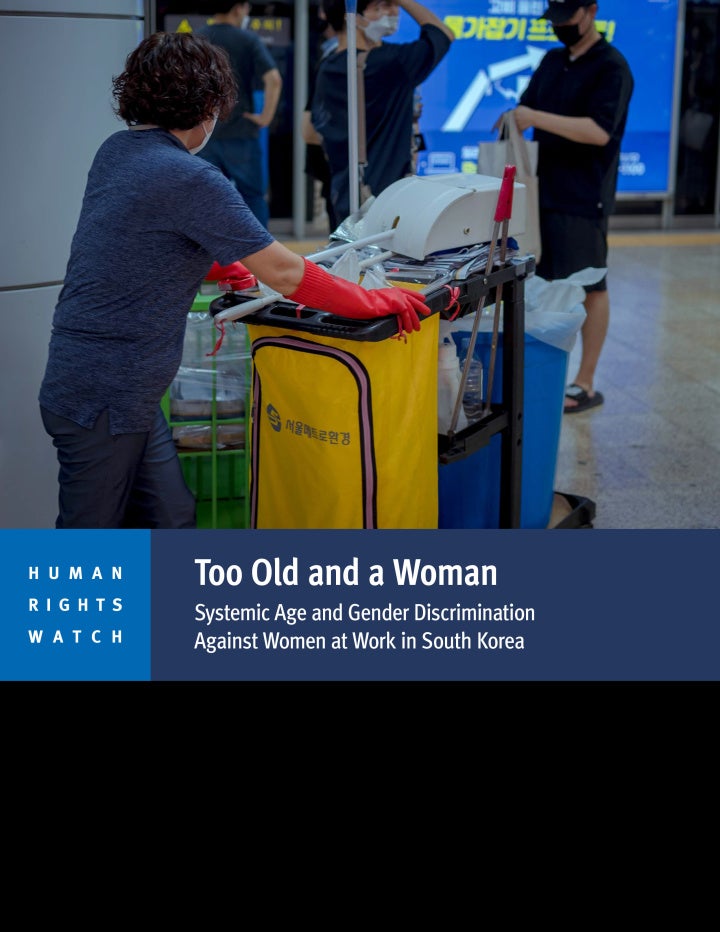
The 92-page report, “Too Old and a Woman: Systemic Age and Gender Discrimination Against Women at Work in South Korea,” documents that social attitudes toward education, unfair treatment in hiring, disrupted careers due to family responsibilities, limited promotion opportunities, glass ceilings, and sexual harassment create a disadvantage for South Korean women throughout their working lives. As women get older, their work opportunities narrow to a handful of low-paid, insecure jobs, and the gender pay gap increases. By the time they are eligible for pensions, women face a significant gender pension gap.
Destruction of Villages, Killings, and Sexual Violence in Unity State South Sudan
Thise 42-page report is based on more than170 interviews in June and July with survivors and witnesses. More than 125 of these were displaced by fighting or attacks on their villages by government troops or allied militia from the Bul Nuer ethnic group. Human Rights Watch documented shocking accounts of about 60 unlawful killings of civilian women, men, and children, including the elderly. Some were hanged and others shot, and others were burned alive. Interviewees were selected randomly and the number of cases documented by Human Rights Watch almost certainly represents only a fraction of the total.
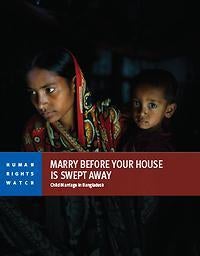
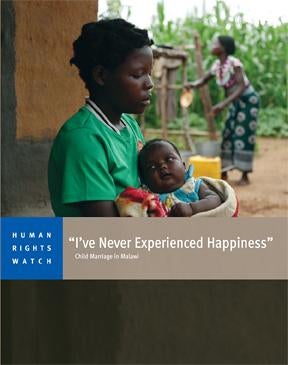
This 134-page report is based on more than a hundred interviews conducted across the country, most of them with married girls, some as young as age 10. It documents the factors driving child marriage in Bangladesh – including poverty, natural disasters, lack of access to education, social pressure, harassment, and dowry.
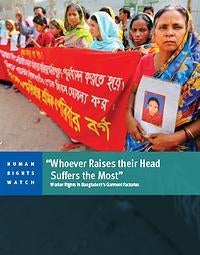
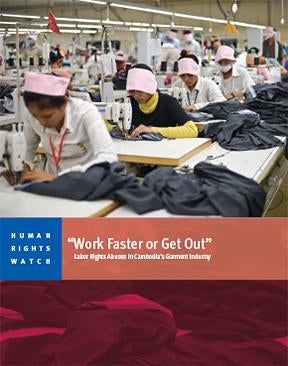
This 78-page report is based on interviews with more than 160 workers from 44 factories, most of them making garments for retail companies in North America, Europe, and Australia.
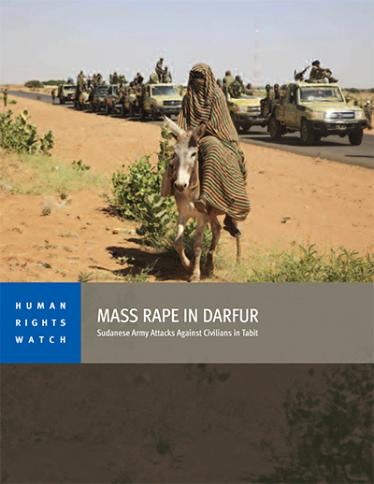
The 48-page report documents Sudanese army attacks in which at least 221 women and girls were raped in Tabit over 36 hours beginning on October 30, 2014. The mass rapes would amount to crimes against humanity if found to be part of a widespread or systematic attack on the civilian population.
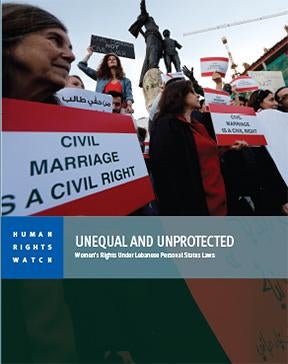
Women’s Rights under Lebanese Personal Status Laws
This 114-page report found that, across all religions, personal status laws erect greater barriers for women than men who wish to terminate unhappy or abusive marriages, initiate divorce proceedings, ensure their rights concerning their children after divorce, or secure pecuniary rights from a former spouse.
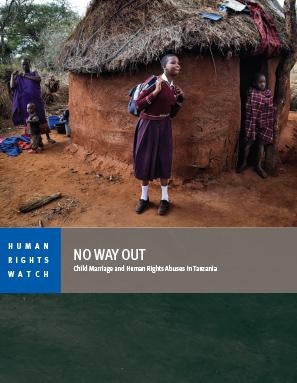
Child Marriage and Human Rights Abuses in Tanzania
This 75-page report documents how child marriage severely curtails girls’ access to education, and exposes them to exploitation and violence – including marital rape and female genital mutilation (FGM) – and reproductive health risks.
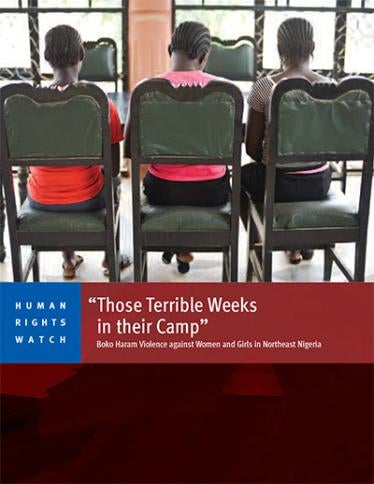
Boko Haram Violence against Women and Girls in Northeast Nigeria
This <a href="http://features.hrw.org/features/HRW_2014_report/Those_Terrible_Weeks_i…; is based on interviews with more than 46 witnesses and victims of Boko Haram abductions in Borno, Yobe, and Adamawa states, including with girls who escaped the April 2014 abduction of 276 girls from Chibok secondary school.
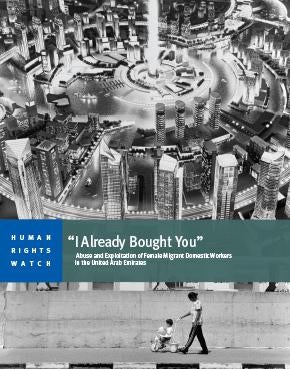
Abuse and Exploitation of Female Migrant Domestic Workers in the United Arab Emirates
This 79-page report documents how the UAE’s visa sponsorship system, known as kafala, and the lack of labor law protections leave migrant domestic workers exposed to abuse. Domestic workers, most from Asia and Africa, cannot move to a new job before their contracts end without the employer’s consent, trapping many in abusive conditions.
The 78-page report documents sexual violence by both government forces and the Communist Party of Nepal (Maoist) combatants during the conflict, which ended with a peace agreement in 2006. Many of these crimes remain unreported, with survivors isolated and unable to find ways to access justice and redress.
Sexual Exploitation and Abuse by African Union Forces in Somalia
This 71-page report documents the sexual exploitation and abuse of Somali women and girls on two AMISOM bases in Somalia’s capital, Mogadishu, since 2013. The AU soldiers, relying on Somali intermediaries, have used a range of tactics, including humanitarian aid, to coerce vulnerable women and girls into sexual activity.
This 47-page report profiles 17 Syrian women who are now refugees in Turkey. Through written and photographic portraits, the report documents ways in which the conflict impacts women in particular.
The 58-page report documents the confiscation of passports, confinement to the home, physical and psychological abuse, extremely long working hours with no rest days, and very low wages or non-payment of wages.
This 69-page report documents how child marriage prevents girls and women from participating in all spheres of life. The practice violates the rights to health, to education, to be free from physical, mental, and sexual violence, and to marry only when able and willing to give free and full consent.
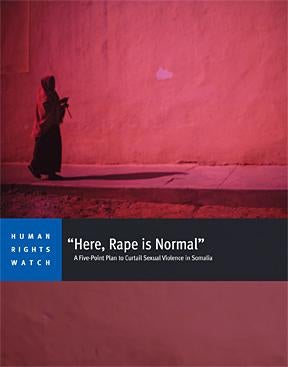
A Five-Point Plan to Curtail Sexual Violence in Somalia
This 72-page report provides a roadmap for the government and its international donors to establish a comprehensive strategy to reduce rape, provide survivors with immediate and urgent assistance, and develop a long-term approach to end these abuses.