After the Storm
A new web feature looks at climate change, planned relocation, and people with disabilities in Siargao, Philippines.
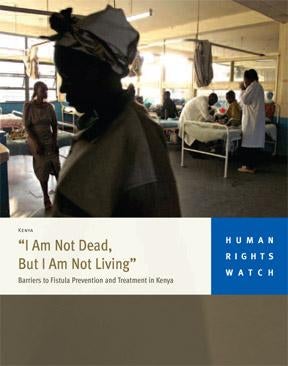
This 82-page report describes the devastating condition facing women with fistula in Kenya and the wide gap between government's policies to address reproductive health and the reality of women's daily lives.
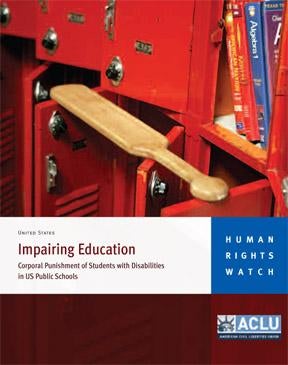
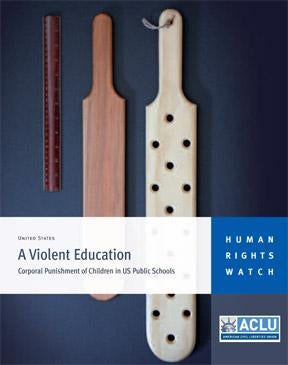
In this 125-page report, the ACLU and Human Rights Watch found that in Texas and Mississippi children ranging in age from 3 to 19 years old are routinely physically punished for minor infractions such as chewing gum, talking back to a teacher, or violating the dress code, as well as for more serious transgressions such as fighting. Corporal punishment, legal in 21 states, typically takes the form of “paddling,” during which an administrator or teacher hits a child repeatedly on the buttocks with a long wooden board. The report shows that, as a result of paddling, many children are left injured, degraded, and disengaged from school.
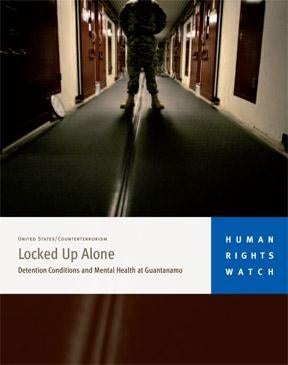
This 54-page report documents the conditions in the various “camps” at the detention center, in which approximately 185 of the 270 detainees are housed in facilities akin to “supermax” prisons even though they have not yet been convicted of a crime.
This 136-page report provides an in-depth look at the abuses and neglect suffered by girls confined in two remote New York State juvenile facilities known as Tryon and Lansing. The facilities are operated by the New York Office of Children and Family Services (OCFS) and are the only two higher-security facilities in New York State holding girls.
Mentally ill offenders face mistreatment and neglect in many U.S. prisons. One in six U.S. prisoners is mentally ill. Many of them suffer from serious illnesses such as schizophrenia, bipolar disorder, and major depression. There are three times as many men and women with mental illness in U.S. prisons as in mental health hospitals.
Shortly after Nicolar Ceauscu was overthrown on December 22, 1989, the world was exposed for the first time to the shocking images of Romania's orphans, expecially its handicapped children and babies with AIDS.