Recruitment and Use of Children by Colombian Armed Groups
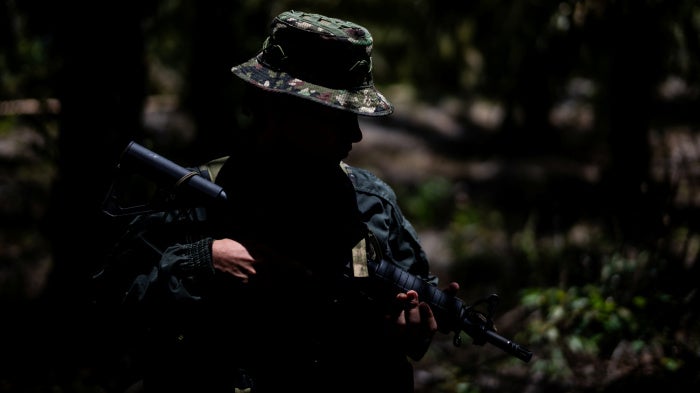
The 102-page report, “‘I Thought I’d Never See My Mom Again’: Recruitment and Use of Children by Colombian Armed Groups,” examines the dynamics of child recruitment, the factors that place children at risk, and the strategies and tools used by armed groups, including through social media platforms, to recruit them. Researchers also analyzed the government’s response and its shortcomings in preventing child recruitment, protecting and rescuing children, assisting the reintegration of those who have been released, and prosecuting the individuals responsible.
In a report released today, Human Rights Watch condemns the war of terror now underway against civilians in Sierra Leone, and calls on the international community to take emergency measures to end the killings, amputations, and abductions taking place in that civil war.
Children Abducted by the Lord's Resistance Army in Uganda
In northern Uganda, thousands of children are victims of a vicious cycle of violence, caught between a brutal rebel group and the army of the Ugandan government.
The summer of 1996 was an appropriate time for the Human Rights Watch Children's Rights Project to examine conditions of confinement for children in Colorado's detention and corrections institutions. Several sensational crimes had created an alarming Asummer of violence in 1993. Public fear triggered a call by Governor Roy Romer for an Airon-fisted response to gang violence.
Thousands of children living in Guatemala's streets face routine beatings, thefts, and sexual assaults at the hands of the National Police and private security guards (who are under the jurisdiction of the Interior Ministry). More serious crimes against street children, including assassination and torture, have lessened since the early 1990s, but still occur.
Police Abuse and Detention of Street Children in Kenya
In addition to the hazards of living on the streets, street children in Kenya are subject to frequent beatings, extortion, and sexual abuse by police. In violation of international law, they are rounded up and held for days or weeks in police lockups under deplorable physical conditions, commingled with adults and often beaten.
Unaccompanied Children Detained by the U.S. Immigration and Naturalization Service
The U.S. Immigration and Naturalization Service (INS) violates the rights of hundreds of unaccompanied children each year, some as young as eight, contrary to international law as well as INS regulations. Children are arrested, imprisoned, and deported, all by the same agency charged with protecting their rights.
In this document, Human Rights Watch seeks to raise concerns about some disturbing trends in the protection of refugees it has observed in the course of researching human rights abuses.
This report examines the context within which children and their parents must struggle to exercise their rights and looks in detail at the legal provisions which deny them even the most basic rights and freedoms. It also reports on the current situation of children in Burma and the daily practices used by the military and other government agents which violate international law.
At least eighteen million children live or work on the streets of India, laboring as porters in railway stations or bus terminals, as rag pickers, and as vendors of food, tea, or handmade articles.
Kurds are the largest non-Arab ethnic minority in Syria, comprising about 8.5 to 10 percent of the population of 13.8 million. This report documents the situation of stateless Syrian-born Kurds — 142,465 by the government's count, and well over 200,000 according to Kurdish sources — who have been arbitrarily denied the right to Syrian nationality in violation of international law.
With credible estimates ranging from 60 to 115 million, India has the largest number of working children in the world. Whether they are sweating in the heat of stone quarries, working in the fields sixteen hours a day, picking rags in city streets, or hidden away as domestic servants, these children endure miserable and difficult lives. They earn little and are abused much.
When Atlanta set out to host the 1996 Summer Olympic Games, its application stated that “for many,” the city is “the modern capital of human rights.” In this report, one of a series on the U.S., we offer an assessment of how Atlanta, and the state of Georgia, violates international human rights standards.
The publication of Death By Default on January 7, 1996 was followed by several weeks of intense coverage of the report by the international news media.
Throughout the world, thousands of children are used as soldiers in armed conflicts. Although international law forbids recruiting children under fifteen as soldiers, such young children may be found in government armies and, more commonly, in armed rebel groups.